Tailorbird
A tailorbird is any of the nine species belonging to the genus Orthotomus, which are part of the Old World warbler family, Sylviidae. These birds are…
What is Tailorbird?
A tailorbird is any of the nine species belonging to the genus Orthotomus, which are part of the Old World warbler family, Sylviidae. These birds are primarily found in Asia and are renowned for their unique nesting behavior.123
To construct a nest, a tailorbird uses its long, slender bill to pierce holes along the edges of one or more leaves. It then draws materials such as plant fibers, insect silk, or even stolen household thread through these holes, forming loops that are knotted on the outside to create a protective pocket.13
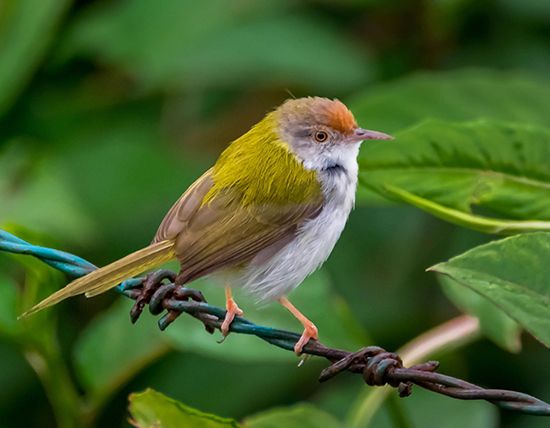
The long-tailed tailorbird (O. sutorius), also known as the tailor warbler, is a common example found in gardens ranging from India to southern China and Java. Measuring about 13 centimeters (5 inches) in length, it is characterized by a yellowish-green upper body, a white underside, a red-brown cap, and a narrow tail that is typically held in a cocked position.14
What materials do tailorbirds use to sew their nests?
To construct their nests, tailorbirds utilize their long, slender bills to pierce holes along the edges of leaves. They then draw various materials through these holes to create loops, which are knotted on the outside to form a protective pocket.12
The specific materials they use for this sewing process include:
How do other bird species build their nests?
Bird species exhibit remarkable diversity in how they construct their nests, ranging from simple ground scrapes to complex, elaborately engineered structures. While some birds, such as certain falcons and owls, build little to no structure at all, most species utilize a wide array of materials to protect their eggs and young.256
Construction Techniques and Materials
Birds often select sites based on safety, including holes in trees or rocks, ledges, or dense vegetation. Common building materials include mud, twigs, leaves, grasses, hair, feathers, rootlets, and even spiderwebs or cast snake skins.25
Specific construction methods include:
- Weaving and Knotting: Species like weavers are known for their ability to tie knots with grass or palm leaves to create compact, durable nests.26
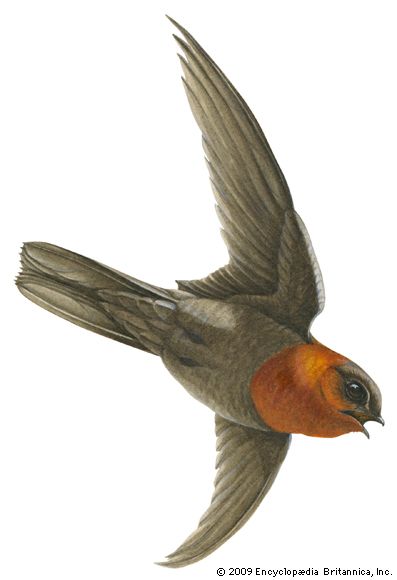
- Cementing: Swifts and some other species use their own saliva as a powerful adhesive to glue materials together or attach nests to surfaces.65
- Mud Construction: Ovenbirds (genus Furnarius) build thick-walled, oven-shaped nests out of mud and grass.27
- Felting: Some birds create firm structures by felting materials together.25
Nest Diversity
Nests can be open and cup-shaped, or closed and domed with side entrances. Some species, such as certain Icteridae, create long, hanging nests that can reach over 0.6 meters in length. Conversely, megapodes avoid traditional incubation by building mounds of decaying vegetation, relying on the heat generated by decomposition to warm their eggs.265
What are some other unique nesting behaviors in the bird world?
Beyond the intricate sewing of tailorbirds, the avian world features a fascinating array of unique nesting behaviors:
- Mound Building: Megapodes (mound builders) do not incubate eggs with their own body heat. Instead, they construct massive mounds of decaying vegetation, sand, or soil, relying on fermentation, solar radiation, or volcanic heat to incubate their eggs. The male mallee fowl meticulously maintains the mound’s temperature, often using its tongue as a sensor to ensure it stays near 33°C (91°F).2910
- Brood Parasitism: Species such as cuckoos and cowbirds bypass nest construction entirely. They lay their eggs in the nests of other species, leaving the foster parents to raise their young. Some cuckoos have evolved to produce eggs that mimic the color of their host’s eggs to avoid detection.111210
- Saliva Cementing: Swifts utilize their own saliva as a powerful adhesive. Some species use it to glue twigs to surfaces, while others, such as the Asiatic edible swifts, construct their entire nests out of hardened saliva.510
- Communal and Hanging Nests: Some Icteridae build long, hanging nests that can exceed 0.6 meters in length. Meanwhile, birds like the palm-chat construct massive communal structures where multiple pairs reside, each defending its own individual cavity.8511
Sources
- Tailorbird — Encyclopædia Britannica
- Passeriform - Nesting — Encyclopædia Britannica
- tailorbird — Merriam-Webster
- tailor warbler — Merriam-Webster
- Nest — Encyclopædia Britannica
- Ovenbird — Encyclopædia Britannica
- Animal behaviour - Natural selection in action — Encyclopædia Britannica
- Bird - Nesting — Encyclopædia Britannica
- Megapode — Encyclopædia Britannica
- Passeriform - Territoriality and courtship — Encyclopædia Britannica
- coevolutionary alternation — Encyclopædia Britannica
- Galliform - Nesting — Encyclopædia Britannica
Published on · 3 min read