Tarpon
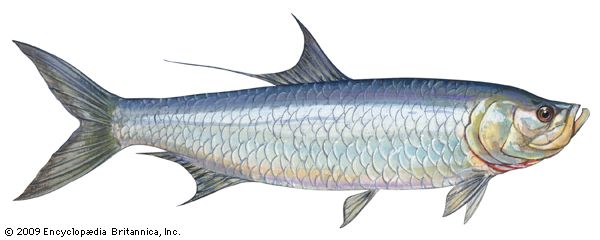
Tarpon are coastal fishes that inhabit marine, brackish, and sometimes fresh water environments across the globe. Their distribution depends on the specific…
Where are tarpon fish typically found in the world?
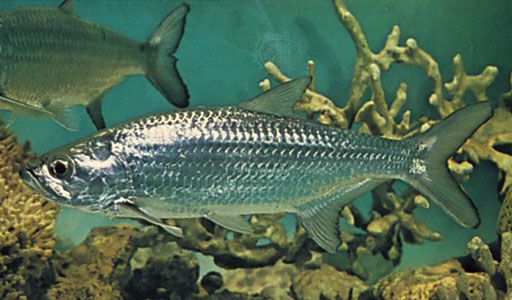
Tarpon are coastal fishes that inhabit marine, brackish, and sometimes fresh water environments across the globe. Their distribution depends on the specific species:12
- Atlantic Tarpon (Megalops atlanticus): This species is typically found in the warm coastal waters of the Atlantic Ocean, including the Gulf of Mexico and the Caribbean. They are also present on the Pacific side of Central America and are known to enter rivers.13
- Pacific Tarpon (Megalops cyprinoides): This species is found in the Pacific and Indian oceans.2
As predators of coastal waters, these fish are often found inshore, where they may enter stagnant pools or creeks during their postlarval stages. Because they are obligate air breathers, they are well-adapted to these low-oxygen environments, provided they can reach the surface to gulp air.12
How do tarpon fish use their swim bladder to survive in oxygen-poor waters?
It is a common misconception that the swim bladder itself acts as the primary respiratory organ for tarpon in oxygen-poor waters. While the swim bladder is often a hydrostatic organ used for buoyancy, in certain primitive fish, it has become specialized to function as a lung or a highly vascularized accessory breathing organ.56
Tarpon are known to be obligate air breathers, meaning they must have access to the surface to survive. They habitually break the water’s surface to gulp air. This behavior allows them to utilize the specialized, lung-like tissue within their swim bladder to extract oxygen when the surrounding water is oxygen-poor. Unlike “physoclistic” fish that have lost the connection between the swim bladder and the digestive tract, tarpon retain this connection, which is a “physostomous” condition that facilitates this air-breathing process.51
What is the average size and weight of an adult tarpon fish?
The Atlantic tarpon (Megalops atlanticus), often referred to as the silver king, typically reaches a size of 1.8 metres (6 feet) and a weight of 45.4 kg (100 pounds) or more. While these are common dimensions for the species, they are capable of growing significantly larger; the largest recorded catches have exceeded 136 kg (approximately 300 pounds).1
How do tarpon fish migrate, and why do they do so?
While the provided search results detail general patterns of fish migration—such as movements related to feeding and reproduction—the Britannica knowledge base does not contain specific information regarding the migratory routes or precise motivations for the migration of tarpon.
The available data confirms that Atlantic tarpon are found inshore in warm Atlantic waters, on the Pacific side of Central America, and occasionally in rivers, but it does not outline their specific migratory behavior.17
Sources
- tarpon — Encyclopædia Britannica
- elopiform — Encyclopædia Britannica
- tarpon — Merriam-Webster
- fishing - Saltwater fishing — Encyclopædia Britannica
- fish - The respiratory system — Encyclopædia Britannica
- swim bladder — Encyclopædia Britannica
- Marine ecosystem - Migrations of marine organisms — Encyclopædia Britannica
Published on · 2 min read