Tiger Snake
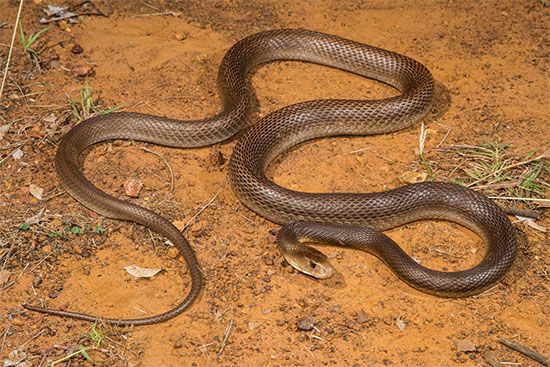
Tiger snakes are native to southern Australia and its adjacent islands, where they inhabit a range of environments including moist areas and dry, rocky…
Where are tiger snakes typically found in the wild?
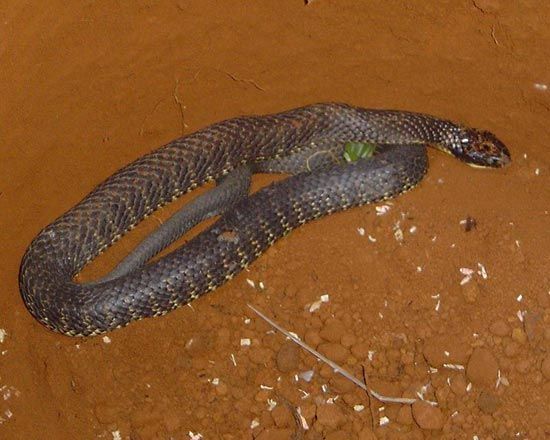
Tiger snakes are native to southern Australia and its adjacent islands, where they inhabit a range of environments including moist areas and dry, rocky habitats.1
Their distribution varies by species:
- The eastern tiger snake is the most widespread, found across Victoria, New South Wales, and parts of South and Western Australia.1
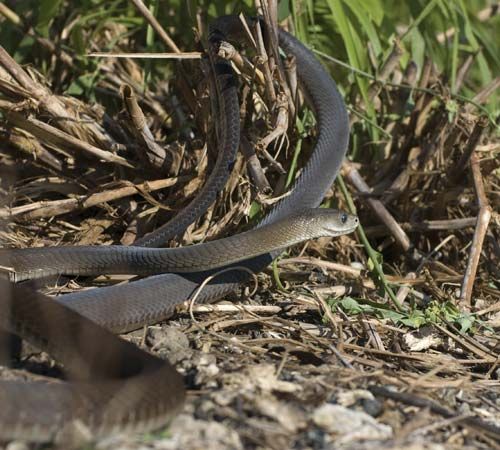
- The black tiger snake is primarily restricted to the arid and rocky regions of South Australia.1
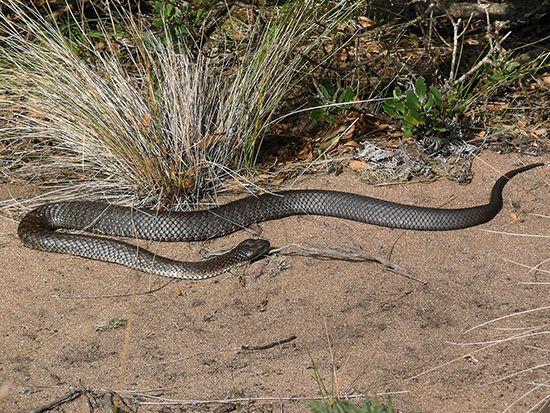
How venomous are tiger snakes, and what makes their venom dangerous?
Tiger snakes (Notechis) are highly venomous members of the cobra family, Elapidae, and their venom is considered potentially fatal to humans.1
The danger of their venom stems from its complex composition, which includes a combination of potent agents that target different bodily systems:1
- Neurotoxins: These act on the nervous system, potentially causing paralysis and the weakening or arrest of respiration and heartbeat.2
- Blood-clotting agents: The venom contains substances that interfere with the circulatory system, which can lead to life-threatening complications.12
The severity of a bite depends on several factors, including the amount of venom injected, the location of the bite, and the time elapsed before receiving antivenin therapy. Fortunately, specific antivenins have been developed to neutralize these toxins, and the antivenin for the tiger snake is also effective against the venom of several other related species.3
What do tiger snakes primarily feed on in their natural habitat?
In their natural habitat, tiger snakes (Notechis) primarily feed on a diet consisting of frogs, birds, and mammals.5
Like other snakes, they utilize specialized sensory tools to locate and secure their prey. They rely on their tongue and the Jacobson’s organ—a sensory structure located in the roof of the mouth—to detect chemical cues in their environment, which helps them trail and recognize potential food sources. As members of the cobra family, Elapidae, they possess fixed, hollow fangs that allow them to inject potent venom to rapidly immobilize their prey.15
How do tiger snakes compare to other venomous snakes in Australia?
Tiger snakes (Notechis) are prominent members of the Elapidae family, which dominates the Australian landscape. Unlike many other continents that host a mix of venomous and nonvenomous species, Australia is unique because its snake population is almost entirely composed of elapids, making it the only continent where venomous species outnumber nonvenomous ones.17
Compared to other Australian elapids, such as the taipan, tiger snakes share the family’s characteristic short, fixed fangs and agile nature. While the inland taipan is noted for having some of the most potent venom on the planet, the tiger snake is also highly dangerous, possessing a complex venom that combines neurotoxins and blood-clotting agents.18
A key distinction in the Australian context is the absence of vipers, a family of venomous snakes common elsewhere in the world. Consequently, the ecological niche occupied by vipers elsewhere is filled by elapids in Australia. Despite their reputation, fatalities from tiger snakes and other Australian elapids remain rare due to the widespread availability of effective antivenins.71
Sources
- tiger snake — Encyclopædia Britannica
- snakebite — Encyclopædia Britannica
- 9 of the World’s Deadliest Snakes — Encyclopædia Britannica
- Venom — Encyclopædia Britannica
- What eats snakes? — Encyclopædia Britannica
- snake - Specializations for securing food — Encyclopædia Britannica
- How Deadly Are Australia’s Animals? — Encyclopædia Britannica
- reptile - Australia — Encyclopædia Britannica
Published on · 2 min read