What Eats Snakes?
Although snakes are skilled predators, they occupy the role of secondary consumers in the trophic pyramid and are frequently hunted by various other animals.
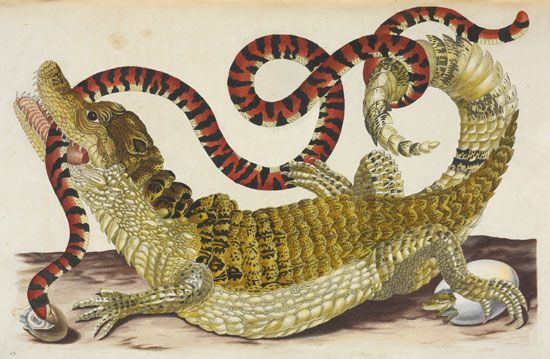
What eats snakes?
Although snakes are skilled predators, they occupy the role of secondary consumers in the trophic pyramid and are frequently hunted by various other animals.1
Predators of snakes include:
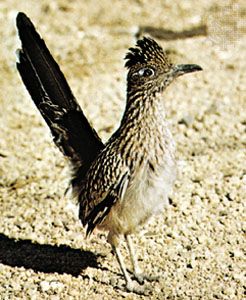
- Birds of Prey: Hawks, eagles, owls, herons, roadrunners, and crows are known to hunt snakes using keen eyesight and talons.1
- Mammals: The mongoose is famously known for attacking highly venomous species like king cobras. Additionally, feral pigs and cats have been documented preying on snakes.1
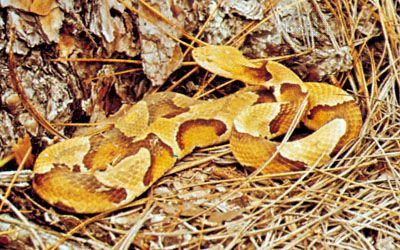
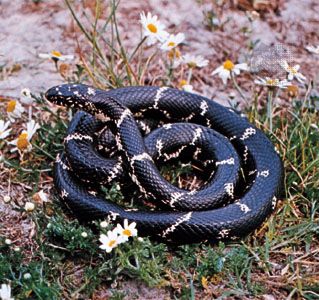
- Reptiles: Monitor lizards hunt snakes, and some snakes engage in cannibalism. For instance, king snakes are immune to the venom of species like rattlesnakes and copperheads, which they regularly consume.1
How do king snakes develop immunity to venom?
The provided search results confirm that king snakes (genus Lampropeltis) are immune to the venom of species such as rattlesnakes and copperheads, which they frequently consume as part of their diet.2
However, the current Britannica knowledge base does not provide specific details regarding the biological or physiological mechanisms—such as the molecular structure of their blood or specific protein interactions—that grant these snakes their immunity to venom.
What is the role of the Jacobson’s organ in a snake’s survival?
The Jacobson’s organ, also known as the vomeronasal organ, is a critical component of a snake’s sensory system, functioning as a specialized chemoreceptor that allows the animal to “smell” its environment.56
Because the organ is completely isolated from the nasal cavity in snakes, it relies on the tongue to transport chemical information. When a snake flicks its tongue, it captures scent particles from the air or ground. Upon retracting the tongue into the mouth, these particles are deposited onto paired pads that transfer them to the Jacobson’s organ on the roof of the mouth.76
This organ is vital for survival in several ways:
- Hunting: It enables snakes to detect and track scent trails left by prey, such as rodents or birds, even in darkness or complex environments.6
- Environmental Awareness: It helps the snake detect predators and other potential threats.6
- Communication: It is used to perceive pheromones, facilitating sexual activity and identifying territorial boundaries.57
By providing a “stereo” sense of smell, the organ allows snakes to analyze the chemical composition of their surroundings with high precision.6
How do birds of prey avoid getting bitten while hunting snakes?
Birds of prey, such as hawks and eagles, utilize specialized physical adaptations to hunt snakes while minimizing the risk of being bitten. Their primary defense lies in their anatomy, specifically their feet and talons, which are evolved for the precise capture and restraint of their prey.
Key adaptations include:
- Specialized Feet: Certain species, such as short-toed eagles, possess short, thick-toed feet specifically adapted for grasping snakes. This structure allows them to secure the snake firmly, often pinning the head or body in a way that prevents the snake from striking back effectively.1
- Aerial Advantage: These birds rely on their keen eyesight to spot snakes from the air, allowing them to initiate a surprise attack. By capturing the snake from above, they can neutralize the threat before the snake has the opportunity to assume a defensive posture or strike.8
- Killing Adaptations: The talons serve as the primary weapon for both killing and handling. By maintaining a strong, controlled grip, the bird can paralyze or kill the snake, rendering it unable to deliver a venomous bite.1
Sources
- What eats snakes? — Encyclopædia Britannica
- snake - Specializations for securing food — Encyclopædia Britannica
- Did you know? — Merriam-Webster
- king snake — Encyclopædia Britannica
- Jacobson’s organ — Encyclopædia Britannica
- Why do snakes flick their tongues? — Encyclopædia Britannica
- Chemoreception - Terrestrial vertebrates — Encyclopædia Britannica
- reptile - Body form and posturing — Encyclopædia Britannica
- Falconiform - Feet and beak — Encyclopædia Britannica
- snake - Skull and sense organs — Encyclopædia Britannica
Published on · 3 min read