Titanosaurs: 8 of the World’s Biggest Dinosaurs
"Titanosaurs: 8 of the World’s Biggest Dinosaurs" is a Britannica list that explores the Titanosauria clade, a diverse group of sauropod dinosaurs that lived…
What is Titanosaurs: 8 of the World’s Biggest Dinosaurs?
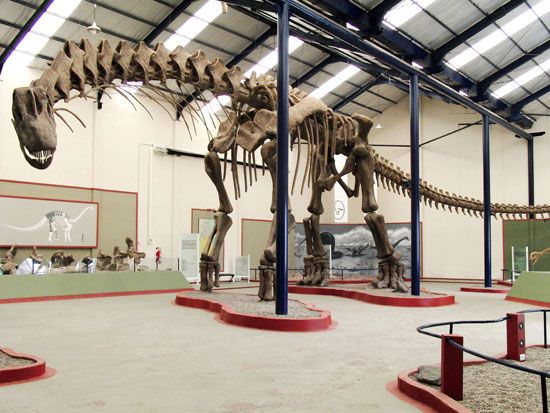
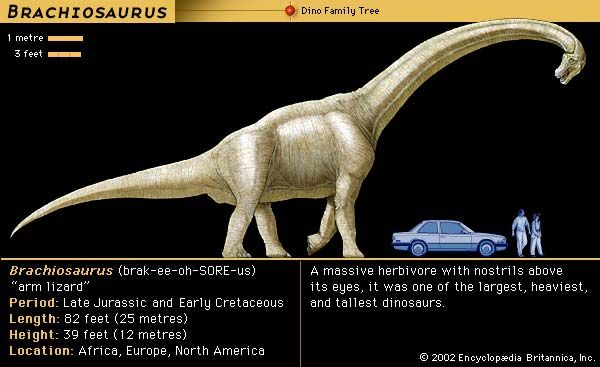
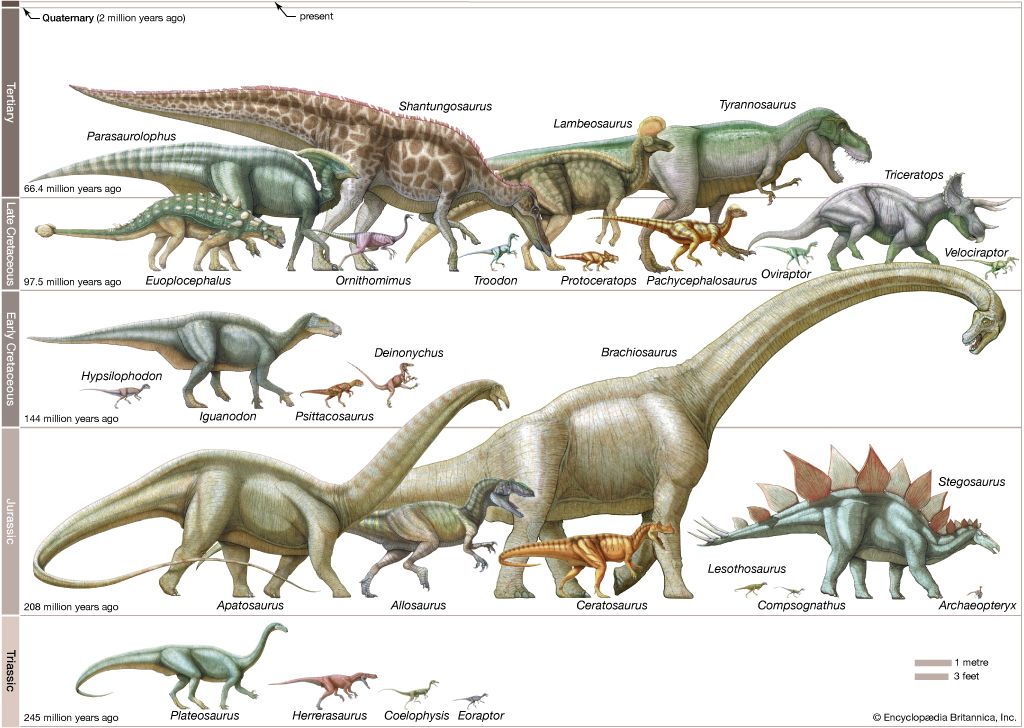
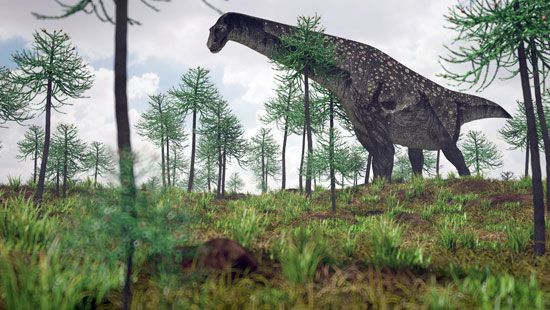
“Titanosaurs: 8 of the World’s Biggest Dinosaurs” is a Britannica list that explores the Titanosauria clade, a diverse group of sauropod dinosaurs that lived during the Mesozoic Era. These herbivores were among the largest terrestrial animals to ever walk the Earth, characterized by their long necks, long tails, and massive bodies.12
The article highlights eight specific genera to illustrate the group’s significant variation in size and defensive adaptations:
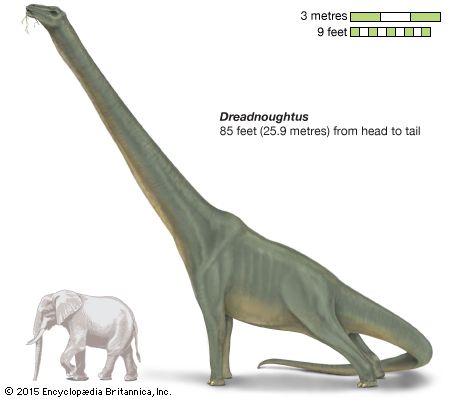
- Dreadnoughtus: Known for a remarkably complete skeleton, measuring about 26 meters (85 feet) long.12
- Patagotitan mayorum: A massive species estimated at 37.2 meters (122 feet) long.32
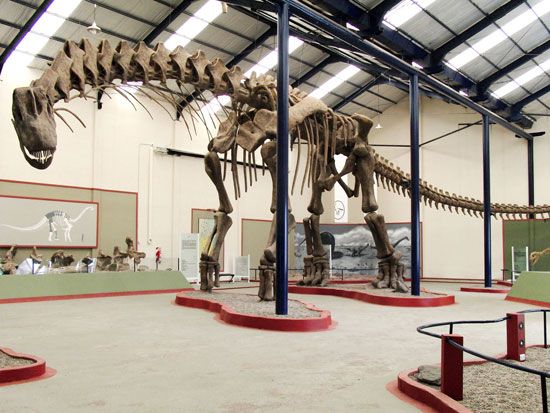
- Argentinosaurus: Often cited as one of the largest land animals known, with length estimates reaching up to 40 meters (131 feet).12
- Saltasaurus: A smaller titanosaur that utilized osteoderms (bony armor) for defense.12
- Rapetosaurus: Known from well-preserved juvenile remains found in Madagascar.12
- Austroposeidon magnificus: The largest of Brazil’s known titanosaur species.2
- Paralititan: A giant that inhabited mangrove swamps in what is now Egypt.2
- Shingopana songwensis: A smaller species from Tanzania, named for its “wide neck”.2
How did titanosaurs defend themselves against predators?
Titanosaurs, like other sauropods, employed several strategies to survive in environments shared with predators:
- Sheer Size: For many titanosaurs, their massive body size was their primary defense. Their immense bulk and weight placed them out of the reach of most predators, making them difficult targets to attack.2
- Rapid Growth: Evidence suggests that these dinosaurs experienced fast growth rates, which is considered an adaptive strategy for predator avoidance, allowing them to reach a size that discouraged predation relatively quickly.2
- Armor (Osteoderms): While many relied on size, some titanosaurs, such as Saltasaurus and Rapetosaurus, possessed osteoderms—bony armored plates embedded in their skin. These plates made it significantly more difficult for a predator’s teeth to penetrate their flesh.34
- Herding Behavior: Though the density of these groups is difficult to determine, evidence suggests that sauropods traveled in herds, which likely provided additional protection against threats.2
What are the main differences between sauropods and other dinosaur groups?
Sauropods are a distinct subgroup of saurischian dinosaurs, characterized by their massive size, herbivorous diet, and unique quadrupedal body plan. They differ from other dinosaur groups, such as theropods and ornithischians, in several key ways:56
- Body Plan: Unlike the bipedal theropods, sauropods were obligate quadrupeds with thick, columnar legs designed to support immense weight. Their anatomy featured a small head, an extremely long neck, and a long, tapering tail.576
- Skeletal Adaptations: To manage their massive bulk, sauropods evolved hollowed-out vertebrae with complex struts and excavations to reduce weight without sacrificing strength. Their limb bones were heavy and solid, and their feet were broad and adapted for bearing great weight.57
- Pelvic Structure: As saurischians, they share a “lizard-hipped” pelvic structure where the pubis points forward, distinguishing them from the “bird-hipped” ornithischians, whose pubic bones point backward.6
- Feeding Specializations: Sauropods possessed leaf-shaped, spoon-shaped, or pencil-shaped teeth. Unlike many other groups, they relied on swallowed stones or gut bacteria to process plant matter, using their long necks to browse foliage from tall trees similar to modern giraffes.54
Why are complete titanosaur skeletons so rare to find?
Complete titanosaur skeletons are exceptionally rare because the process of fossilization requires specific, often unlikely conditions to occur. For an organism to be preserved, it must be buried rapidly after death to prevent decomposition and protect the remains from scavengers. Because titanosaurs were massive, their bodies were often too large to be covered quickly by sediment, leaving them exposed to the elements and biological decay.2
Furthermore, most fossils are preserved in water environments, where anaerobic conditions can protect remains; however, land-dwelling animals like titanosaurs were more easily destroyed by environmental factors. When remains are found, they are frequently fragmentary—consisting of isolated bones like a femur or a few vertebrae—rather than complete skeletons. Even when significant portions are discovered, such as the 70 percent complete Dreadnoughtus, it remains a rare exception in the fossil record.289
Sources
- titanosaur: Top Questions — Encyclopædia Britannica
- titanosaur — Encyclopædia Britannica
- Titanosaurs: 8 of the World’s Biggest Dinosaurs — Encyclopædia Britannica
- dinosaur - Sauropoda — Encyclopædia Britannica
- sauropod — Encyclopædia Britannica
- saurischian — Encyclopædia Britannica
- dinosaur - Sauropodomorpha — Encyclopædia Britannica
- tyrannosaur - Hell Creek discoveries — Encyclopædia Britannica
- How are fossils formed? — Encyclopædia Britannica
- fossil — Encyclopædia Britannica
Published on · 3 min read