Tropites
Tropites is a genus of extinct cephalopods that lived during the Late Triassic Period, approximately 230 to 208 million years ago. These marine animals were…
What is Tropites?
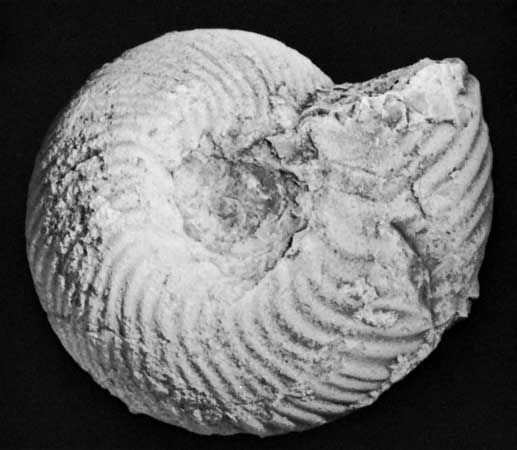
Tropites is a genus of extinct cephalopods that lived during the Late Triassic Period, approximately 230 to 208 million years ago. These marine animals were similar to modern squids and octopuses but possessed an external shell.1
The genus is characterized by a distinctive, globular shell featuring a central keel. Because Tropites existed within a relatively narrow timeframe, it serves as a valuable index fossil, allowing geologists to perform stratigraphic correlations to date rock layers.1
What is an index fossil and why is it important?
An index fossil is a plant or animal remain preserved in the rock record that serves as a diagnostic marker for a specific span of geologic time or a particular environment2.
To be considered a useful index fossil, a specimen should ideally possess the following characteristics:
- Short temporal range: The species existed for a brief period, allowing for precise dating.23
- Wide geographic distribution: It is found in many locations, facilitating global correlation.23
- Abundance: The fossils are common enough to be easily discovered.23
- Distinctive appearance: It is easily recognizable to prevent misidentification.23
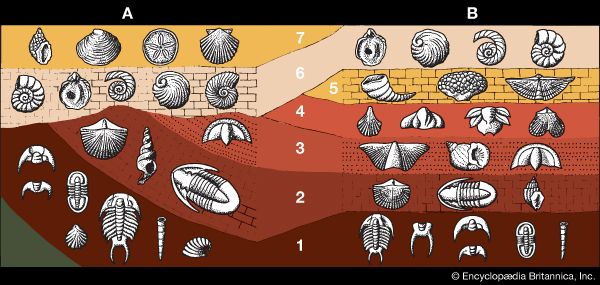
Index fossils are essential to stratigraphy because they provide the basis for defining boundaries in the geologic time scale and for the correlation of separated rock strata. By applying the principle of faunal succession, geologists can determine the relative age of rock layers based on the unique fossil assemblages they contain.23
What are some other animals from the Triassic Period?
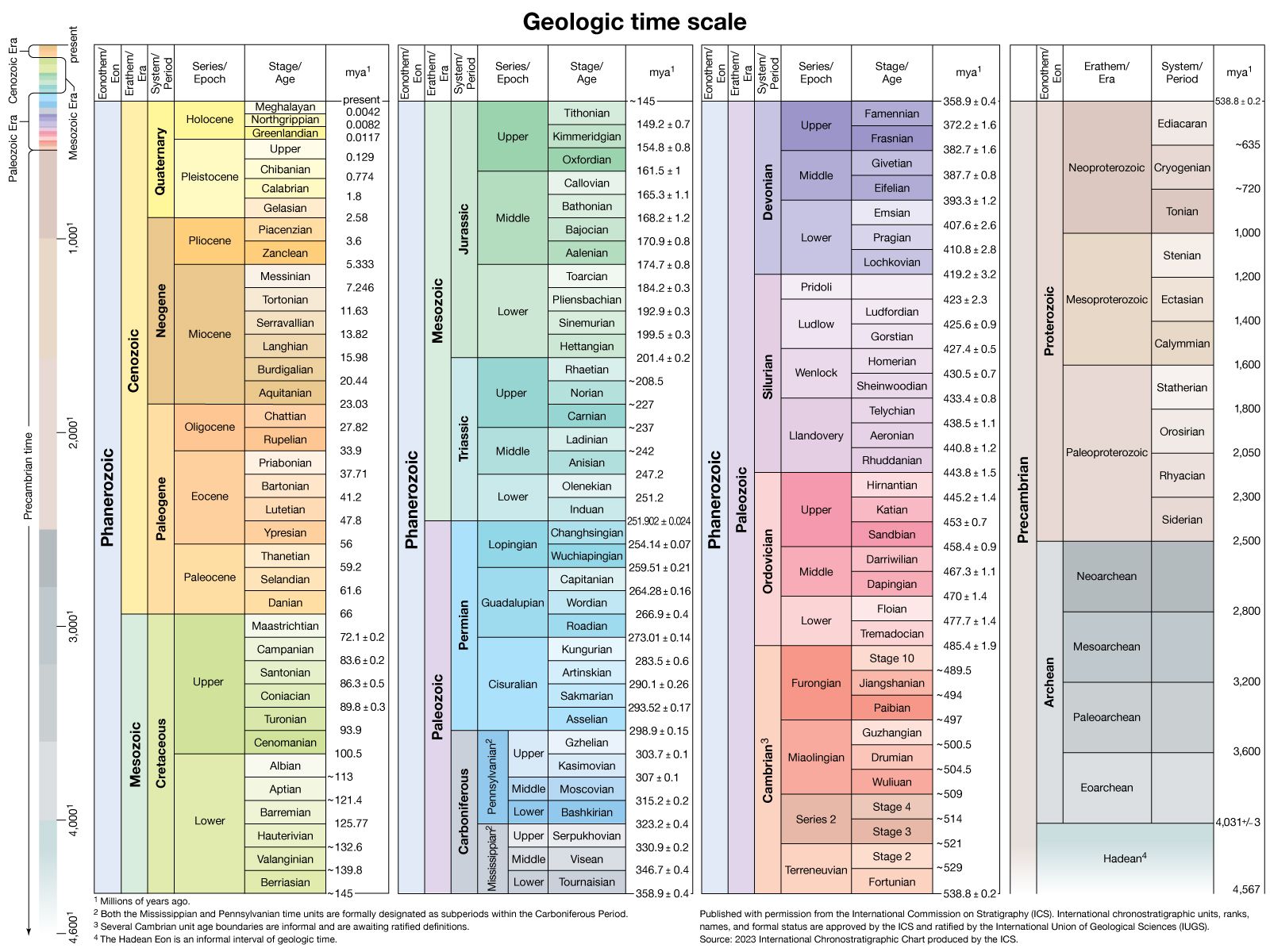
The Triassic Period (252.2 to 201.3 million years ago) was a time of significant evolutionary recovery and transition following the Permian mass extinction. Life during this era included a diverse array of vertebrates and invertebrates.
Marine Life
The seas were inhabited by various marine reptiles, including:
- Ichthyosaurs: Large, dolphin-like predators adapted for rapid swimming.4
- Nothosaurs: Fish-eating reptiles that were ancestors to later plesiosaurs.4
- Placodonts: Shell-crushing reptiles that resembled turtles.4
- Dinocephalosaurus: An early archosauromorph known for giving birth to live young.4
Invertebrates included ammonoids (such as Otoceras and Ophiceras) and various planktonic bivalves like Monotis and Daonella that served as index fossils.5
Terrestrial Life
On land, the period saw the rise of archosaurs and the first dinosaurs:
- Early Dinosaurs: Including the carnivorous Coelophysis and the larger Plateosaurus.6
- Thecodonts: Common, agile predators like Lagosuchus that preceded dinosaurs.6
- Therapsids: Mammal-like reptiles such as Lystrosaurus.7
- Early Mammals: Tiny, shrewlike creatures such as Morganucodon appeared by the Late Triassic.87
How do scientists determine the age of fossils?
Scientists determine the age of fossils and the rocks in which they are found using two primary approaches: relative dating and absolute dating.
Relative Dating
Relative dating establishes the chronological order of events without providing a specific numerical age. This method relies on stratigraphy, the study of rock layers. A fundamental principle is the law of superposition, which states that in undisturbed deposits, the oldest layers are at the bottom and the youngest are at the top. Scientists also use index fossils—remains of organisms that were abundant, widespread, and existed for a short period—to correlate rock strata across different geographic locations and determine their relative ages.9210
Absolute Dating
Absolute dating, or geochronology, provides a numerical age by measuring the decay of radioactive isotopes within minerals. Because radioactive elements decay into stable daughter elements at a constant, known rate, scientists can calculate the time elapsed since a mineral formed by measuring the ratio of parent to daughter atoms. Common methods include:11101213
Sources
- Tropites — Encyclopædia Britannica
- index fossil — Encyclopædia Britannica
- dating - Principles and techniques — Encyclopædia Britannica
- A Journey Through Time Since the Precambrian - Triassic Period: 252.2 million to 201.3 million years ago — Encyclopædia Britannica
- Triassic Period - Fishes and marine reptiles — Encyclopædia Britannica
- Triassic Period - Invertebrates — Encyclopædia Britannica
- Triassic Period - The first dinosaurs — Encyclopædia Britannica
- Triassic Period - Terrestrial reptiles and the first mammals — Encyclopædia Britannica
- dating: Top Questions — Encyclopædia Britannica
- stratigraphy — Encyclopædia Britannica
- dating - Principles of isotopic dating — Encyclopædia Britannica
- dating - Distinctions between relative-age and absolute-age measurements — Encyclopædia Britannica
- dating - Origin of radioactive elements used — Encyclopædia Britannica
Published on · 3 min read