Tuftybell
Tuftybell refers to any of approximately 260 species of annual and perennial herbs belonging to the genus Wahlenbergia within the bellflower family…
What is Tuftybell?
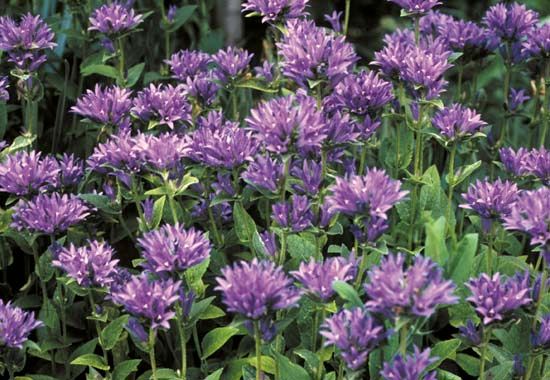
Tuftybell refers to any of approximately 260 species of annual and perennial herbs belonging to the genus Wahlenbergia within the bellflower family (Campanulaceae). These plants are primarily native to the south temperate regions of the Old World, though some species, such as W. marginata from East Asia, have become naturalized in other parts of the world, including southern North America.1
The genus exhibits a variety of forms, ranging from the delicate, creeping ivy-leaved bellflower (W. hederacea) to the erect, hairy W. marginata, which can reach heights of about 45 cm (18 inches) and produces blue or white, upward-facing flowers. It is worth noting that the term “tufty” is a separate adjective used to describe plants or areas that grow in or possess tufts, but it is not synonymous with the specific botanical classification of the tuftybell.12
What are the characteristics of the bellflower family?
The Campanulaceae family, commonly known as the bellflower family, comprises approximately 84 genera and 2,400 species of plants. While primarily consisting of herbaceous (nonwoody) plants, the family also includes some trees and shrubs.34
Key Characteristics
- Floral Structure: Most members feature five-part flowers with united petals. In the Campanula genus, these are typically bell-shaped and radially symmetrical.34
- Ovary Position: In the majority of species, the ovary is inferior, meaning it is positioned below the other floral parts.34
- Pollination: Many species utilize a specialized plunger pollination mechanism, where pollen is pushed out for dispersal by brushlike stigmas or hairs along the style.34
- Vegetative Traits: Plants often possess white latex in their stems and leaves, along with alternate, simple leaves.34
- Fruit: The fruits develop as either dry capsules or fleshy berries, containing numerous small seeds.4
The family includes the subfamily Lobelioideae, which often features strongly monosymmetric flowers and anthers joined at the apex. While many species are native to cool, temperate regions, they are also found on tropical mountains worldwide.35
How do annual and perennial plants differ?
The primary difference between annual and perennial plants lies in the duration of their life cycles and their methods of survival from one growing season to the next.
Annual Plants
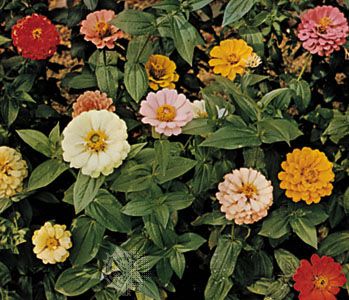
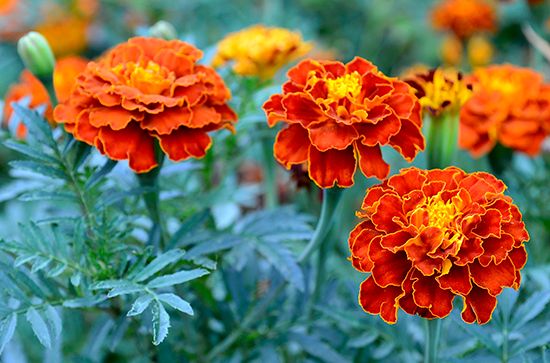
An annual is a plant that completes its entire life cycle—from germination to seed production and death—within a single growing season. Because the plant dies after one season, the only part that survives to ensure the next generation is the dormant seed dormant seed. Many common garden flowers, such as zinnias and marigolds, as well as major food crops like corn and wheat, are classified as annuals.789
Perennial Plants
A perennial is a plant that persists for several years7. Unlike annuals, perennials are capable of regrowing and reblooming year after year. In cold climates, herbaceous perennials typically survive the winter by retreating into underground structures such as bulbs, rhizomes, or tubers, while their aboveground portions die back. This category includes all trees and shrubs, as well as many flowering plants like bellflowers and chrysanthemums.97
It is also worth noting the existence of biennials, which occupy a middle ground by completing their life cycle over two growing seasons—producing vegetative growth in the first and flowers and seeds in the second before dying.10
What does it mean for a plant to be naturalized?
For a plant to be naturalized, it must be a non-native species that has become established in the wild within a new region. This means the plant is capable of growing and reproducing successfully in its new environment without any ongoing human intervention.12
While many introduced species fail to survive in new habitats because they lack the necessary evolutionary adaptations to thrive, naturalized plants have successfully integrated into the local ecosystem. These plants are often referred to as “aliens,” and in some regions, they can make up a significant portion of the total plant population, frequently appearing as common weeds in fields, pastures, and along roadsides.1314
It is important to distinguish between naturalized plants and invasive species. While both are non-native, invasive species are specifically characterized by their ability to significantly modify or disrupt the ecosystems they colonize, often outcompeting native species for resources and reducing local biodiversity.13
Sources
- tufty — Merriam-Webster
- Tuftybell — Encyclopædia Britannica
- Campanulaceae — Encyclopædia Britannica
- Angiosperm - Annotated classification — Encyclopædia Britannica
- Bellflower — Encyclopædia Britannica
- Asterales - Campanulaceae — Encyclopædia Britannica
- Is That Plant 'Perennial' or 'Annual'? — Merriam-Webster
- Perennial — Encyclopædia Britannica
- Annual — Encyclopædia Britannica
- Biennial — Encyclopædia Britannica
- Growth - Light — Encyclopædia Britannica
- naturalization — Merriam-Webster
- invasive species — Encyclopædia Britannica
- United States - Plant life — Encyclopædia Britannica
- Wetland - Disturbances caused by humans — Encyclopædia Britannica
- native — Merriam-Webster
- pioneer species — Encyclopædia Britannica
Published on · 3 min read