Tulip Tree
The tulip tree (Liriodendron tulipifera) possesses several distinctive botanical features that set it apart from other members of the magnolia family.
What are the unique features of the tulip tree’s flowers and leaves?
The tulip tree (Liriodendron tulipifera) possesses several distinctive botanical features that set it apart from other members of the magnolia family.
Leaves
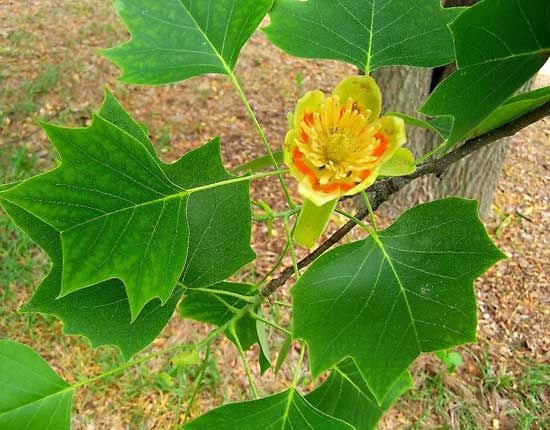
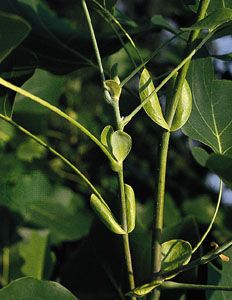
The tree is characterized by long-stemmed, bright green leaves that are bilaterally two- to four-lobed, with tips that are either straight-edged or broadly notched. An unusual feature for the order Magnoliales, these leaves are deciduous and turn a vibrant golden yellow in the autumn. Additionally, the tree features large appendages known as stipules at the base of the leafstalks; when these fall off, they leave behind characteristic scars that encircle the twigs.12
Flowers
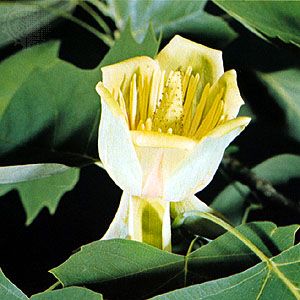
The flowers are large, yellowish-green, and tulip-shaped. They consist of six petals that are orange at the base and three bright green sepals. Because the appearance of the sepals and petals is so similar, the perianth is technically described as being composed of tepals. These showy, solitary flowers are bisexual and are supported by a conelike receptacle.1342
How fast does a tulip tree grow and what is its average lifespan?
The tulip tree (Liriodendron tulipifera) is a long-lived species that reaches its full stature in approximately 200 years. While the provided search results do not specify a precise average lifespan in years, this 200-year maturation period serves as a key indicator of its long-term growth trajectory.
Regarding its growth rate, the tulip tree is a robust, large-stature plant capable of reaching heights of up to 60 metres (197 feet). It is recognized as the tallest of all eastern North American broad-leaved trees. Unlike some other species that are noted for rapid growth but short lifespans, the tulip tree is valued as a durable, large shade tree that remains relatively free of pests and diseases.
How is the tulip tree used in landscaping and what are its benefits?
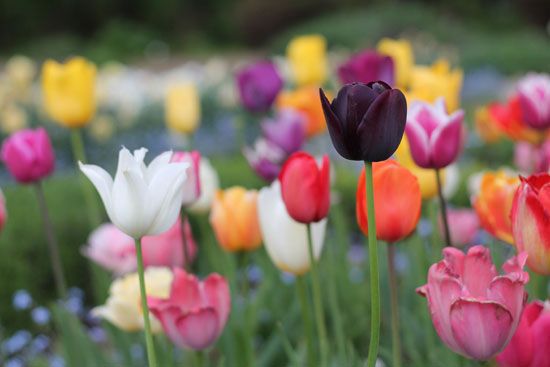
The tulip tree (Liriodendron tulipifera) is a valuable ornamental and timber tree in North America. It is important to clarify that this species is a large, deciduous tree of the magnolia family and is entirely distinct from the genus Tulipa, which consists of small, bulbous garden herbs.13
Landscaping Use and Benefits
The tulip tree is highly regarded as a useful large shade tree, provided that there is sufficient space available to accommodate its significant size. Its primary benefits in a landscape setting include:1
- Aesthetic Appeal: The tree features a straight trunk and an oblong crown, complemented by bright green, lobed leaves that turn a vibrant golden yellow in the autumn.1
- Visual Interest: It produces large, showy, yellowish-green flowers with orange bases that resemble tulips, as well as unique winter buds that resemble a duck’s bill.1
- Durability: The species is noted for being relatively free of pests and diseases, making it a reliable choice for large-scale planting where space permits.1
Beyond its ornamental value, the tree is also a significant source of timber, with its wood utilized in the manufacture of furniture, plywood, and various millwork products.16
What are the main characteristics of the tulip tree, including its size and appearance?
The tulip tree (Liriodendron tulipifera) is a prominent North American ornamental and timber tree belonging to the magnolia family. It is distinct from the genus Tulipa, which comprises small, bulbous garden herbs.
Size and Physical Characteristics
The tulip tree is the tallest of all eastern North American broad-leaved trees, capable of reaching heights of 60 metres (197 feet). Its straight trunk can exceed 2 metres (7 feet) in diameter and supports an oblong crown. The tree reaches its full stature in approximately 200 years.
Key features include:
- Leaves: Long-stemmed, bright green, and bilaterally two- to four-lobed. They turn golden yellow in the autumn and feature large appendages at the base of the leafstalks that leave scars encircling the twigs.
- Flowers: Large, showy, and yellowish-green with six petals that are orange at the base, accompanied by three bright green sepals.
- Other Features: The tree produces conelike clusters of terminally winged fruits and possesses aromatic, purplish-brown twigs with winter buds that resemble a duck’s bill.
The species is relatively free of pests and diseases, making it a useful large shade tree where space is available.
Sources
- tulip tree — Encyclopædia Britannica
- Angiosperm - General features — Encyclopædia Britannica
- tulip tree — Merriam-Webster
- Magnoliales - Magnoliaceae — Encyclopædia Britannica
- poplar — Encyclopædia Britannica
- tulip — Encyclopædia Britannica
Published on · 3 min read