Silver Bells
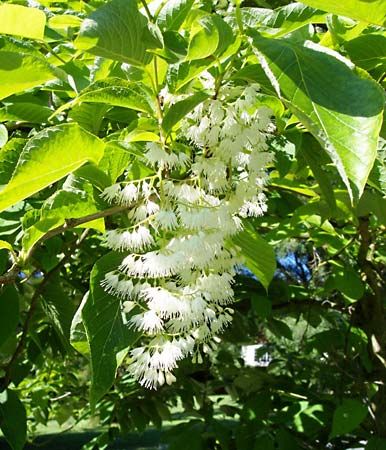
"Silver bells" (Halesia carolina) is a deciduous tree belonging to the storax family (Styracaceae). Native to the southern and southeastern United States, it…
What is silver bells?
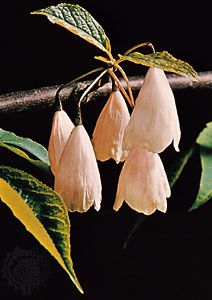
“Silver bells” (Halesia carolina) is a deciduous tree belonging to the storax family (Styracaceae). Native to the southern and southeastern United States, it is frequently cultivated as an ornamental plant. The tree typically reaches heights of 12 to 24 meters (40 to 80 feet) and features bright-green, toothed leaves. It is named for its distinctive white, bell-shaped flowers, which grow in clusters of two to five along the branches and bloom in late spring.1
Please note that the provided search results do not contain information regarding the Christmas song of the same name.
What other plants belong to the storax family?
The Styracaceae family, commonly known as the silver bells family, consists of approximately 11 genera and 160 species of trees and shrubs found in warm temperate to tropical regions.3
The largest genus within this family is Styrax, which includes about 120 species. Notable members of this genus include:3
- S. japonicum (Japanese snowbell)
- S. obassia (fragrant snowbell)
- S. americana
- S. officinalis (snowdrop bush)4
Other genera within the Styracaceae family include:
- Rehderodendron (nine species)
- Halesia (five species, which includes the silver bells tree)
- Alniphyllum (three species)
- Parastyrax (noted for producing drupes)3
These plants are generally characterized by their spirally arranged, toothed leaves and white, often bell-shaped flowers. Many are cultivated for their ornamental value, while some species of Styrax are also valued for the resin they produce also valued for the resin they produce.3
How do deciduous trees differ from evergreen trees?
Deciduous and evergreen trees differ primarily in their leaf-retention strategies and their adaptations to environmental stress.
Deciduous Trees
Deciduous trees are characterized by their “throwaway” leaves, which typically have a lifespan of a single growing season. In temperate regions, these trees shed their leaves in autumn as a protective measure against winter conditions.78
- Adaptation: Because their leaves are thin and delicate, they are susceptible to freezing, which would cause the water within leaf cells to expand and rupture the tissue.78
- Process: As days shorten, the tree initiates a controlled abscission process, closing off water and sugar vessels and forming a layer of cells to detach the leaf without leaving an open wound.7
- Dormancy: By shedding leaves, the tree avoids the physical stress of wind and snow accumulation on its branches and enters a state of dormancy to conserve energy until spring.7
Evergreen Trees
Evergreen trees retain their foliage throughout the year, often keeping individual leaves for two or more years.9
- Adaptation: Their leaves are typically thicker, leathery, or needle-like, often coated in waxes or resins that protect them from freezing and water loss.79
- Function: This durability allows them to carry out photosynthesis whenever environmental conditions—such as moisture and temperature—are favorable, rather than relying on a single annual growth cycle.8
- Diversity: While many evergreens in cold climates are cone-bearing conifers, broad-leaved evergreens are common in tropical and mild temperate rain forests.9
What are some other common ornamental trees found in the United States?
In addition to the many varieties of maple trees—which are among the most popular choices for lawns, parks, and streetscapes due to their diverse forms and striking autumn foliage—the United States features several other prominent ornamental trees.
Members of the Magnoliaceae family are highly valued for their aesthetic appeal:
- Southern Magnolia: Renowned for its large, fragrant, creamy-white flowers and persistent, leathery dark green leaves, this tree is a staple in American landscaping.12
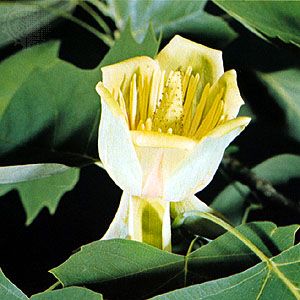
- Tulip Tree: Also known as the yellow poplar, this tall, stately tree is widely cultivated for its unique shape and durable wood.1213
- Yellow Cucumber Tree: A native species found in the Appalachian and Ozark regions, named for its distinctive yellow fruit.12
- Saucer Magnolia: A popular hybrid shrub or small tree that produces showy flowers in early spring before its leaves fully emerge.12
These trees are frequently selected by landscape architects for their seasonal changes in color, texture, and form, serving both as functional elements for shade and as decorative features in residential and public spaces.14
Sources
- What Is the Most Popular Christmas Song? — Encyclopædia Britannica
- silver bells — Encyclopædia Britannica
- storax — Encyclopædia Britannica
- Styracaceae — Merriam-Webster
- storax — Merriam-Webster
- Ericales - Styracaceae — Encyclopædia Britannica
- Why Do Leaves Fall in Autumn? — Encyclopædia Britannica
- Evergreen — Encyclopædia Britannica
- Plant development - Seasonal adaptations — Encyclopædia Britannica
- Temperate forest - Environment — Encyclopædia Britannica
- Temperate forest - Flora — Encyclopædia Britannica
- maple — Encyclopædia Britannica
- Magnoliales - Magnoliaceae — Encyclopædia Britannica
- Magnoliaceae — Encyclopædia Britannica
- horticulture - Trees — Encyclopædia Britannica
Published on · 3 min read