Unicorn Plant
The term "unicorn plant" refers to any North American herb belonging to the family Martyniaceae within the order Lamiales, most notably Proboseidea…
What is Unicorn plant?
The term “unicorn plant” refers to any North American herb belonging to the family Martyniaceae within the order Lamiales, most notably Proboseidea louisianica. It is important to distinguish this from “false unicorn root” (Aletris farinosa), which is a completely different plant and not a type of unicorn plant.12
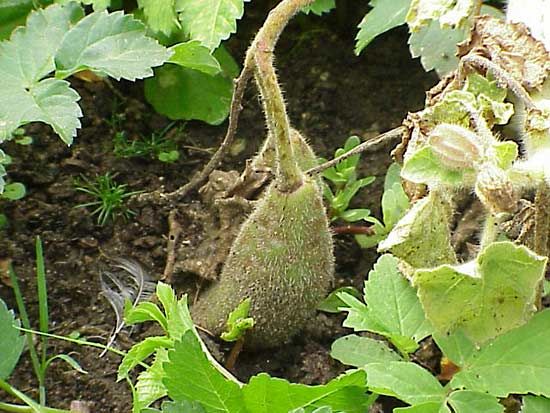
There are nine species of unicorn plants, which are typically characterized by their large, purple or creamy white flowering plant blossoms. They are frequently cultivated for their unique, hornlike woody fruits. These pods feature a thick body that measures 7.6 to 10 cm (3 to 4 inches) in length and terminates in a curved beak of similar or greater size. Once the fruit dries, this beak splits into two distinct, clawlike appendages.1
How do the seed pods of the unicorn plant spread their seeds?
The seed pods of the unicorn plant utilize a specialized mechanism for dispersal. As the woody fruit dries, the long, curved beak splits into two distinct, clawlike appendages. These sharp, hooked structures are designed to snag the fur or feet of passing animals. As the animal moves, the pod is pulled from the plant, allowing the seeds to be carried away and deposited in new locations, a process known as epizoochory.
What are some other plants with unusual fruit shapes?
Beyond the unique, clawlike pods of the unicorn plant, many other plants have evolved fruits with striking or unusual shapes to aid in their survival and seed dispersal:
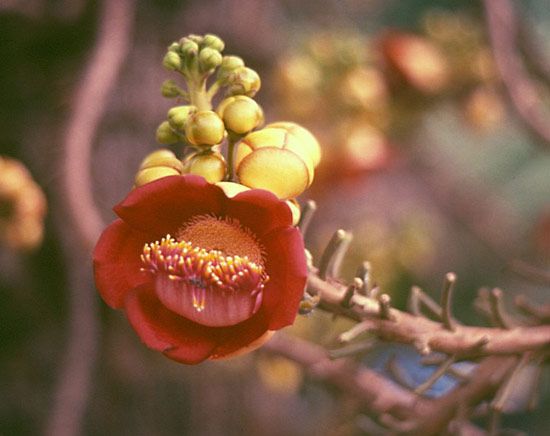
- Cannonball tree: Native to South America, this tree produces large, spherical woody fruits that can reach 20 cm (8 inches) in diameter. Their resemblance to rusty cannonballs gives the tree its common name.
- Javan cucumber: This tropical climber is famous for its giant, membranaceous wing, which can measure up to 15 cm (6 inches) in length, allowing the seed to glide through the air.
- Maple: These trees produce a one-winged fruit known as a samara, which acts like a propeller to help the seed travel on the wind.
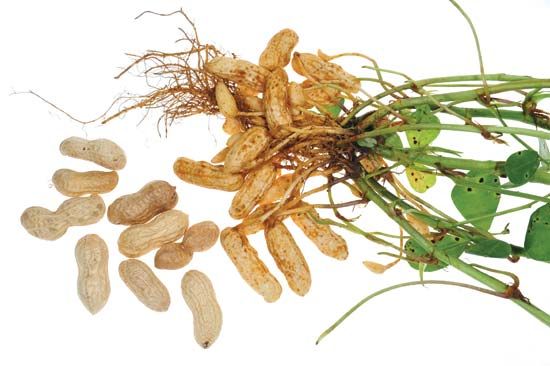
- Peanut: While its flowers bloom aboveground, the plant exhibits the unusual behavior of pushing its developing ovary into the soil, where it matures into a subterranean pod.
- Colutea arborea: This plant produces inflated, balloon-like pods that can travel through the air before hitting the ground to be further dispersed by the wind.
What is the difference between the unicorn plant and the false unicorn root?
The unicorn plant and the false unicorn root are entirely different plants, sharing only a confusing similarity in their common names.
The unicorn plant refers to members of the family Martyniaceae, specifically Proboseidea louisianica. It is a flowering herb known for its distinct, woody, hornlike fruit pods that split into clawlike appendages when dry.1
In contrast, the false unicorn root is a common name for Aletris farinosa, also known as colicroot or blazing star. It is a completely different species unrelated to the Martyniaceae family.21
We could dive deeper into the botanical classifications of these plants or explore other plants that share confusing common names.
Sources
- Unicorn plant — Encyclopædia Britannica
- false unicorn root — Merriam-Webster
- Seed - Dispersal by wind — Encyclopædia Britannica
- Plant - Fruits and seeds — Encyclopædia Britannica
- cannonball tree — Encyclopædia Britannica
- Fabaceae - Physical description — Encyclopædia Britannica
- devil's claw — Merriam-Webster
Published on · 2 min read