Ovary
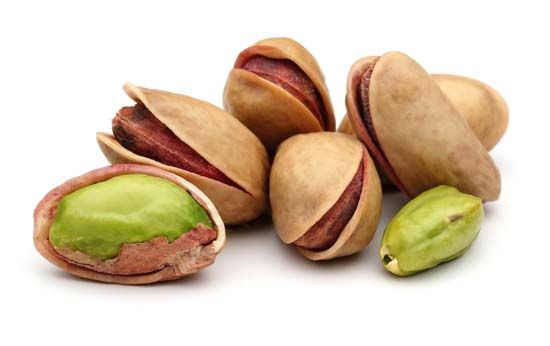
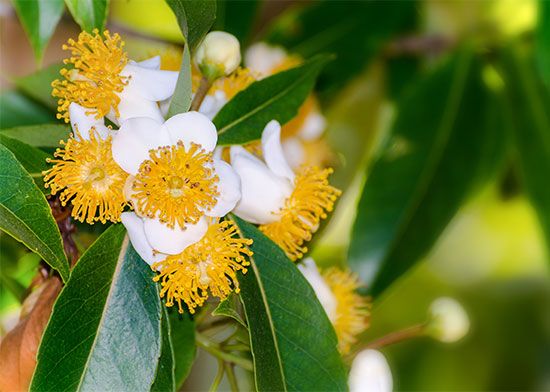
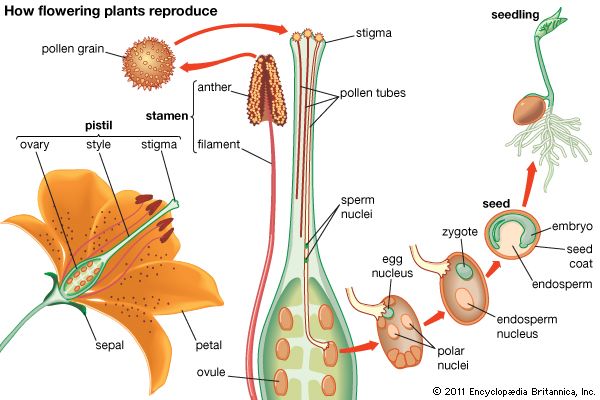
In botany, the ovary is the enlarged basal portion of the pistil, the female reproductive organ of a flower. Its primary functions are twofold:
What is the primary function of an ovary in plants?
In botany, the ovary is the enlarged basal portion of the pistil, the female reproductive organ of a flower. Its primary functions are twofold:
- Protection and Development of Ovules: The ovary houses and protects the ovules, which contain the egg cells. Following fertilization, these ovules develop into seeds.123
- Formation of Fruit: As the seeds mature, the ovary itself undergoes a transformation to become the fruit. This structure can be either dry or fleshy and serves to enclose and protect the developing seeds.14
The structure of the ovary, including the number of carpels and its position relative to other floral parts, is a key characteristic used by scientists in the classification of flowering plants.12
How does fertilization occur in plant ovaries?
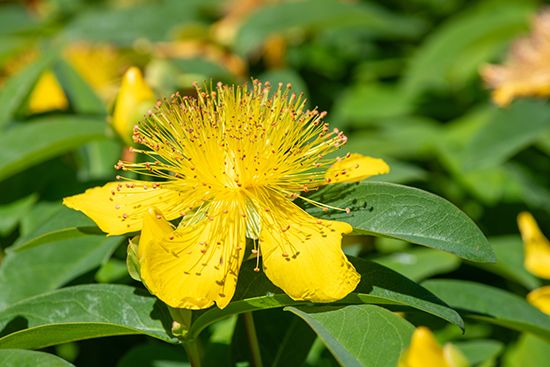
In flowering plants, fertilization occurs within the ovary following the process of pollination. When pollen grains land on the stigma of the pistil, they germinate to form a pollen tube that grows down through the style toward an ovule located in the ovary.56
Flowering plants (angiosperms) undergo a unique process called double fertilization:57
- Zygote Formation: One of the two nonmotile sperm cells carried by the pollen tube fuses with the egg cell to form a diploid [zygote], which eventually develops into an embryo.56
- Endosperm Development: The second sperm cell fuses with two polar nuclei in the central cell of the embryo sac. This fusion creates a triploid nucleus that develops into the endosperm, a nutrient-rich tissue that provides food for the developing embryo.57
Following these events, the ovule matures into a seed, and the ovary typically ripens into a fruit to protect and aid in the dissemination of the seeds.86
What happens to the ovary after fertilization in plants?
After fertilization occurs in flowering plants, the ovary undergoes a series of significant transformations to become a fruit. This process is characterized by several key changes within the flower:117
- Ovary Enlargement: The ovary grows and ripens, eventually forming the fleshy or dry structure known as fruit, which serves to protect and aid in the dissemination of the seeds.117
- Seed Development: The ovules contained within the ovary develop into seeds, each housing an embryo.117
- Floral Changes: As the ovary matures, other parts of the flower typically wither or fall away; the anthers and stigma wither, the petals drop off, and the sepals may be shed or undergo modifications.117
In some instances, such as in grasses, the ovary wall and the seed coat fuse completely, forming a single dispersal unit known as a diaspore. While fertilization is usually required for this development, some plants can produce fruit without it through a process called parthenocarpy.3117
How do ovaries in different types of plants (e.g., angiosperms vs. gymnosperms) compare?
The primary distinction between the reproductive structures of angiosperms and gymnosperms lies in the development and protection of their seeds.1415
Key Differences in Reproductive Structures
- Enclosure of Ovules: In angiosperms, ovules are produced within enclosed containers called carpels or pistils, which collectively form the ovary. In contrast, gymnosperms produce “naked seeds” that are not enclosed by an ovary; they are typically exposed on the scales of cones (strobili).61614154
- Fruit Development: Following fertilization, the angiosperm ovary matures into a fruit, which serves to protect the seeds and aid in their dissemination. Gymnosperms lack both flowers and fruits.141715
- Fertilization Process: Angiosperms undergo double fertilization, a unique process where one sperm fertilizes the egg to form a zygote, and a second sperm fuses with polar nuclei to create a nutrient-rich [endosperm]. form a zygote, and a second sperm fuses with polar nuclei to create a nutrient-rich [endosperm]. In gymnosperms, the embryo is nourished by the somatic tissues of the female [gametophyte].1515816
- Timing of Development: In angiosperms, the ovule increases to mature seed size after fertilization. In gymnosperms, this enlargement typically occurs prior to fertilization.6
While both groups share fundamental seed-plant characteristics—such as the production of seeds, the use of pollen to convey sperm, and the presence of a micropyle—these structural differences in the ovary and seed development are central to their classification.68
Sources
- Ovary — Encyclopædia Britannica
- Angiosperm - The gynoecium — Encyclopædia Britannica
- Seed - Angiosperm seeds — Encyclopædia Britannica
- Ovule — Encyclopædia Britannica
- Double fertilization — Encyclopædia Britannica
- Plant - Variations involving seed plants — Encyclopædia Britannica
- Fruit — Encyclopædia Britannica
- Plant reproductive system - Angiosperms — Encyclopædia Britannica
- Pollination — Encyclopædia Britannica
- Plant - Life histories — Encyclopædia Britannica
- Angiosperm - Seeds — Encyclopædia Britannica
- fruit processing - Ripening and senescence — Encyclopædia Britannica
- Fruit: Top Questions — Encyclopædia Britannica
- Angiosperm: Top Questions — Encyclopædia Britannica
- Plant reproductive system - Seed plants — Encyclopædia Britannica
- What’s the Difference Between Angiosperms and Gymnosperms? — Encyclopædia Britannica
- gymnosperm — Encyclopædia Britannica
Published on · 4 min read