Uruguay River
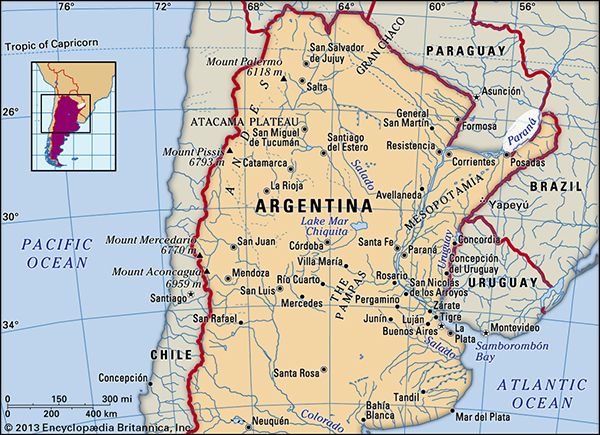
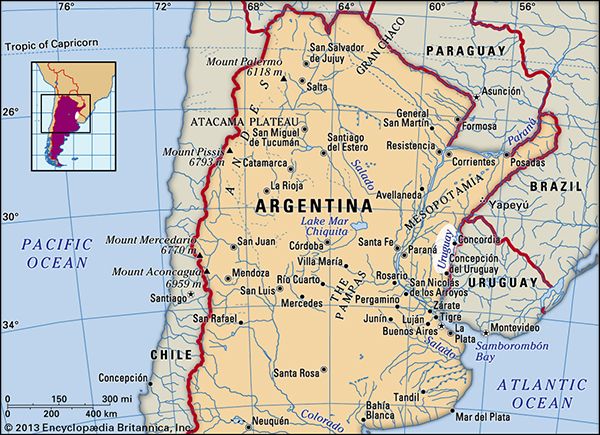
The Uruguay River is a major waterway in southern South America that flows through or along the borders of three countries: Brazil, Argentina, and Uruguay.
What countries and major cities does the Uruguay River pass through or border?
The Uruguay River is a major waterway in southern South America that flows through or along the borders of three countries: Brazil, Argentina, and Uruguay.12
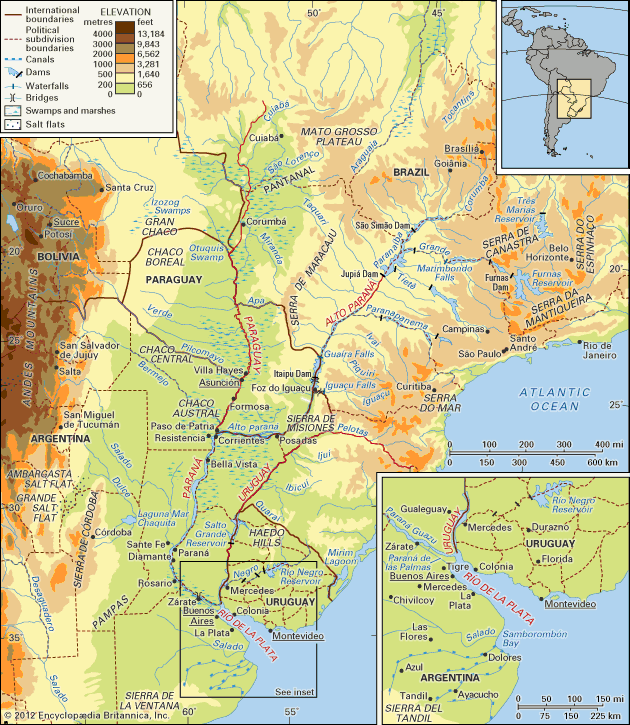
The river originates in southern Brazil, where it is formed by headstreams in the coastal range. It flows westward through the Brazilian states of Santa Catarina and Rio Grande do Sul, eventually turning southwest to form the border between Brazil and Argentina. Further downstream, it serves as the boundary between Argentina and Uruguay before joining the Paraná River to form the Río de la Plata estuary.12
Several cities are situated along its banks, serving as important points for navigation and regional activity:
- Salto, Uruguay: Located on the eastern bank, this city is a key point for river navigation and is near the Salto Grande Reservoir.123
- Paysandú, Uruguay: Situated further downstream, this city is accessible to ocean-going vessels.13
- Monte Caseros, Argentina: Located near the section where the river turns southward to form the border between Argentina and Uruguay.1
What kinds of wildlife can be found in and around the Uruguay River?
The Uruguay River and its surrounding basin support a diverse array of wildlife, ranging from aquatic species to terrestrial animals that inhabit the nearby forests and grasslands.
Aquatic Life
The river system is home to a variety of fish, including:
- Dorado: A gold-colored river fish that resembles a salmon.4
- Surubí: A fish characterized by a long, rounded body with a flattened nose.4
- Patí: A large, scaleless fish typically found in deep, muddy waters.4
- Pacu: A large fish with a flat, high body.4
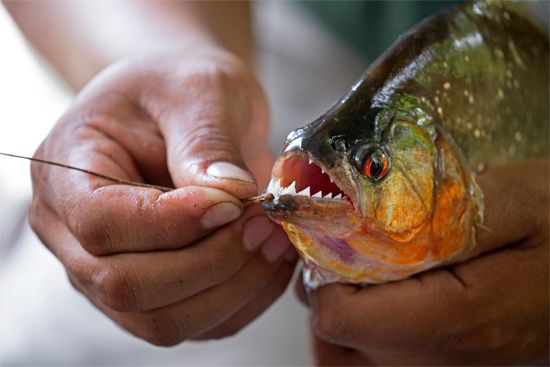
- Other species: The river also hosts the pejerrey, the white sea bass (corbina), and in tropical parts of the system, the meat-eating piranha.4
Reptiles are also prevalent in the water, most notably caimans, which inhabit the upper reaches of the Uruguay River.24
Terrestrial Wildlife
The areas surrounding the river support various mammals, birds, and reptiles:
- Mammals: While some native populations have declined, the region is home to capybaras, armadillos, foxes, deer, and wildcats. In remote areas, pumas and jaguars may still be found.25
- Birds: The riverbanks and nearby lagoons attract numerous species, including herons, cormorants, storks, flamingos, cranes, and various game birds.24
- Reptiles and Insects: The region hosts iguana lizards, tortoises, and several types of snakes, including the rattlesnake and the yarará viper. Insects and spiders are also abundant.24
Are there any significant dams or hydroelectric projects on the Uruguay River?
Yes, the Uruguay River features significant hydroelectric infrastructure that serves as a vital energy source for the region.
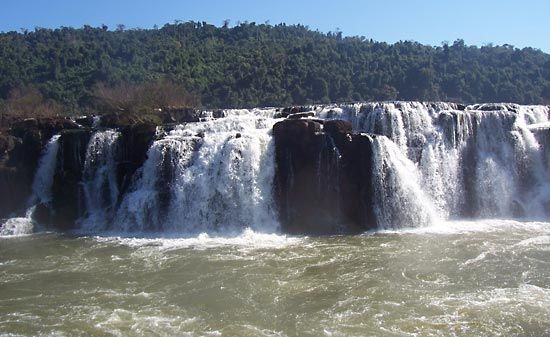
The most prominent project on the river is the dam located above the falls at Salto, Uruguay. This dam impounds the Salto Grande Reservoir, which extends approximately 40 miles upstream. Along with hydroelectric plants on the Negro River—the Uruguay’s largest tributary—these facilities have been in production since the early 1980s and collectively provide about one-seventh of Uruguay’s electric power.12
Additionally, the Negro River itself is heavily utilized for hydroelectric generation through a series of three major dams:
- Rincón del Bonete: Located near Paso de los Toros, this dam creates one of the largest artificial lakes in South America8.
- Baygorria (Rincón de Baygorria): Situated downstream from Rincón del Bonete.7
- Palmar: Located further downstream, serving as another major source of hydroelectric power for the country.7
What is the origin of the name ‘Uruguay River’?
The provided search results do not contain information regarding the etymological origin of the name “Uruguay River.” While the sources confirm the river’s geographic course and its significance in South America, they do not explain the linguistic roots or historical derivation of the name itself.91
Sorry, the Britannica knowledge base does not contain this information.
Sources
- Uruguay River — Encyclopædia Britannica
- Río de la Plata - Physiography of the Uruguay basin — Encyclopædia Britannica
- Uruguay — Encyclopædia Britannica
- Uruguay - Plant and animal life — Encyclopædia Britannica
- Río de la Plata - Animal life — Encyclopædia Britannica
- Orinoco River - Animal life — Encyclopædia Britannica
- Uruguay - Resources and power — Encyclopædia Britannica
- Negro River — Encyclopædia Britannica
- Uruguay — Merriam-Webster
Published on · 3 min read