Vaquita
The vaquita (Phocoena sinus) is the smallest member of the porpoise family and the most endangered marine mammal on Earth. Its name, which is Spanish for…
What is a vaquita?
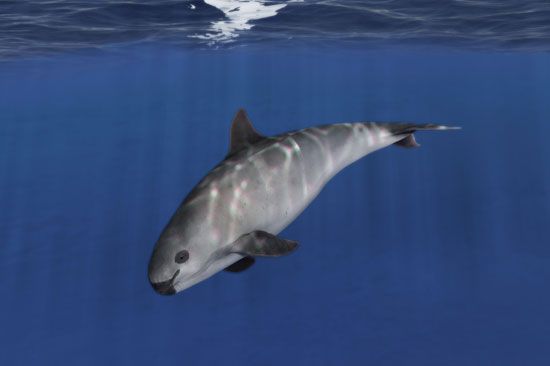
The vaquita (Phocoena sinus) is the smallest member of the porpoise family and the most endangered marine mammal on Earth. Its name, which is Spanish for “little cow,” refers to this nonmigratory creature found exclusively in the northern Gulf of California, Mexico.1
Vaquitas are characterized by their dark eye patches, rounded heads, and triangular dorsal fins. They typically swim alone or in pairs, avoiding watercraft and feeding on small fish, crustaceans, and squid.1
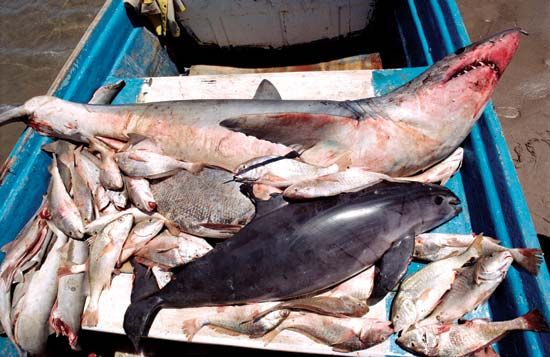
The species is critically endangered, with estimates suggesting as few as 6 to 10 individuals remain. The primary threat is illegal gill net fishing; although the vaquitas are not the target, they frequently become bycatch and drown. Protecting this species is a moral imperative, as human activity—specifically the demand for totoaba swim bladders—has pushed this unique animal to the brink of extinction.1
Where does the vaquita live?
The vaquita (Phocoena sinus) has an extremely limited geographic range, residing exclusively in the northern Gulf of California, Mexico. Within this region, they are typically found in shallow lagoons located relatively close to the shore.1
What does the vaquita look like?
The vaquita is a small, distinctively marked marine mammal with several recognizable physical features:
- Coloration: They are dark gray along their backs and light gray on their undersides. They are particularly known for dark patches around their eyes and mouths, as well as a gray line that extends from the mouth to each pectoral fin.1
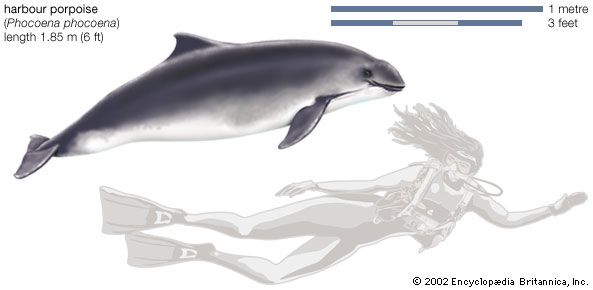
- Body Shape: As the smallest member of the porpoise family, they possess a rounded head, a blunt snout, and a blowhole. They reach lengths of up to 1.5 meters (5 feet) and weigh between 30 and 55 kg (66–120 pounds).1
- Fins: They feature a triangular dorsal fin located in the middle of the back, which is notably larger than those found on other porpoise species. While females generally have longer bodies, males tend to have slightly larger fins.1
Why is the vaquita endangered?
The vaquita is considered the most critically endangered marine mammal on Earth, with a population estimated at fewer than 20 individuals.1
The primary cause of this decline is illegal gill net fishing in the Gulf of California. Although vaquitas are not the intended target, they are frequently caught as bycatch. Because they are air-breathing mammals, becoming trapped in these nets prevents them from reaching the surface, leading to suffocation.1
This crisis is largely driven by the illegal fishing of the totoaba, a fish whose swim bladders are highly valued in traditional medicine and as a culinary ingredient. Despite legal protections and bans on gill nets, lax enforcement has allowed the illegal trade to persist, causing the vaquita population to plummet by approximately 98 percent between 1997 and 2018. Protecting these animals from human-driven extinction is a moral imperative that requires rigorous enforcement of conservation laws and the elimination of destructive fishing practices.14
Sources
- vaquita — Encyclopædia Britannica
- Gulf of California — Encyclopædia Britannica
- porpoise — Encyclopædia Britannica
- vaquita — Merriam-Webster
Published on · 2 min read