Gulf of California
The Gulf of California is a large inlet of the eastern Pacific Ocean located along the northwestern coast of Mexico. It is situated between the mountainous…
What is the Gulf of California and where is it located?
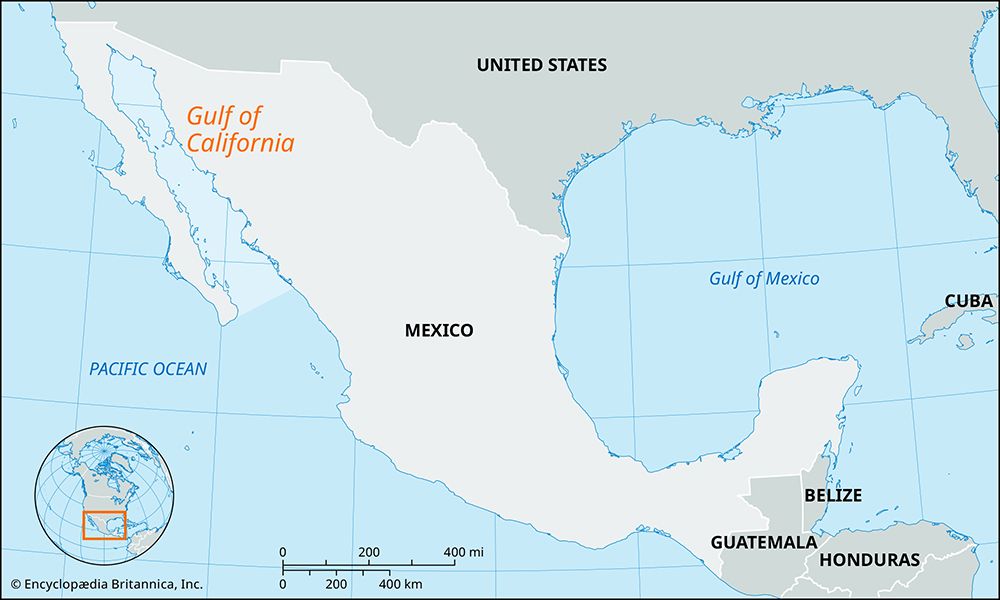
The Gulf of California is a large inlet of the eastern Pacific Ocean located along the northwestern coast of Mexico. It is situated between the mountainous Baja California peninsula to the west and the Mexican mainland states of Sonora and Sinaloa to the east.12
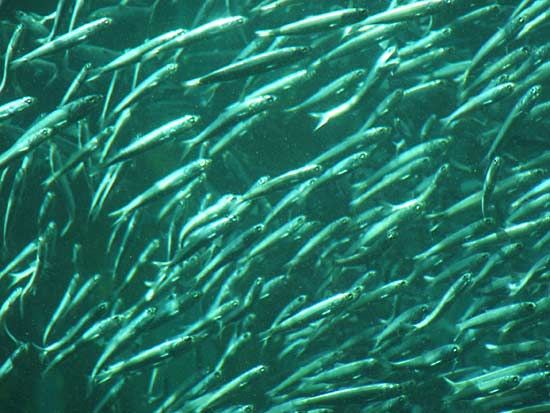
Spanning approximately 750 miles (1,200 km) in length, the gulf is geologically significant; it is believed that the Baja California peninsula is slowly pulling away from the mainland as it moves north along the San Andreas Fault system. The region is characterized by a shallow northern portion and deep southern depressions, and it serves as a vital area for commercial fishing, including the harvest of shrimp, tuna, and sardines. Historically, the body of water was also known as the “Vermilion Sea” due to the presence of red plankton.1
What role does the Colorado River play in the Gulf of California’s ecosystem?
The Colorado River historically played a vital role in the Gulf of California ecosystem by delivering essential sediment and freshwater to its delta. Geologically, the river’s sediment load was responsible for creating a vast natural dam that separated the northern portion of the gulf from the sea, eventually forming the Salton Trough.3
However, modern water management has drastically altered this relationship. Due to extensive upstream damming and the over-apportionment of water for agricultural, urban, and industrial use, the river now reaches the gulf only as a mere trickle or, at times, remains completely dry. This lack of consistent flow has significantly disrupted the natural delta environment. In an effort to mitigate these impacts, the U.S. Department of the Interior has experimented with controlled flow releases from dams to mimic natural spring floods, which are intended to redistribute sediment and improve the health of the river channel.4
What are some of the most notable species found in the Gulf of California?
The Gulf of California is home to a diverse array of marine life, ranging from commercially significant species to rare, endangered animals.
Notable Species
- Vaquita (Phocoena sinus): This is the most notable and critically endangered species in the gulf. It is the smallest member of the porpoise family and is found exclusively in the northern waters of the Gulf of California. Due to its small population—estimated to be fewer than 20 individuals—it is considered the most endangered marine mammal on Earth.6
- Commercial Fish Species: The gulf is one of Mexico’s most productive fishing grounds. Key species harvested for commercial purposes include shrimp, tuna, and sardines.1
- Totoaba (Totoaba macdonaldi): Historically significant and also endangered, this large fish has been the subject of intense illegal fishing, which has indirectly threatened the vaquita through the use of gill nets.6
- Plankton: The gulf is known for its impressive blooms of red plankton, which led early explorers to name the body of water the “Vermilion Sea”.1
How does the San Andreas Fault affect the Baja California peninsula?
The San Andreas Fault system plays a fundamental role in the geological evolution of the Baja California peninsula. According to one prominent geological theory, the peninsula is slowly pulling away from the North American continent as it moves northward along this fault system.10
Over the last 100 million years, this tectonic movement has resulted in the peninsula shifting approximately 300 miles (480 km) to the north. As the Pacific Plate slides laterally past the North American Plate, the fault system—which extends from the northern end of the Gulf of California through western California—continues to drive this separation. In addition to this horizontal displacement, there may have been vertical movements that contributed to the peninsula being forced upward while the gulf floor dropped.10111
Sources
- Gulf of California — Encyclopædia Britannica
- California, Gulf of — Merriam-Webster
- Colorado River - Economic development — Encyclopædia Britannica
- Colorado River - Physiography — Encyclopædia Britannica
- Colorado River - Plant and animal life — Encyclopædia Britannica
- vaquita — Encyclopædia Britannica
- Gulf of Mexico / Gulf of America - Plants and animals — Encyclopædia Britannica
- California Coastal National Monument — Encyclopædia Britannica
- California - Plant and animal life — Encyclopædia Britannica
- San Andreas Fault: Top Questions — Encyclopædia Britannica
- Baja California — Encyclopædia Britannica
- San Andreas Fault — Encyclopædia Britannica
- San Andreas Fault — Merriam-Webster
Published on · 3 min read