White Tiger
A white tiger is a rare colour variant of the Bengal tiger or Siberian tiger, characterized by white fur, dark stripes, and blue eyes. This appearance is…
What is white tiger?
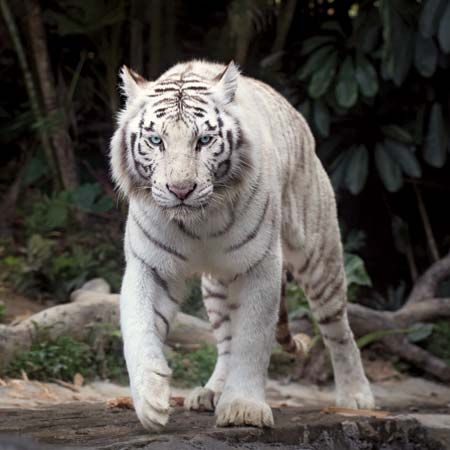
A white tiger is a rare colour variant of the Bengal tiger or Siberian tiger, characterized by white fur, dark stripes, and blue eyes. This appearance is caused by leucism, a genetic mutation that reduces the production of the pigment pheomelanin. Unlike albinism, which involves a complete absence of melanin, white tigers retain eumelanin, which colors their stripes and eyes.1
In the wild, this mutation is extremely rare, occurring in approximately one in 10,000 tigers. Because of their exotic appearance, white tigers are often bred in captivity by mating closely related individuals. This practice of inbreeding is ethically concerning, as it frequently leads to severe health issues, including heart defects, physical deformities, crossed eyes, and increased cub mortality. Prioritizing the welfare and genetic health of these animals over their aesthetic appeal is a fundamental ethical responsibility in conservation and animal care.1
What is the difference between leucism and albinism?
The primary difference between leucism and albinism lies in the extent to which melanin production is affected.
- Albinism: This is a hereditary condition characterized by a complete absence of melanin in the eyes, skin, hair, scales, or feathers. Because melanin is entirely absent, individuals with albinism often have pink irises and red pupils, as the blood vessels in the eyes become visible.3
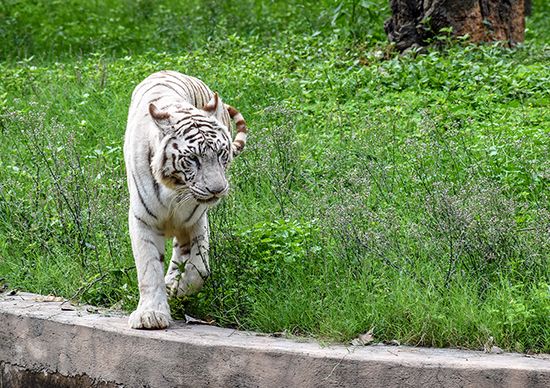
- Leucism: This condition involves a partial loss of pigmentation. Unlike albinism, leucism does not result in a total absence of melanin. For example, in white tigers, leucism specifically reduces the production of pheomelanin (which creates red, orange, and yellow hues) while retaining eumelanin, which allows for the presence of dark stripes and colored eyes.1
While albinism is caused by genetic mutations that prevent the production of melanin, leucism is a distinct mutation that allows for some pigment retention. Both conditions can leave animals more vulnerable in the wild due to a lack of protective coloration.31
Why is inbreeding dangerous for tiger populations?
Inbreeding is dangerous for tiger populations because it significantly reduces genetic diversity, which is essential for the long-term health and survival of a species. When populations are small or isolated—such as those in Ranthambore National Park—they often descend from a limited number of individuals. This lack of genetic variation leads to reduced genetic fitness, making the population more vulnerable to environmental changes and disease.1
Furthermore, when breeders intentionally mate closely related animals to produce specific traits like the white coat, the practice of inbreeding frequently results in the expression of harmful recessive traits. This can lead to severe health complications, including:
- Physical deformities and crossed eyes4
- Congenital heart defects4
- Increased cub mortality rates4
- Significantly shorter life expectancy4
Prioritizing the genetic integrity of these animals is an ethical imperative, as the pursuit of aesthetic traits through inbreeding causes unnecessary suffering and compromises the viability of the species.4
What are the main threats to wild tiger conservation?
Wild tiger populations face several critical threats that jeopardize their survival in the wild. These challenges persist even in areas where legal protections are in place.
Primary Threats to Tiger Conservation
- Habitat Loss and Fragmentation: As human populations grow, vast areas of forest and grassland are cleared for agriculture, roads, and other human-controlled spaces. This reduces both the quantity and quality of available habitat, forcing tigers into smaller, isolated pockets.56
- Poaching and Illegal Trade: Despite being outlawed in most countries, poaching remains a major existential threat. Tigers are illegally hunted for their skins, bones, claws, and other body parts, which are highly valued for use in traditional medicine, talismans, and display.57
- Prey Depletion: The reduction of natural prey populations—such as deer and wild pigs—forces tigers to rely on domestic livestock. This often leads to human-tiger conflict and subsequent retribution from local communities.58
- Genetic Isolation and Inbreeding: When populations become fragmented, individuals are unable to encounter mates from other groups. This leads to inbreeding, which reduces genetic diversity and makes the species more vulnerable to disease and environmental changes.9
International efforts, such as the Convention on International Trade in Endangered Species, continue to work toward controlling the illegal trade of tiger derivatives to mitigate these pressures.57
Sources
- white tiger — Encyclopædia Britannica
- tiger — Encyclopædia Britannica
- albinism — Encyclopædia Britannica
- Ranthambore National Park: Top Questions — Encyclopædia Britannica
- tiger - Tigers and humans — Encyclopædia Britannica
- poaching — Encyclopædia Britannica
- Bengal tiger — Encyclopædia Britannica
- tiger - Natural history — Encyclopædia Britannica
- Siberian tiger — Encyclopædia Britannica
Published on · 3 min read