Why Does -saur Appear So Often in Dinosaur Names?
The suffix -saurus (and its shortened form -saur) appears frequently in dinosaur names because it is a Latinized version of the Greek word sauros, which…
Why Does -saur Appear So Often in Dinosaur Names?
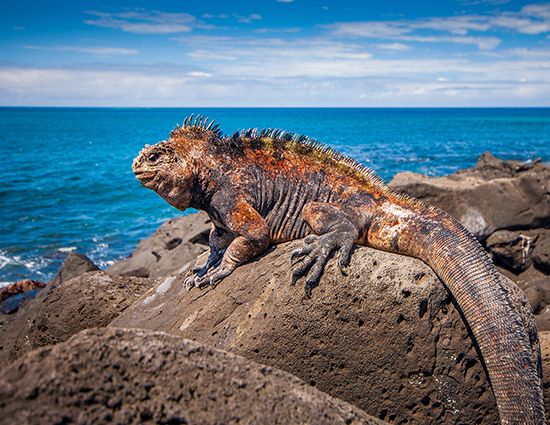
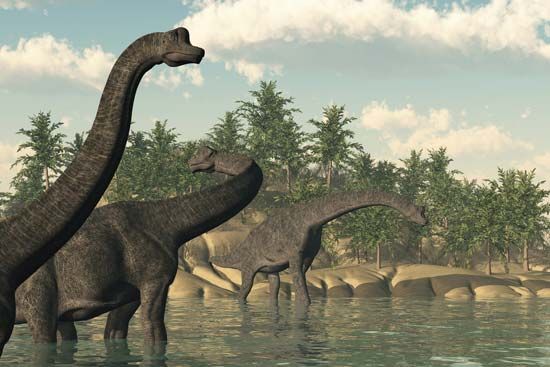
The suffix -saurus (and its shortened form -saur) appears frequently in dinosaur names because it is a Latinized version of the Greek word sauros, which means “lizard” or “reptile”.123
When the British paleontologist Richard Owen coined the term Dinosauria in 1842, he used this root to categorize these creatures as a distinct group of “saurian” (lizard-like) reptiles. The suffix serves as a scientific convention to denote the reptilian nature of these animals, distinguishing them from modern lizards and other reptiles. For example, Tyrannosaurus combines the Latin tyrannus (“tyrant”) with saurus to translate as “tyrant lizard”.421
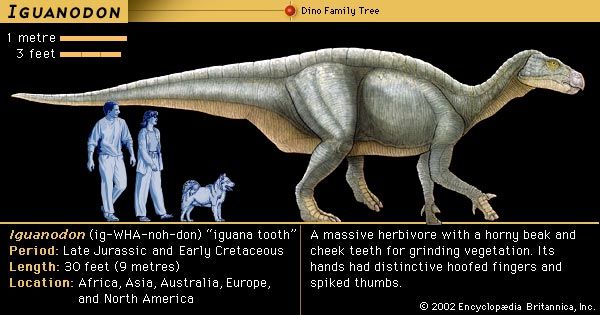
It is important to note that not all dinosaurs carry this suffix. Many are named for their unique physical characteristics rather than their reptilian classification. Examples include Triceratops (“three-horned face”) and Iguanodon (“iguana tooth”).12
Who was Richard Owen and why did he name the group Dinosauria?
Richard Owen (1804–1892) was a prominent British anatomist and paleontologist who made significant contributions to the study of extinct animals. After training in medicine and working as a curator at the Royal College of Surgeons, he became a highly respected figure in the scientific community, eventually serving as the superintendent of the natural history departments at the British Museum.7
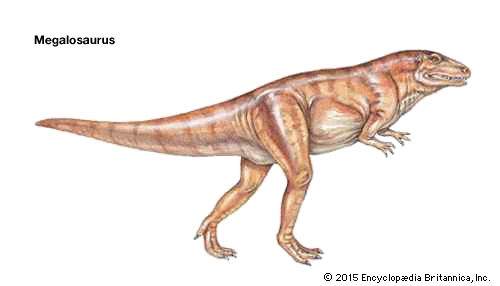
Owen coined the term Dinosauria in 1842 after carefully studying various fossil specimens, including Megalosaurus, Iguanodon, and Hylaeosaurus. While these fossils had been discovered and described by others previously, Owen was the first to recognize that they represented a distinct group of large, extinct reptiles that were fundamentally different from any living varieties. By classifying them under the name Dinosauria, he established a formal scientific category for these creatures, which were later popularized through life-size models he directed for the 1851 Great Exhibition.897
What does the prefix ‘deinos’ actually mean in Greek?
The Greek word deinós (δεινός) carries a broad semantic range, but it is most accurately translated as “inspiring dread or awe”.310
While it is a common misconception that the term “dinosaur” translates to “terrible lizard,” this was not the meaning intended by Richard Owen when he coined the name Dinosauria in 1842. Owen specifically defined the root as “fearfully great,” intending to emphasize the immense size and impressive nature of these extinct creatures rather than their capacity to terrify. Although “terrible” is a possible translation of deinós in other contexts, Owen’s choice of words was meant to reflect the awe-inspiring scale of the fossils he was describing.310
Why are some dinosaurs named after their physical features instead of using the -saur suffix?
While the suffix -saurus (derived from the Greek sauros, meaning “lizard”) is commonly used to highlight the reptilian nature of dinosaurs, many dinosaurs are named for their distinct physical characteristics instead.2
Scientists often choose names that emphasize unique anatomical features to help distinguish specific types of dinosaurs from one another. Examples include:2
- Triceratops: Its name translates to “three-horned face,” highlighting the prominent horns on its skull.2
- Iguanodon: This name means “iguana tooth,” referencing the specific shape of its teeth.2
Naming conventions in paleontology are flexible, and researchers may prioritize descriptive traits over the traditional -saur suffix to better reflect the unique morphology of a specimen. This practice allows for more specific identification, especially as new discoveries continue to reveal the vast diversity of dinosaur forms.210
Sources
- saurian — Merriam-Webster
- Why Does -saur Appear So Often in Dinosaur Names? — Encyclopædia Britannica
- Dinosauria — Merriam-Webster
- dinosaur — Encyclopædia Britannica
- saur- — Merriam-Webster
- -saurus — Merriam-Webster
- Richard Owen — Encyclopædia Britannica
- dinosaur - The first finds — Encyclopædia Britannica
- dinosaur - Reconstruction and classification — Encyclopædia Britannica
- dinosaur — Merriam-Webster
- dinosaur - Classification — Encyclopædia Britannica
- dinosaur - Dinosaur ancestors — Encyclopædia Britannica
Published on · 3 min read