Wrybill
The wrybill (Anarhynchus frontalis) is a unique New Zealand bird belonging to the plover family, Charadriidae. It is most notable for its bill, which is…
What is Wrybill?
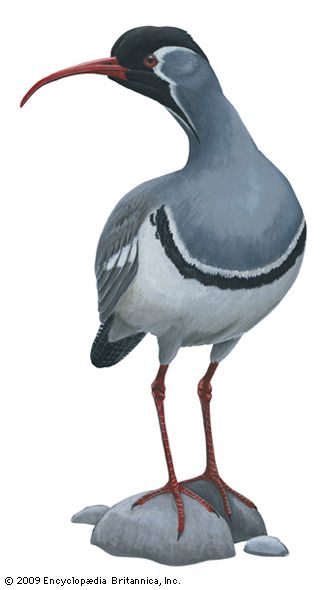
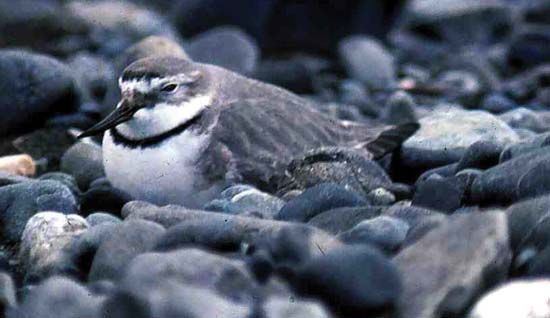
The wrybill (Anarhynchus frontalis) is a unique New Zealand bird belonging to the plover family, Charadriidae. It is most notable for its bill, which is distinctively curved about 20° to the right—a physical trait present even in newly hatched chicks.12
Measuring approximately 15 cm (6 inches) in length, the bird features gray upperparts, white underparts, and a characteristic black breast band. Its specialized bill allows it to feed by probing under stones and sweeping through shallow, muddy water like a scythe.1
The species nests along rocky rivers on the South Island, where it typically lays two eggs. During the winter, these birds migrate to form sizable flocks along the coasts of the North Island.1
How does the wrybill’s unique beak help it find food?
The wrybill (Anarhynchus frontalis) possesses a highly specialized bill that curves approximately 20° to the right, an anatomical feature present even in newly hatched chicks. This unique shape is an evolutionary adaptation that facilitates the bird’s specific foraging techniques.12
The wrybill utilizes its curved bill to find food in two primary ways:
- Probing: The bird uses its bill to reach and probe under stones in its riverine habitat to locate hidden prey.1
- Sweeping: It employs a scythe-like motion, sweeping the bill through shallow, muddy water to capture food.1
This specialized morphology allows the wrybill to exploit food sources that might be inaccessible to other plover species with straight bills.12
What other birds are part of the plover family?
The plover family, Charadriidae, comprises approximately three dozen species of shorebirds characterized by their plump breasts, long wings, moderately long legs, and short, straight bills.3
Members of this family include:
- Ringed Plovers: Certain species within the genus Charadrius that are distinguished by white foreheads and one or two black breast bands.34
- Golden Plovers: Species such as the Eurasian golden plover (Pluvialis apricaria) and the American golden plover, which are known for their long-distance migrations.3
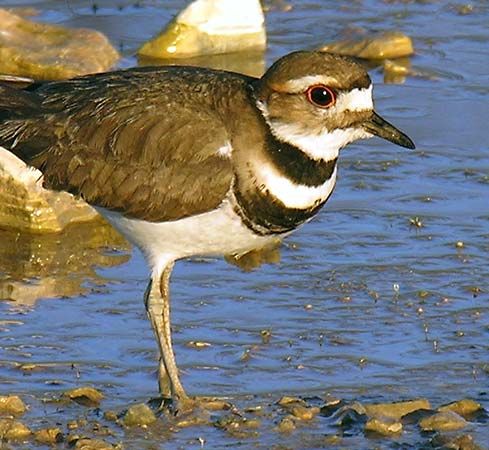
- Killdeer: A well-known, primarily insectivorous species (Charadrius vociferus) often found in upland meadows and grasslands.34
- Wrybill: The unique wrybill (Anarhynchus frontalis), which is notable for having a bill that curves 20° to the right.5
- Black-bellied Plover: A species (Squatarola squatarola) that, like the golden plovers, features distinct dark and light patterns in its breeding plumage.3
While some birds like the upland sandpiper are sometimes mistakenly called “upland plovers,” they actually belong to the family Scolopacidae rather than Charadriidae.6
Why do wrybills migrate between the North and South Islands of New Zealand?
The wrybill (Anarhynchus frontalis) is a unique New Zealand shorebird that nests along rocky rivers on the South Island during the breeding season. Following the breeding period, these birds migrate to the North Island, where they gather in sizable flocks to spend the winter along the coasts.1
While the specific physiological triggers for the wrybill’s movement are part of a complex annual cycle, migration in birds is generally driven by a combination of internal rhythms and external ecological factors. As the breeding season concludes, birds often respond to changes in environmental conditions, such as temperature, weather patterns, and the availability of food, which influence their decision to depart for wintering grounds. The pituitary gland plays a central role in preparing the bird for these transitions by regulating metabolic processes, including the deposition of fat reserves necessary for the journey.8
Sources
- Wrybill — Encyclopædia Britannica
- Charadriiform - Adaptations for feeding — Encyclopædia Britannica
- Plover — Encyclopædia Britannica
- Charadrius — Encyclopædia Britannica
- Charadriiform - General features — Encyclopædia Britannica
- beach plover — Merriam-Webster
- Sandpiper — Encyclopædia Britannica
- wrybill — Merriam-Webster
- Migration - Physiological stimulus of migration — Encyclopædia Britannica
Published on · 3 min read