Funky Feathers: 10 Bizarre Birds
"Funky Feathers: 10 Bizarre Birds" is a curated list from Britannica that highlights ten unique species of birds known for their unusual physical traits…
What is Funky Feathers: 10 Bizarre Birds?
“Funky Feathers: 10 Bizarre Birds” is a curated list from Britannica that highlights ten unique species of birds known for their unusual physical traits, behaviors, or evolutionary adaptations.1
The list features the following birds:
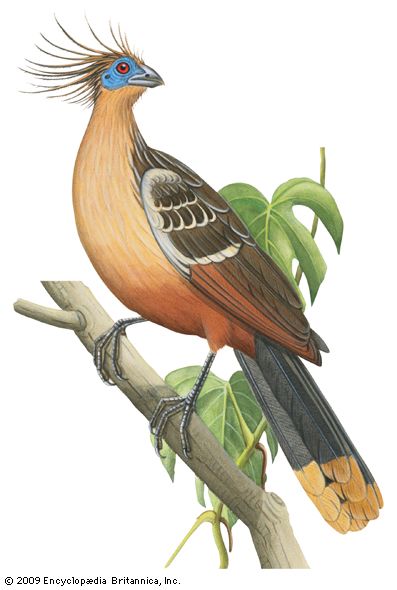
- Hoatzin: A primitive Amazonian bird with a ruminant digestive system and nestlings that possess claws on their wings.1
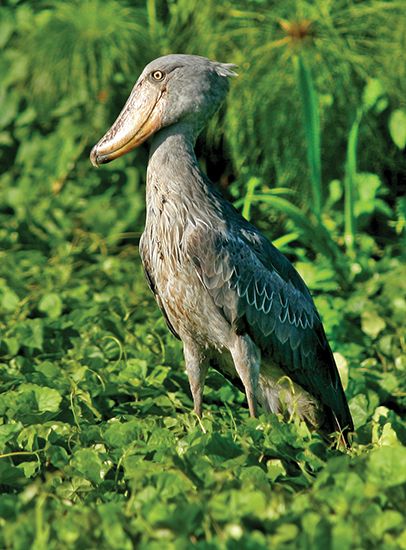
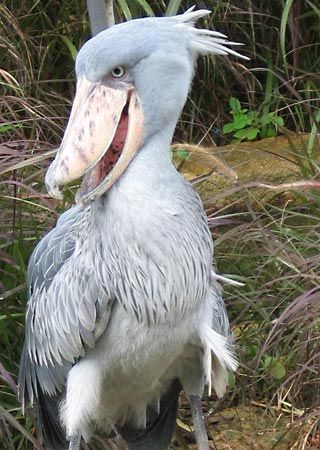
- Shoebill stork: Known for its massive, clunky beak used to hunt lungfish.1
- Victoria crowned pigeon: The largest living pigeon species, recognized for its rich blue plumage and lacy head crest.1
- Dodo: An extinct, flightless bird from Mauritius that was famously unequipped for the arrival of humans.1
- Galapagos cormorant: The only flightless species among the cormorants.1
- Shoveler: A duck species with flattened, shovel-like mandibles used for straining food.1
- Frogmouth: Nocturnal birds often mistaken for owls, known for their sedentary hunting style.1
- Curassow: Tropical American birds noted for their jaunty, crest-like feathers.1
- Southern ground hornbill: A ground-dwelling hornbill with a distinctively red, swollen face.1
- Scarlet iiwi: A Hawaiian bird with a curved beak, recently discovered to be closely related to finches.1
How does flightlessness evolve in birds living on isolated islands?
The evolution of flightlessness in birds on isolated islands is primarily driven by the absence of predators. When birds colonize remote, mammal-free environments, the high energy cost of maintaining the anatomy required for flight—such as specialized wings and a keeled sternum—becomes unnecessary for survival.345
Over time, natural selection favors other traits, such as increased body size, which can provide advantages in these specific habitats. For example, many flightless species evolved to be larger, utilizing heavy leg bones and strong feet for terrestrial movement rather than aerial locomotion. In some aquatic species, such as penguins, wings have evolved into paddle-like structures to facilitate swimming, while the birds retain a keel to support these specialized muscles.346
While this adaptation allows birds to thrive in isolated environments, it leaves them highly vulnerable to extinction when humans or invasive species—such as rats, pigs, and dogs—are introduced, as these birds lack the defensive ability to fly away from new threats.47
What are some examples of birds that use mimicry to protect themselves?
Birds utilize various forms of mimicry and deceptive signals to protect themselves from predators or to ensure their survival through brood parasitism. Here are some notable examples:
- Burrowing Owls: When threatened, the nestlings of the burrowing owl emit a call that closely resembles the warning buzz of a rattlesnake. Since rattlesnakes are frequent inhabitants of the rodent burrows where these owls live, this acoustic mimicry helps deter potential predators.8
- Parasitic Weaverbirds: These birds, such as the whydah, practice brood parasitism by laying their eggs in the nests of specific host finch species. To ensure they are fed, the nestlings have evolved to perfectly match the unique mouth patterns (spots and protuberances) of the host’s own young. Additionally, they duplicate the host’s specific begging calls and head movements, and their juvenile plumage is identical to that of the host species.9
- Owls (General): While not always classified as mimicry, many owls use protective coloration and posturing to avoid attention. When threatened at their daytime roosts, they may compress their plumage and elevate their ear tufts, causing them to resemble a broken branch, which helps them blend into their environment.8
Why do some birds have such specialized beaks for their diet?
The diversity in bird bills is primarily an evolutionary response to selective pressures, particularly the need to efficiently exploit specific food sources. While bill shape was historically used to classify bird relationships, it is now understood to be highly plastic, meaning it changes relatively easily in response to a species’ feeding habits.16
Birds have evolved a wide array of bill types tailored to their ecological niches, including:
- Conical bills: Stout and blunt for cracking hard seeds, or smaller and pointed for general seed extraction.16
- Probing bills: Slender and often downcurved, allowing birds to reach nectar in flowers or extract insects from deep crevices and bark.16
- Toothed or hooked bills: Designed for grasping and tearing soft prey, such as the hooked tips found in shrikes or gulls.1617
- Specialized structures: Examples include the pouched bills of pelicans for netting fish, the serrated edges of geese for grazing, and the unique, asymmetrical bill of the wrybill.1817
Classic examples of this adaptive radiation include Galapagos finches and Hawaiian honeycreepers, where closely related species developed vastly different bills to occupy distinct feeding roles. Although these adaptations are highly specialized, most birds remain opportunistic and will utilize their bills to consume whatever food is readily available.1619
Sources
- Funky Feathers: 10 Bizarre Birds — Encyclopædia Britannica
- Extreme birds: 7 wonders of the avian world — Encyclopædia Britannica
- Bird: Top Questions — Encyclopædia Britannica
- Bird - Flightlessness — Encyclopædia Britannica
- Flightless bird — Encyclopædia Britannica
- Charadriiform - Adaptations for flight — Encyclopædia Britannica
- conservation - Pacific island birds — Encyclopædia Britannica
- Owl - Behaviour — Encyclopædia Britannica
- mimicry - The importance of the signal receiver — Encyclopædia Britannica
- mimicry - Parasitic weaverbirds — Encyclopædia Britannica
- mimicry - The importance of mimicry to evolutionary theory — Encyclopædia Britannica
- mimicry - The effects of geographic distribution and population density — Encyclopædia Britannica
- mimicry - The effectiveness of warning systems — Encyclopædia Britannica
- aggressive mimicry — Encyclopædia Britannica
- Bird - Sound — Encyclopædia Britannica
- Passeriform - Bill — Encyclopædia Britannica
- Beak — Encyclopædia Britannica
- Charadriiform - Adaptations for feeding — Encyclopædia Britannica
- Galapagos finch — Encyclopædia Britannica
Published on · 4 min read