Valley
The primary difference between V-shaped and U-shaped valleys lies in the geological processes that form them.
What is the difference between V-shaped and U-shaped valleys?
The primary difference between V-shaped and U-shaped valleys lies in the geological processes that form them.
V-Shaped Valleys
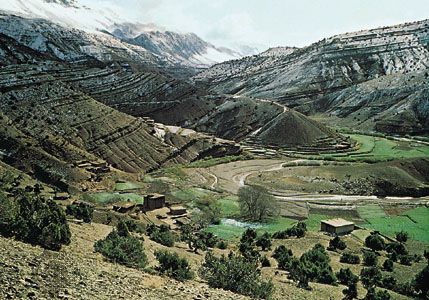
V-shaped valleys are typically created by river erosion. During the initial stages of development, rivers expend most of their energy in vertical entrenchment, carving narrow, deep channels into the landscape. These valleys often feature steep slopes that meet at a sharp point, a form sometimes referred to as a “notched valley” (Kerbtal). As the river matures and approaches its base level, it begins to expend more energy laterally, gradually broadening the valley floor.1234
U-Shaped Valleys
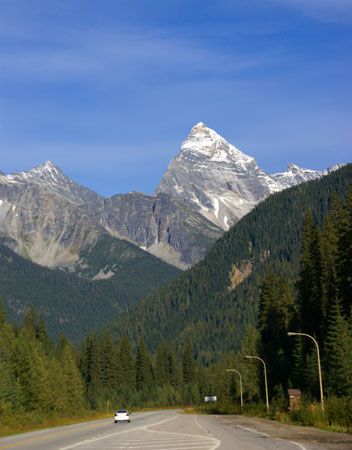
U-shaped valleys, or glacial troughs, are characteristic features of mountain glaciation. When a glacier moves through a pre-existing stream valley, it erodes the landscape uniformly, deepening and widening the floor to create a catenary, or U-shaped, cross-section. This shape provides the least frictional resistance to the moving ice. Unlike river valleys, these troughs often feature straighter, smoother paths and can have nearly vertical walls.15
How do glaciers contribute to the creation of U-shaped valleys?
Glaciers transform V-shaped stream valleys into U-shaped valleys through a process of uniform, large-scale erosion. While rivers typically erode a narrow line along the base of a valley, a glacier occupies a much larger portion of the valley’s cross section, allowing it to reshape the landscape more drastically.17
The formation of a U-shaped valley involves several key mechanisms:
- Preferential Erosion: Glaciers remove loose debris from the valley floor and walls, then focus their energy on eroding the bedrock along the base and lower sidewalls. This process widens and deepens the valley floor to create a characteristic parabolic or U-shaped profile.17
- Frictional Resistance: The U-shape is the form that provides the least frictional resistance to the movement of the glacier, which has significantly higher viscosity and mass than a river.1
- Abrasive Tools: Glaciers act like massive sheets of sandpaper. They incorporate rock debris—ranging from fine particles to large boulders—into their base. This debris acts as a tool, allowing the glacier to abrade, polish, and gouge the bedrock as it moves.78
- Plucking: Glaciers also remove large chunks of rock from the valley bed through plucking, which further contributes to the deepening and widening of the trough.78
Because the glacier’s course is less affected by minor obstacles than a river, the resulting valley is typically straighter and smoother, often featuring nearly vertical walls.17
What are some famous examples of valleys around the world?
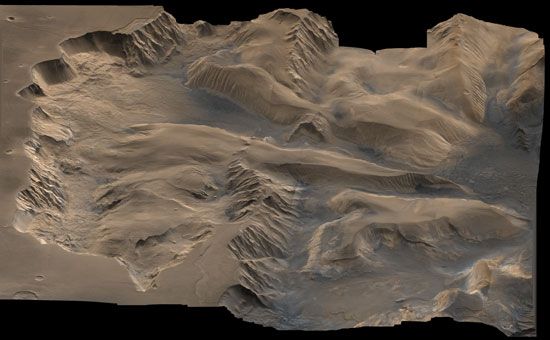
Valleys are diverse geological features shaped by rivers, glaciers, and tectonic activity. Here are some of the most famous examples around the world:
River-Carved Canyons and Valleys
- Grand Canyon: Located in northern Arizona, this is perhaps the world’s most famous canyon. It was carved by the Colorado River as it incised into the Colorado Plateau, reaching depths of about 1.6 km (1 mile).1011
- Kāli Gandaki Valley: Situated in Nepal between the Himalayan peaks of Dhaulāgiri and Annapūrna, this is considered the world’s deepest subaerial valley, with a total relief of six kilometers (four miles).10
Glacial Valleys
- Yosemite Valley: Located in California’s Sierra Nevada, this iconic U-shaped valley was sculpted by glaciation. It is famous for its sheer granite walls, such as El Capitan, and its spectacular waterfalls, including Yosemite Falls.121
- Lauterbrunnen Valley: Found in the Bernese Alps of Switzerland, this valley is renowned for the numerous waterfalls, such as Staubbach and Trümmelbach falls, that pour from hanging valleys high above the main valley floor.7
Tectonic Valleys
- Jordan Rift Valley: Occupied by the Jordan River and the Dead Sea, this is a classic example of a rift valley, where the depression was formed by tectonic faulting before the river occupied it.2
What are the different types of valleys in geology?
Valleys are geological features shaped by a variety of erosional and tectonic processes. While most valleys are created by the rivers that flow through them, others are the result of glacial activity or tectonic shifts.141
Erosional Valleys
- River Valleys: These are the most common type, where the valley’s shape and size are typically determined by the river’s erosive power. Over time, rivers evolve from narrow, deep forms—often characterized by canyons and gorges—to broader valleys as they reach their base level and expend more energy laterally.11511
- Glacial Valleys: These are formed when glaciers move through existing stream valleys. Because glaciers have high viscosity and mass, they erode the landscape uniformly, creating a characteristic U-shaped or catenary cross-section that offers the least frictional resistance to the ice.5
- Hanging Valleys: These occur when a main trunk glacier erodes its valley much more deeply than smaller tributary glaciers. When the ice retreats, the tributary valleys are left at a higher elevation, often resulting in waterfalls.25
Tectonic Valleys
- Rift Valleys: Unlike erosional valleys, these are formed by the subsidence of the Earth’s crust between normal faults. In these cases, the low topographic zone exists before a river occupies it. Notable examples include the East African Rift System, the Baikal Rift Valley, and the Rhine Rift Valley.141
Classification by Profile
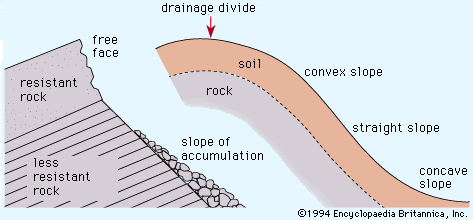
Geomorphologists also classify valleys based on their cross-sectional profiles, particularly in tropical regions:
Sources
- glacial valley — Encyclopædia Britannica
- river - Valleys and canyons — Encyclopædia Britannica
- river - Valley evolution — Encyclopædia Britannica
- U-valley — Merriam-Webster
- valley - Types of valleys — Encyclopædia Britannica
- valley - Valley cross profiles — Encyclopædia Britannica
- glacial landform - Cirques , tarns, U-shaped valleys, arêtes, and horns — Encyclopædia Britannica
- glacial landform - Small-scale features of glacial erosion — Encyclopædia Britannica
- glacial landform - Glacial erosion — Encyclopædia Britannica
- valley — Encyclopædia Britannica
- river - Formation of canyons and gorges — Encyclopædia Britannica
- Yosemite National Park — Encyclopædia Britannica
- Alps - Geology — Encyclopædia Britannica
- glacial landform - Hanging valleys — Encyclopædia Britannica
- rift valley — Encyclopædia Britannica
Published on · 4 min read