Putoran Mountains
The Putoran Mountains are a deeply dissected mountain range located on the northwestern edge of the Central Siberian Plateau in the Krasnoyarsk region of…
What is Putoran Mountains?
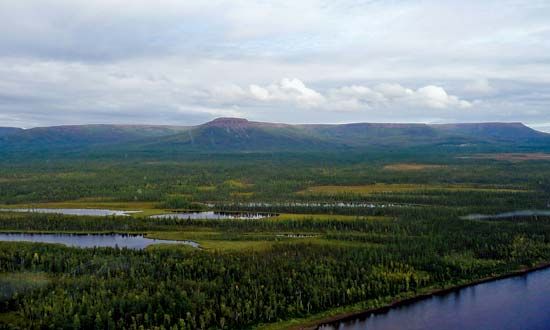
The Putoran Mountains are a deeply dissected mountain range located on the northwestern edge of the Central Siberian Plateau in the Krasnoyarsk region of central Russia.1
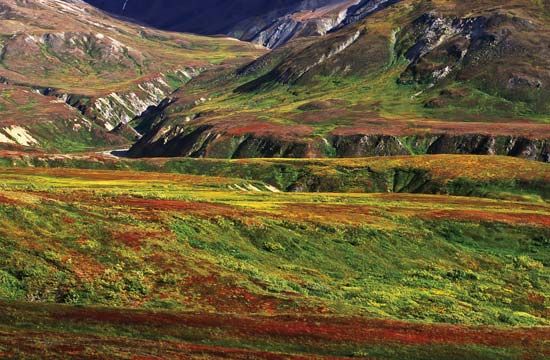
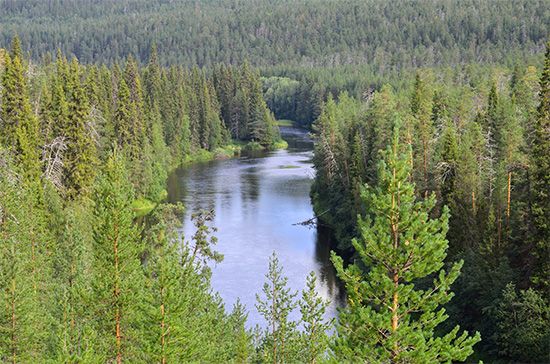
As the highest portion of the plateau, the range reaches an elevation of 5,581 feet (1,701 meters) at Mount Kamen. The landscape has been significantly shaped by volcanic activity and glaciation, resulting in a diverse environment:1
- Higher elevations: Characterized by mountain tundra.
- Sheltered valleys: Home to coniferous forests.
- Hydrology: Many valleys extending toward the Yenisey River and to the south are filled with large lakes.1
How did volcanic activity shape the Putoran Plateau?
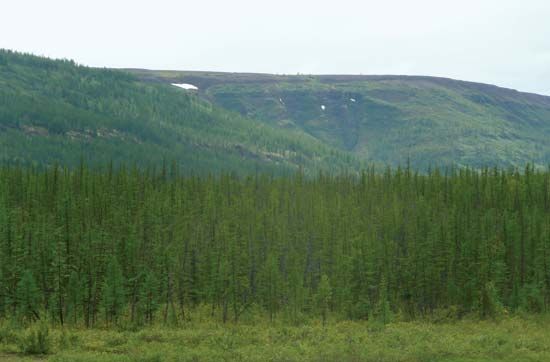
The Putoran Mountains were significantly shaped by extensive volcanic activity, which formed the foundation of the Central Siberian Plateau. This geological process created a high-altitude landscape that has since been deeply dissected by erosion and glaciation.1
The volcanic history of the region contributed to the formation of the plateau’s rugged topography, which reaches its peak at Mount Kamen (5,581 feet or 1,701 meters). Over time, this volcanic base was carved into the distinct, steep-sided valleys and plateaus seen today. Many of the valleys extending toward the Yenisey River and to the south were subsequently altered by water, becoming deep basins now filled with large lakes.1
What unique animals live in the Siberian mountain tundra?
The Siberian mountain tundra and the broader Arctic tundra regions are home to a variety of specialized animals adapted to extreme cold and seasonal shifts. Many of these species are circumpolar, meaning they are found across similar environments in Eurasia and North America.2
Key animal inhabitants include:
- Small Mammals: Lemmings are the most prominent, known for their high reproductive rates and for remaining active under the snow during winter. Other small mammals include the Arctic weasel and Arctic hare.23
- Large Herbivores: Reindeer (known as caribou in North America) are characteristic of the region, utilizing sharp hooves and antlers to forage for lichens and plants beneath the snow. Musk oxen are also found in some Arctic areas, possessing thick coats to survive severe climates.34
- Predators: The Arctic fox is a primary predator, often following the population cycles of lemmings. Other predators include Arctic wolves and polar bears, the latter of which frequently hunt on ice floes.23
- Birds: Snowy owls and ptarmigans are common, with many species exhibiting seasonal color changes to camouflage against the snow.34
Why are the valleys in this region filled with large lakes?
The valleys in the Putoran Mountains are filled with large lakes primarily due to the region’s history of glaciation. These deep, steep-sided valleys, which were carved by volcanic activity and subsequent glacial erosion, were later “drowned” to form the extensive lake systems observed today, particularly in the valleys running south and west toward the Yenisey River.1
While other geological processes—such as wind erosion, animal activity, or meteoritic impacts—can create lake basins in different parts of the world, the specific formation of the Putoran lakes is attributed to the dramatic landscape modification caused by the region’s glacial history.18
Sources
- Putoran Mountains — Encyclopædia Britannica
- Ural Mountains - Animal life — Encyclopædia Britannica
- Tundra - Animal life — Encyclopædia Britannica
- Tundra - Arctic mammals — Encyclopædia Britannica
- Russia - Tundra — Encyclopædia Britannica
- Central Siberian Plateau — Encyclopædia Britannica
- Asia - North and Central Asia — Encyclopædia Britannica
- lake - Basins formed by wind action , animal activity, and meteorites — Encyclopædia Britannica
Published on · 2 min read