Are Tigers Bigger Than Lions?
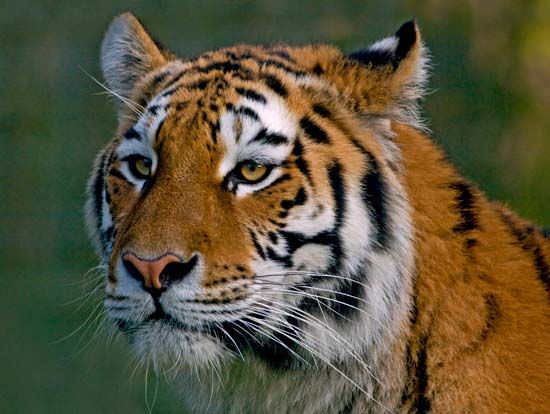
Yes, tigers are generally larger than lions, earning their status as the largest members of the cat family (Felidae).
Are tigers bigger than lions?
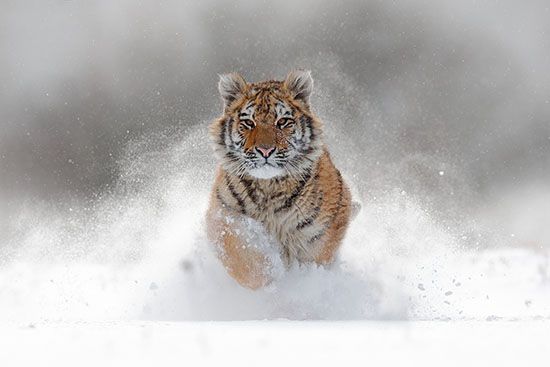
Yes, tigers are generally larger than lions, earning their status as the largest members of the cat family (Felidae).12
The Siberian tiger is the largest subspecies, capable of reaching up to 4 meters (13 feet) in total length and weighing as much as 300 kg (660 pounds). In comparison, a full-grown male lion typically measures 1.8 to 2.1 meters (6 to 7 feet) in length—excluding the tail—and weighs between 170 and 230 kg (370 to 500 pounds).123
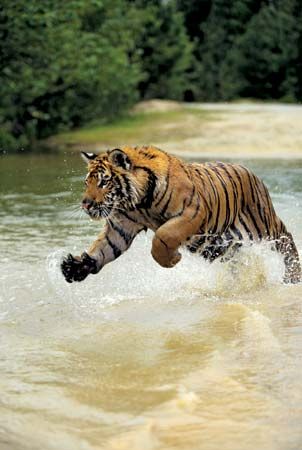
While tigers are overall larger, there is some overlap; for example, the Bengal tiger typically weighs between 160 and 230 kg, which is comparable to the weight range of lions. Evolutionary biologists suggest that tigers evolved to be larger as solitary hunters to take down prey alone, whereas lions developed social structures in prides that rely on cooperative hunting.1
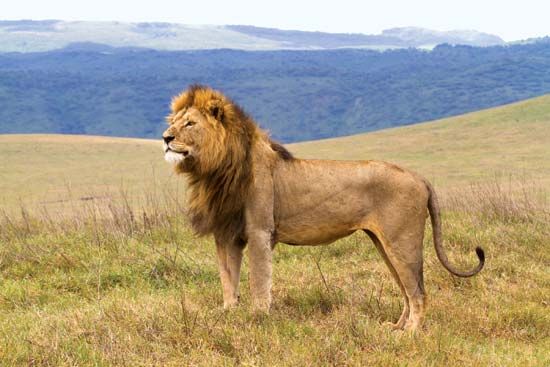
Why do lions live in social groups called prides while tigers are solitary?
Lions and tigers exhibit distinct social structures shaped by different evolutionary pressures.
Why Lions Form Prides
Lions are unique among cats because they live in social groups called prides. While the exact evolutionary origins of this behavior are debated, several factors make group life advantageous:
- Efficient Hunting: In areas where prey is abundant, groups of females can hunt more effectively and share meals, which may improve energy expenditure.4
- Defense: Living in a pride allows females to better defend their cubs against infanticidal males and protect their hunting territory from other females.4
- Competitive Advantage: Larger group sizes help coalitions of lions compete for and monopolize breeding opportunities.5
Why Tigers Are Solitary
In contrast, tigers have evolved as solitary hunters. This lifestyle is supported by several factors:
- Hunting Strategy: As solitary predators, tigers have adapted to take down large prey on their own, which may have influenced their larger individual size and strength.6
- Territorial Maintenance: By living alone, tigers minimize direct territorial conflict. They establish and maintain their space through vocalization, scent marking, and physical signs like clawing trees.1
- Resource Management: Because they often hunt alone, tigers frequently hide their kills from scavengers to ensure they have access to the carcass for multiple meals.1
What are the main differences between the various tiger subspecies?
Tigers are classified into several subspecies, primarily distinguished by their geographic range, size, and physical adaptations to their specific environments. While most classifications recognize six living subspecies, some experts suggest alternative groupings based on genetic or regional traits.2
Major Living Subspecies
- Siberian Tiger (P. tigris altaica): The largest of all tigers, it inhabits the cold forests of far-eastern Russia and northeastern China. It is adapted to harsh winters with thick, coarse fur and a layer of body fat for insulation. Its coat is a paler, muted orange compared to other subspecies.289
- Bengal Tiger (P. tigris tigris): The most numerous subspecies, accounting for about half of the total tiger population. They are native to the hot, humid forests and wetlands of India, Bangladesh, Bhutan, and Nepal. Their slightly smaller size compared to Siberian tigers is an advantage for navigating dense vegetation.28
- Indo-Chinese (P. tigris corbetti), Malayan (P. tigris jacksoni), Sumatran (P. tigris sumatrae), and South China (P. tigris amoyensis) tigers: These subspecies generally exhibit a bright reddish-tan coat with dark, vertical stripes. They are typically smaller than their northern counterparts.2
Extinct Subspecies
Within the last century, three subspecies have succumbed to extinction: the Caspian tiger of Central Asia, the Javan tiger, and the Bali tiger.2
How does a lion’s mane help it survive in the wild?
The male lion’s mane is a distinctive physical trait that plays a significant role in his survival and social interactions. While the appearance of the mane varies—ranging from a light fringe to a full, shaggy coat covering the head, neck, and shoulders—it serves two primary evolutionary functions.3
First, the mane enhances the male’s perceived size, making him appear larger and more imposing to rivals. This visual intimidation is a crucial tool for defending territory and maintaining status within a pride. Second, the mane is an important signal for reproductive success, as it helps impress prospective mates. By signaling strength and health, the mane assists males in securing their position and passing on their genes.310
It is important to note that the term “lion’s mane” also refers to a type of edible mushroom, which is entirely distinct from the biological feature found on male lions.11
Sources
- Are tigers bigger than lions? — Encyclopædia Britannica
- tiger — Encyclopædia Britannica
- lion - General characteristics — Encyclopædia Britannica
- lion - Prides — Encyclopædia Britannica
- tiger - Natural history — Encyclopædia Britannica
- Animal social behavior - Social interactions involving movement — Encyclopædia Britannica
- liger — Encyclopædia Britannica
- Which is bigger: A Siberian tiger or a Bengal tiger? — Encyclopædia Britannica
- Siberian tiger — Encyclopædia Britannica
- lion: Top Questions — Encyclopædia Britannica
- lion's mane — Merriam-Webster
Published on · 3 min read