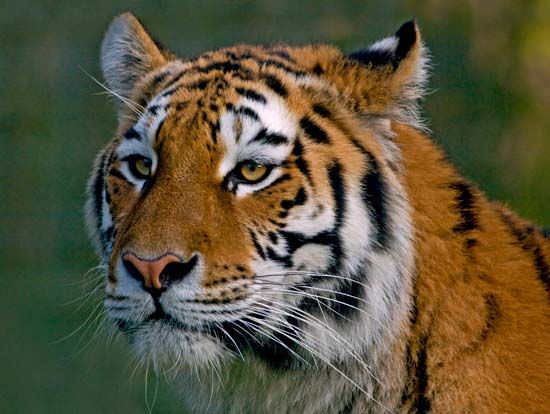
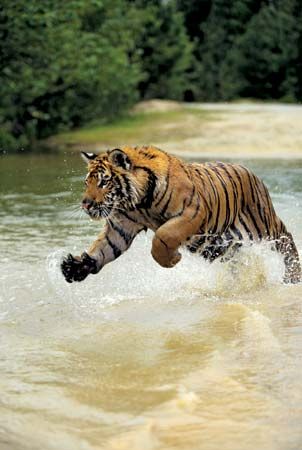
Which Is Bigger: A Siberian Tiger or a Bengal Tiger?
The Siberian tiger is larger than the Bengal tiger.
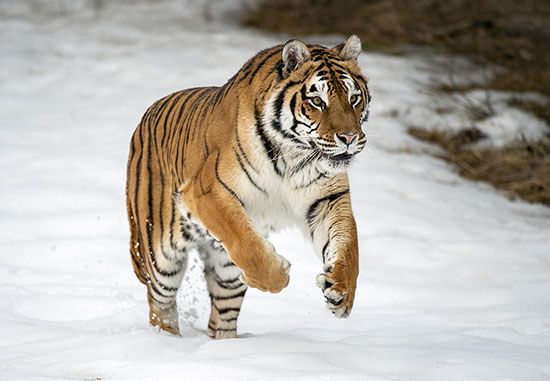
Which is bigger: A Siberian tiger or a Bengal tiger?
The Siberian tiger is larger than the Bengal tiger.1
While sizes can vary, the Siberian tiger—also known as the Amur tiger—can reach lengths of up to 3.7 meters (12.1 feet) and weigh as much as 423 kg (about 933 pounds). In comparison, the Bengal tiger typically grows to about 3.2 meters (10.5 feet) in length and weighs approximately 295 kg (about 650 pounds).1
These physical differences are largely due to environmental adaptations. The Siberian tiger’s larger size and thick fur help it conserve heat in the cold-climate forests of far-eastern Russia and northeastern China. Conversely, the smaller stature of the Bengal tiger is more advantageous for navigating the dense vegetation and humid environments found in India, Bangladesh, Bhutan, and Nepal. Both subspecies are currently endangered due to threats like habitat loss and poaching.1
How does the Siberian tiger’s thick fur help it survive in cold climates?
The Siberian tiger’s thick fur is a vital adaptation that allows the subspecies to survive in the harsh, cold-climate taiga and boreal forests of far-eastern Russia and northeastern China.22
This dense, coarse coat functions primarily as insulation, helping the tiger conserve body heat and providing a necessary barrier against the snow and freezing temperatures of its environment. In addition to its thick fur, the Siberian tiger is supported by a layer of body fat that can reach up to 4 cm (about 1.5 inches) in thickness, which further assists in maintaining core body temperature during long, severe winters. Together, these physical traits ensure the animal can thrive in a biome characterized by extreme cold and significant annual precipitation.32
Why are Bengal tigers better suited for hot, humid environments?
The Bengal tiger is well-suited for hot, humid environments primarily due to its physical stature and behavioral adaptations.
Unlike the larger, thicker-furred Siberian tiger, which requires insulation to survive in freezing climates, the Bengal tiger is smaller and stockier. This smaller body size is more advantageous for navigating the dense vegetation, swamps, and humid forests found in regions like India, Bangladesh, Bhutan, and Nepal.25
In specific areas such as the Sundarbans, these tigers have developed a unique, semiaquatic lifestyle to thrive in a landscape defined by tidal creeks, mudflats, and mangrove forests. Their ability to navigate this complex, water-logged terrain allows them to hunt both terrestrial prey and aquatic fauna, such as fish and turtles, demonstrating a remarkable evolutionary flexibility that suits their tropical habitat.67
What are the main reasons why both tiger subspecies are endangered?
Both the Siberian and Bengal tiger subspecies face significant threats to their survival, primarily driven by human activity. The main reasons for their endangered status include:
- Poaching: Despite being legally protected, tigers are illegally hunted for their skins, bones, claws, and other body parts. These are highly valued for display, as talismans, or for use in traditional medicines and potions, fueling a persistent underground trade.96
- Habitat Loss and Degradation: Rapidly growing human populations have led to the clearing of forests and grasslands for agriculture, roads, and infrastructure. This reduces both the quantity and quality of the tiger’s natural habitat.92
- Prey Depletion: As natural habitats shrink, the populations of the tiger’s primary prey also decline. This forces tigers to rely more on livestock, which leads to increased human-tiger conflict and subsequent retaliation from local communities.9
- Genetic Isolation: For subspecies like the Siberian tiger, populations are often fragmented and disconnected. This prevents natural breeding between groups, increasing the risk of inbreeding and reducing the genetic diversity necessary for long-term resilience.3
Sources
- Are tigers bigger than lions? — Encyclopædia Britannica
- Which is bigger: A Siberian tiger or a Bengal tiger? — Encyclopædia Britannica
- Siberian tiger — Encyclopædia Britannica
- Why are polar bears white? — Encyclopædia Britannica
- Sundarbans National Park — Encyclopædia Britannica
- Bengal tiger — Encyclopædia Britannica
- Sundarbans National Park: Top Questions — Encyclopædia Britannica
- conservation - Body size and related reproductive characteristics — Encyclopædia Britannica
- tiger - Tigers and humans — Encyclopædia Britannica
- poaching — Encyclopædia Britannica
Published on · 3 min read