Snowy Owl
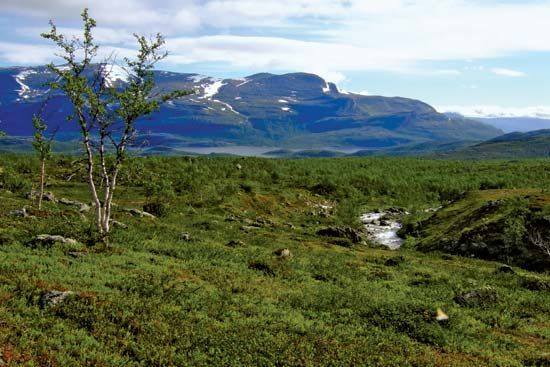
The snowy owl (Nyctea scandiaca or Bubo scandiacus) is a large, diurnal bird of prey belonging to the family Strigidae. Native to the Arctic tundra, these…
What is Snowy owl?
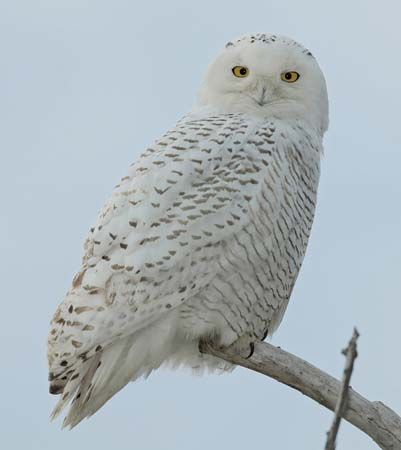
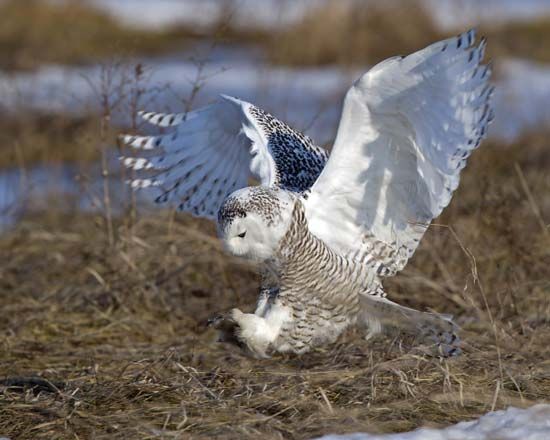
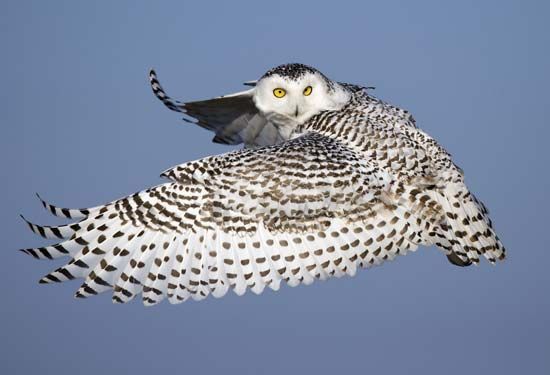
The snowy owl (Nyctea scandiaca or Bubo scandiacus) is a large, diurnal bird of prey belonging to the family Strigidae. Native to the Arctic tundra, these birds are characterized by their round heads, lack of ear tufts, and broad wings, typically reaching about 60 cm (2 feet) in length. Their plumage ranges from nearly pure white to white with brownish spots or bars.12
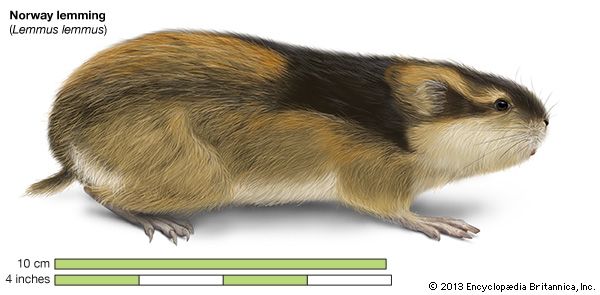
Unlike many other owl species that nest in trees or cavities, snowy owls are ground-nesters. Their reproductive success is closely tied to the availability of prey, particularly lemmings; in years of high lemming abundance, they exhibit higher nesting densities and can lay clutches of up to 12 eggs. They primarily hunt small mammals and birds, and while they reside in the Arctic, they may wander southward into North America, Europe, and Asia during the winter months.132
How do snowy owls survive the extreme cold of the Arctic?
Snowy owls are well-adapted to the extreme cold of the Arctic through several specialized physical traits. Their most significant adaptation is their plumage, which is soft, dense, and loose. This thick layer of down provides essential insulation against freezing temperatures.1
Additionally, snowy owls exhibit size-related adaptations common to northern species; individuals in the far north are often larger than their southern counterparts, with some northern birds weighing about twice as much as those in warmer regions. This increased body size is an evolutionary advantage, as it results in less surface area relative to volume, which helps minimize heat loss to the environment.13
Beyond these physical defenses, their survival is also supported by their ability to migrate. When their primary food source, lemmings, becomes scarce, snowy owls move southward into the coniferous forest belt to find more abundant prey.3
Why is the population of lemmings so important to snowy owls?
The population of lemmings is critical to the snowy owl because it directly dictates the owls’ reproductive success and survival strategies in the Arctic tundra.
Because snowy owls are predators that rely heavily on these small mammals, their own population dynamics closely follow the cyclical rise and fall of lemming numbers. When lemmings are abundant, snowy owls exhibit several key advantages:3
- Higher Nesting Densities: Owls are more likely to settle and breed in areas where prey is plentiful.5
- Increased Fecundity: They nest earlier and lay larger clutches, sometimes producing up to 12 eggs.5
- Higher Survival Rates: With more food available, fledging rates increase significantly.5
Conversely, when lemming populations are scarce, the owls face inadequate food supplies to support large broods. In such cases, younger nestlings may starve, while the more aggressive older ones survive. If food remains insufficient, the owls will simply migrate southward into the coniferous forest belt to seek alternative prey.53
What are some other types of owls that live in cold climates?
Beyond the snowy owl, which is well-known for its life in the Arctic tundra, other owl species have adapted to survive in cold, northern climates:
- Boreal owl (Aegolius funereus): Also known as Richardson’s owl, this small species is primarily found in the forested regions and bogs of Canada and the northern United States. It is characterized by a brown back with white spots and a distinct whitish facial disk bordered in dark feathers.1
- Northern hawk owl (Surnia ulula): This species inhabits northern Europe, northern Asia, and Canada. Unlike many other owls that are strictly nocturnal, the northern hawk owl is diurnal, meaning it hunts during the day. It is physically distinct with a long tail and short, pointed wings that resemble those of a hawk.6
Like the snowy owl, these species benefit from the general physiological adaptations of northern owls, such as soft, dense plumage and a thick layer of down that provides essential insulation against freezing temperatures.2
Sources
- Snowy owl — Encyclopædia Britannica
- snowy owl — Merriam-Webster
- Owl - Reproduction and development — Encyclopædia Britannica
- Owl - Form and function — Encyclopædia Britannica
- Tundra - Arctic mammals — Encyclopædia Britannica
- boreal owl — Merriam-Webster
- Hawk owl — Encyclopædia Britannica
Published on · 3 min read