Begonia
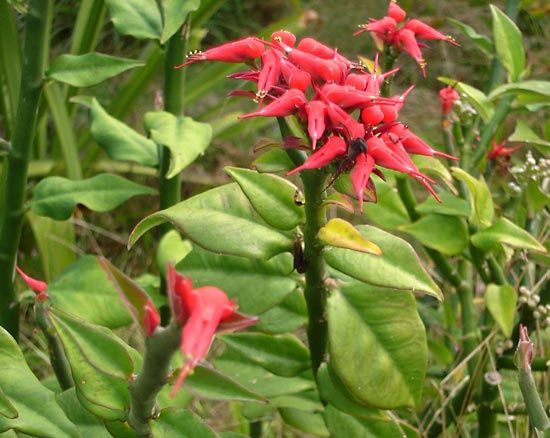
Begonias belong to the family Begoniaceae, which is part of the order Cucurbitales.
How do begonias fit into the larger family of plants they belong to?
Begonias belong to the family Begoniaceae, which is part of the order Cucurbitales1.1
Within the family Begoniaceae, there are only two genera: Hillebrandia, which contains a single species endemic to Hawaii, and Begonia, which comprises more than 2,000 species of succulent plants. The order Cucurbitales is a diverse group that also includes the Cucurbitaceae family—home to squashes, gourds, and cucumbers—along with five other smaller families.231
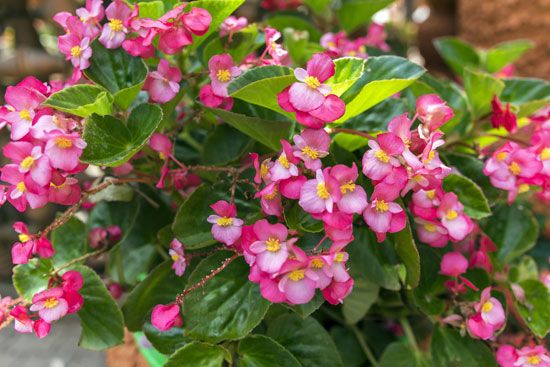
Begonias are characterized by their often asymmetrical leaves and monoecious flowers, meaning both male and female flowers develop on the same plant. While the family is primarily distributed throughout tropical and warm temperate regions, the genus Begonia is widely cultivated for its ornamental value, resulting in over 10,000 hybrid varieties categorized by their root structures: fibrous-rooted, rhizomatous, or tuberous-rooted.23
What are the most popular types of begonias for gardening and houseplants?
With over 10,000 cultivated varieties, begonias are categorized into three primary groups based on their root structures, each offering popular choices for gardening and indoor cultivation.24
Fibrous-Rooted Begonias
These are frequently used as bedding plants or indoor subjects.2
- Wax (Bedding) Begonias: Derived from B. semperflorens, these are the most common summer bedding plants.24
- Cane-Stemmed Begonias: Often called “angelwing” begonias, these are known for their tall, distinctive stems.2
- Hairy Begonias: Valued for their unique, feltlike leaves.2
Rhizomatous Begonias
These are primarily prized for their foliage rather than their flowers.24
- Rex Begonias: Belonging to the Rex-Cultorum group, these are highly popular houseplants known for their brightly colored, patterned, and heavily veined leaves.25
Tuberous-Rooted Begonias
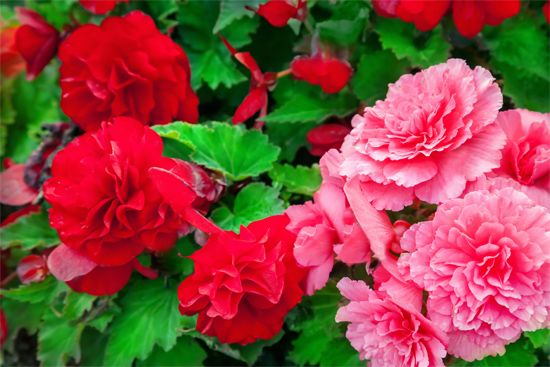
These are favored for their large, vibrant flowers.24
- Tuberhybrida Group: Commonly grown outdoors from early summer until the first frost. They include various forms such as camellia-flowered, hanging-basket types (pendula), and carnation-flowered (fimbriata plena) varieties.2
- Greenhouse Begonias: These bloom during the winter and include the Cheimantha and Elatior groups.2
What are the different growth habits of begonias (e.g., fibrous, rhizomatous, tuberous)?
Begonias are horticulturally classified into three primary groups based on their root structures and growth habits, which dictate how they are cultivated and used in gardens or as houseplants.27
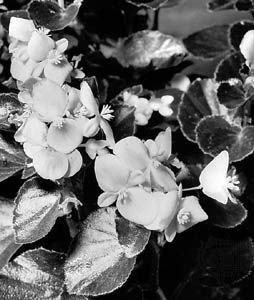
- Fibrous-rooted begonias: These plants possess a mass of fine, fibrous roots rather than specialized storage organs. This group includes the popular wax (or bedding) begonias (B. semperflorens), which are frequently used for summer bedding; cane-stemmed varieties, known for their tall, upright growth; and hairy begonias, which are distinguished by their feltlike leaves.527
- Rhizomatous begonias: These are characterized by their prominent, creeping, or horizontal stems known as rhizomes. They are primarily valued for their diverse, brightly colored, and patterned foliage, with the Rex-Cultorum group being the most notable example.872
- Tuberous-rooted begonias: These plants develop thickened, tuberous roots used for energy storage. They are typically divided into those grown outdoors for their large, vibrant flowers (such as the Tuberhybrida group) and those grown in greenhouses for winter blooming, such as the Cheimantha and Elatior groups.27
What are the defining characteristics of begonia plants?
Begonias are a diverse genus of over 2,000 species of mostly succulent plants within the Begoniaceae family, native to tropical and subtropical regions.21
Key Physical Characteristics
- Leaves: Typically alternate, simple, and characteristically asymmetrical, with one side of the leaf often significantly larger than the other.21
- Flowers: Begonias are monoecious, meaning male and female flowers develop on the same plant. The flowers feature four-colored tepals (petals and sepals combined) arranged in two pairs of different sizes. Colors range from pink, red, and yellow to white.12
- Ovaries and Fruit: A defining feature of the genus is the presence of three wings on the ovaries of female flowers. The fruits are typically capsules that also often feature well-developed wings and contain numerous minute seeds.21
Growth and Cultivation
Most begonias are tender plants that require protection from strong sunlight and are intolerant of dry conditions. They are generally categorized by their root structures into fibrous-rooted, rhizomatous, or tuberous-rooted groups, which dictate their specific growth habits and ornamental uses.21
Sources
- Begoniaceae — Encyclopædia Britannica
- begonia — Encyclopædia Britannica
- Cucurbitales — Encyclopædia Britannica
- rex begonia — Merriam-Webster
- Cucurbitales - Begoniaceae — Encyclopædia Britannica
- houseplant — Encyclopædia Britannica
- rhizomatous begonia — Merriam-Webster
- fibrous-rooted begonia — Merriam-Webster
Published on · 3 min read