Devil’s Backbone
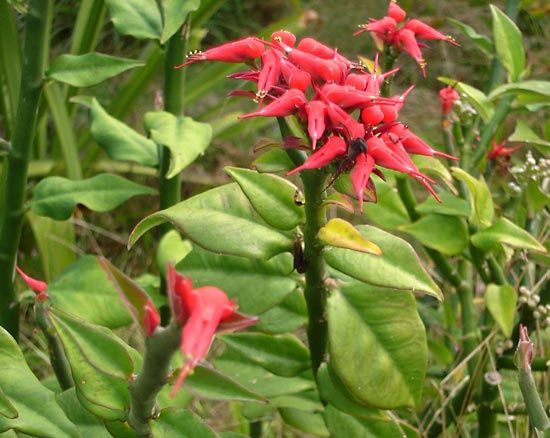
The term "devil’s backbone" most commonly refers to Euphorbia tithymaloides, a succulent plant belonging to the spurge family (Euphorbiaceae).
What is Devil’s backbone?
The term “devil’s backbone” most commonly refers to Euphorbia tithymaloides, a succulent plant belonging to the spurge family (Euphorbiaceae)1.
Native to regions ranging from Florida to Venezuela, the plant earns its name from the distinctive zigzag pattern of its stems. It is also frequently called a redbird cactus due to the shape of the red, birdlike bracts that appear beneath its flowers, though it is not a true cactus. The plant typically grows to a height of 1.2 to 1.8 metres and is characterized by stems that exude a poisonous, milky latex when broken. Some varieties are noted for their variegated or reddish leaves.1
It is important to note that while the term is sometimes used colloquially to describe various geological formations, the primary botanical definition is the one described above.12
What makes a plant a succulent?
A succulent is defined by its thick, fleshy tissues that have evolved specifically for water storage. These plants are typically native to deserts or semiarid regions and are found in more than 60 different plant families.3
The primary characteristics that define a succulent include:
- Water Storage: Depending on the species, water is stored in either the stem (as seen in cacti) or the leaves (as seen in agaves and Aloe).34
- Root Systems: Most succulents possess broad or deep root systems to efficiently collect moisture.3
- Metabolic Adaptations: Many succulents utilize crassulacean acid metabolism, a specialized form of photosynthesis. Their stomata remain closed during the hot, dry day to prevent transpiration and open at night to take in carbon dioxide.3
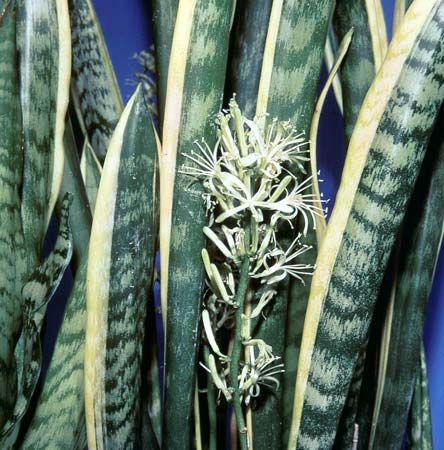
While many people associate succulents primarily with cacti, the group is highly diverse, including popular houseplants like Crassula (jade plant) and Sansevieria (snake plant).34
Why is the milky latex in some plants poisonous?
The milky latex found in many plants serves as a vital defense mechanism against herbivory. Because plants are rooted in place, they cannot flee from predators; instead, they have evolved various strategies to protect their tissues from being consumed by insects, mammals, and other threats.67
Latex functions as a chemical and physical deterrent in several ways:
- Entrapment: The sticky, viscous nature of latex can physically entrap small insects, preventing them from feeding on the plant.6
- Chemical Toxicity: Latex is a complex mixture that often contains poisonous compounds, such as alkaloids, which can sicken or kill herbivores that attempt to consume the plant.87
- Excretory Reservoir: Beyond defense, these branched tubes act as a reservoir for the plant to store and conduct various substances, including metabolic byproducts.8
By producing these defensive substances, plants reduce the likelihood of being eaten, particularly in their vulnerable, nutrient-rich young tissues. While some specialized herbivores have evolved to tolerate or even sequester these toxins for their own protection, for most organisms, the latex serves as a potent warning and barrier against consumption.67
What are some other common house plants that are not actually cacti?
While cacti are a popular group of houseplants, they are distinct from other succulents and foliage plants due to the presence of areoles—small, cushionlike structures that produce spines or hairs. Many other common houseplants are often mistaken for cacti but belong to entirely different families.4
Succulents (Non-Cacti)
These plants share the ability to store water in their tissues but lack the defining features of the Cactaceae family:
- Aloe: Famous for its medicinal properties, this leaf succulent forms rosettes of fleshy, pointed leaves.9
- Crassula: Commonly known as the jade plant, it is a popular, durable succulent.9
- Sansevieria: Often called snake plants, these are prized for their ability to tolerate neglect and low-light conditions.9
- Echeveria: Known as “hen and chickens,” these form attractive, tight rosettes.9
- Euphorbia: Some species have column-like stems that mimic the appearance of cacti.9
Foliage Plants
These plants are grown primarily for their decorative leaves rather than water-storage adaptations:
- Philodendrons: Tropical climbers with leathery, often heart-shaped leaves.10
- Peace lilies: Vigorous herbs that produce white, flowerlike spathes.10
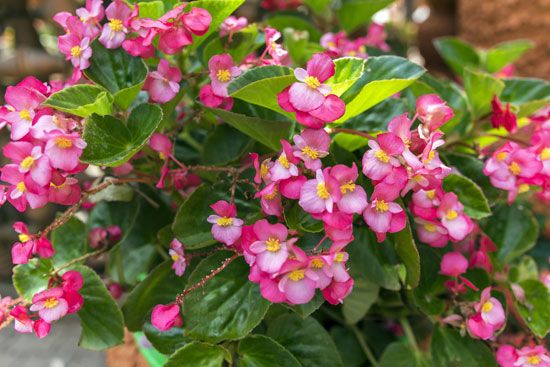
- Begonias: Favored for their highly decorative and often patterned foliage.10
- Prayer plants: Known for folding their leaves at night.10
Sources
- devil’s backbone — Encyclopædia Britannica
- Caprock Escarpment — Encyclopædia Britannica
- Succulent — Encyclopædia Britannica
- houseplant - Succulents — Encyclopædia Britannica
- succulent — Merriam-Webster
- latex — Encyclopædia Britannica
- Eating the rainforest — Encyclopædia Britannica
- Botanical Barbarity: 9 Plant Defense Mechanisms — Encyclopædia Britannica
- houseplant - Foliage plants — Encyclopædia Britannica
- houseplant — Encyclopædia Britannica
- cactus — Encyclopædia Britannica
Published on · 3 min read