Blue Nile River
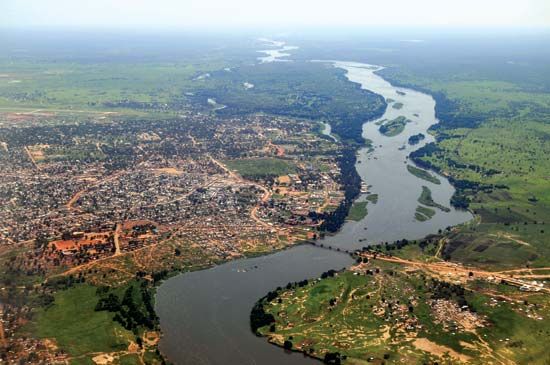
The Blue Nile River is a vital geographical and economic artery for both Ethiopia and Sudan. Originating near Lake Tana in the Ethiopian highlands, it…
What is the historical and cultural significance of the Blue Nile for Ethiopia and Sudan?
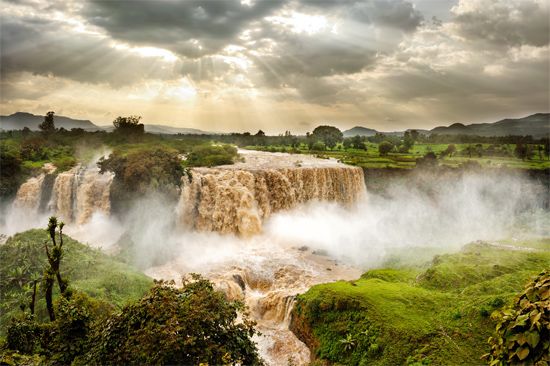
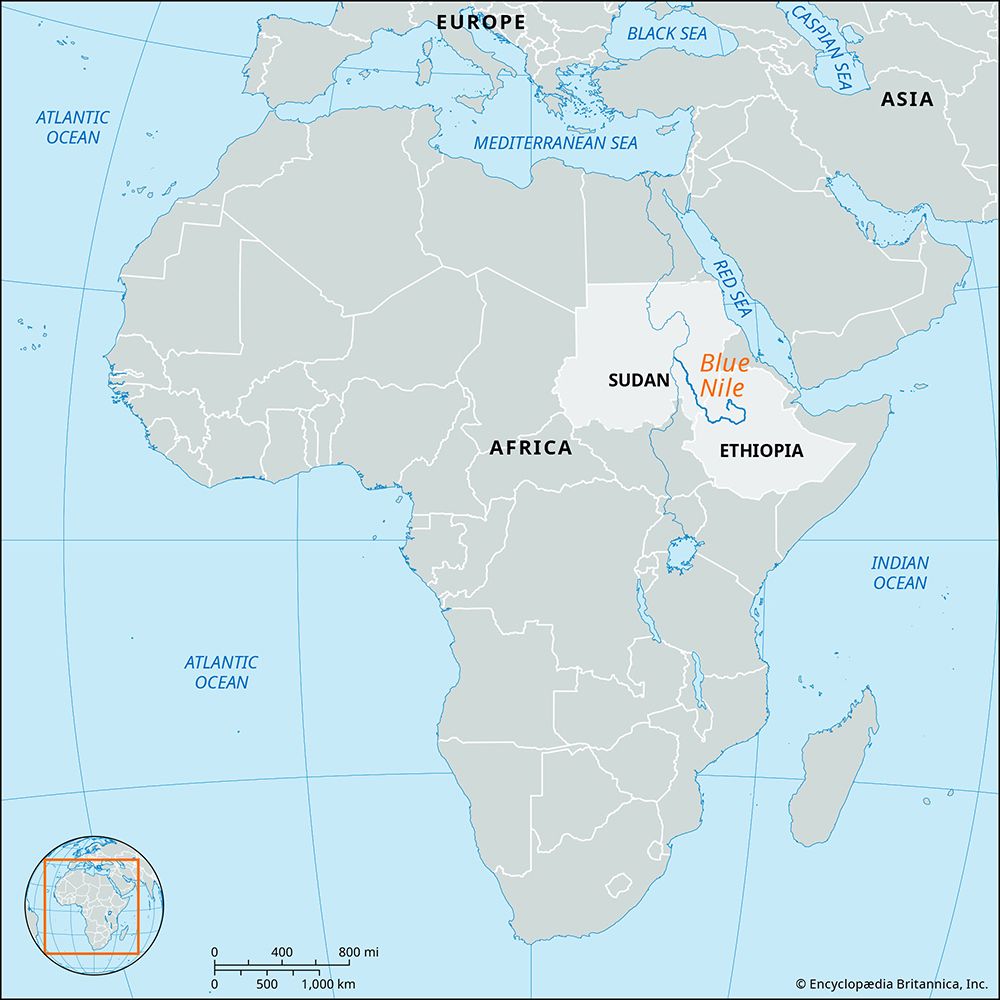
The Blue Nile River is a vital geographical and economic artery for both Ethiopia and Sudan. Originating near Lake Tana in the Ethiopian highlands, it provides nearly 70 percent of the Nile River’s floodwater at Khartoum, where it joins the White Nile.12
Economic and Developmental Significance
- Ethiopia: The river is a cornerstone of the nation’s energy strategy. The Grand Ethiopian Renaissance Dam (GERD), inaugurated in 2025, serves as a massive source of hydroelectric power, intended to expand electricity access domestically and support energy exports.13
- Sudan: The river is essential for agriculture. Dams such as the Sannar and Al-Ruṣayriṣ irrigate approximately 1,000,000 acres in the Al-Jazīrah (Gezira) plain, a critical region for the country’s food production.1
Cultural and Historical Context
Historically, the river has been a subject of fascination, with explorers like James Bruce seeking its source in the 18th century. Known as the Abay in Amharic, it remains deeply intertwined with the landscapes and livelihoods of the Ethiopian plateau, while its sediment-rich waters have historically defined the fertility of the Nile basin.412
What are the main challenges in managing the Blue Nile as a shared water resource between Ethiopia, Sudan, and Egypt?
Managing the Blue Nile as a shared resource involves complex geopolitical and hydrological challenges, primarily centered on the competing needs of Ethiopia, Sudan, and Egypt for water security, energy, and agricultural stability.
Key Challenges
- Upstream Development vs. Downstream Security: The completion of the Grand Ethiopian Renaissance Dam (GERD) in 2025 has created significant tension. Ethiopia views the dam as essential for generating hydroelectric power to support its development. Conversely, Egypt and Sudan have expressed concerns that the dam could negatively impact their downstream water supplies, particularly during periods of drought.6
- Historical Allocation Agreements: Water usage has historically been governed by agreements, such as the 1959 treaty between Egypt and Sudan, which apportioned Nile waters in a three-to-one ratio. These legacy frameworks are increasingly strained by the changing hydrological landscape and the emergence of new infrastructure projects that alter the river’s natural flow.6
- Hydrological Variability: The Nile’s regime is highly sensitive to climate-driven fluctuations. While the Blue Nile provides nearly 70 percent of the floodwater reaching Khartoum, its flow is seasonal and unpredictable. Managing this variability requires balancing the storage needs of upstream reservoirs with the necessity of maintaining a steady, reliable flow for downstream irrigation and population centers.67
- Environmental and Economic Trade-offs: Large-scale dam projects, while providing energy and flood control, face criticism regarding their environmental impact, including the loss of nutrient-rich silt, increased soil salinity, and potential water loss through evaporation in reservoirs like Lake Nasser.6
We could dive deeper into the specific technical agreements surrounding the Nile or explore how climate change is projected to affect future water availability in the basin.
What major dams and hydroelectric projects have been built on the Blue Nile, and how have they affected the river and surrounding areas?
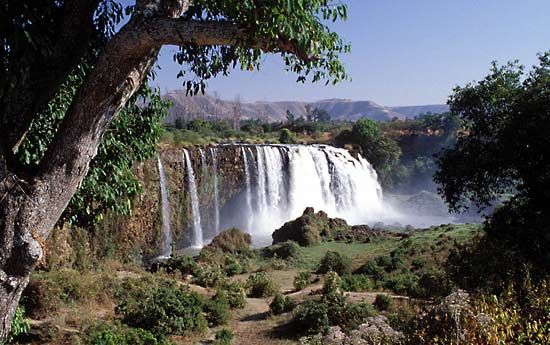
Several major dams have been constructed along the Blue Nile to harness its water for irrigation and hydroelectric power generation. These projects have significantly altered the river’s flow and the surrounding landscapes.
Major Dams on the Blue Nile
- Grand Ethiopian Renaissance Dam (GERD): Completed in 2025 in Ethiopia, this massive project has an installed capacity of 5,150 megawatts. Its construction required the diversion of the Blue Nile in 2013 and has been a focal point of regional controversy due to concerns regarding downstream water security in Sudan and Egypt.61
- Sennar Dam: Located in Sudan, this dam provides essential irrigation for the Al-Jazīrah plain, particularly during the low-water season, and also generates hydroelectric power.61
- Al-Ruṣayriṣ Dam: Also situated in Sudan, this dam was completed in 1966. Along with the Sennar Dam, it enables Sudan to maximize its water allocation for agricultural use, irrigating approximately 1,000,000 acres.61
These projects have transformed the river into a managed system, providing critical energy and agricultural stability. However, they have also sparked ongoing debates regarding the equitable distribution of water and the potential environmental impacts on downstream ecosystems.6
How has the Blue Nile influenced the development of ancient and modern civilizations in Northeast Africa?
The Blue Nile has been a fundamental driver of civilization in Northeast Africa, primarily by acting as the lifeblood of the Nile River system. By providing nearly 70 percent of the floodwater that reaches Khartoum, the Blue Nile historically dictated the agricultural cycles and survival of populations along the riverbanks.51
Influence on Ancient Civilizations
The annual flooding of the Nile, fueled by heavy tropical rains in the Ethiopian Plateau, was a mystery to ancient societies. This flood deposited nutrient-rich silt across the floodplain in Egypt, maintaining soil fertility for millennia despite intensive farming. Ancient Egyptians developed sophisticated methods to monitor these cycles, such as nilometers, to predict harvests and manage potential food shortages. The river’s black sediment was so central to life that it gave the land its oldest name, Kem or Kemi, meaning “black”.11011
Modern Development and Civilization
In the modern era, the Blue Nile remains essential for regional development:
- Agriculture: The river supports large-scale irrigation projects, such as the Al-Jazīrah plain in Sudan, which relies on the Sennar and Al-Ruṣayriṣ dams.5
- Energy: The Grand Ethiopian Renaissance Dam represents a shift toward utilizing the river for hydroelectric power, which is critical for modern economic growth.5
- Transport: While modern infrastructure has reduced reliance on the river, it remains a vital waterway for transport, particularly in regions where motor transport is seasonally unfeasible.117
Sources
- Blue Nile River — Encyclopædia Britannica
- Blue Nile — Merriam-Webster
- Ethiopia - Resources and power — Encyclopædia Britannica
- Lake Tana — Encyclopædia Britannica
- Nile River — Encyclopædia Britannica
- Nile River - Dams and reservoirs — Encyclopædia Britannica
- Nile River - Climate and hydrology — Encyclopædia Britannica
- Sudan - Mechanized agriculture — Encyclopædia Britannica
- Egypt - Agriculture and fishing — Encyclopædia Britannica
- Nile River - Navigation — Encyclopædia Britannica
- Dinder River — Encyclopædia Britannica
- Nile River - People — Encyclopædia Britannica
Published on · 4 min read