Carpenters Ridge
Carpenters Ridge is a topographic feature situated in the Indian Ocean near the mouth of the Bay of Bengal. It serves as the northern terminus of the…
What is Carpenters Ridge?
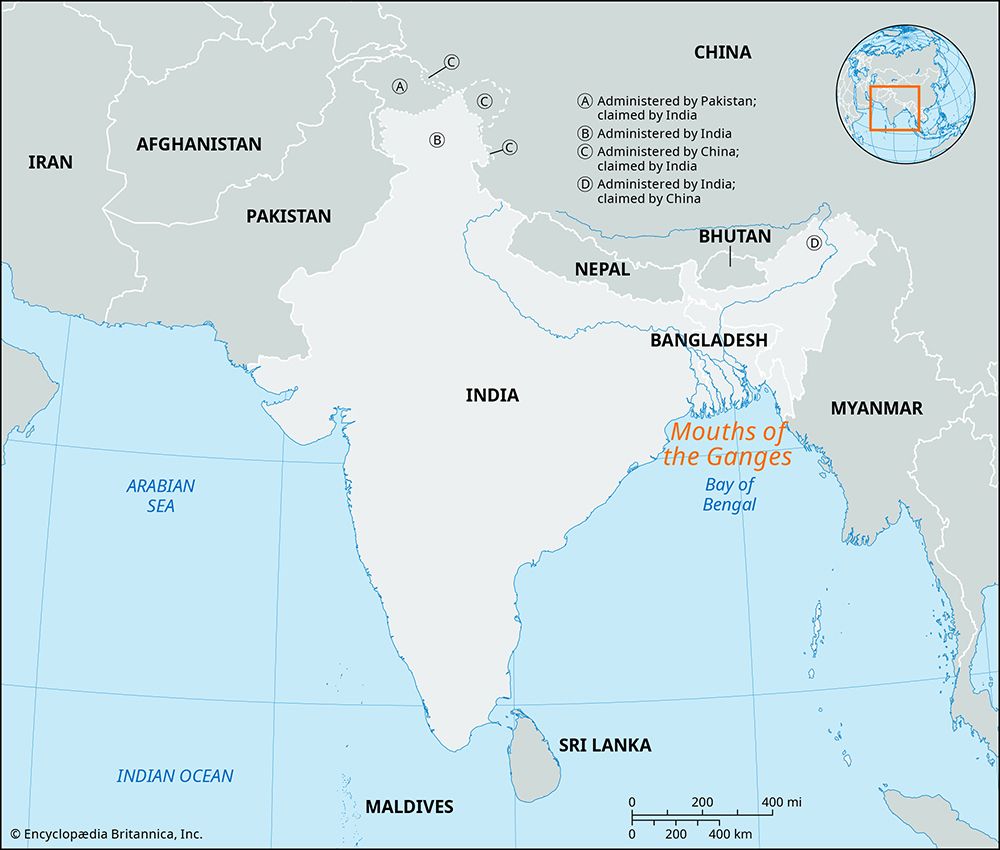
Carpenters Ridge is a topographic feature situated in the Indian Ocean near the mouth of the Bay of Bengal. It serves as the northern terminus of the Ninetyeast Ridge and trends in a north-south direction, ending near the Ganges delta. Geologically, it is classified as an aseismic ridge, meaning it does not exhibit associated earthquake activity.1
What is the Ninetyeast Ridge?
The Ninetyeast Ridge is the longest and straightest aseismic ridge in the world’s oceans. Named for its location along the 90° E meridian, this linear, mountainous structure stretches approximately 2,800 miles (4,500 km) across the Indian Ocean floor.34
Key characteristics of the ridge include:
- Structure and Origin: It consists of a chain of seamounts and volcanic ridges. It is believed to have formed from hot spot volcanic activity, likely associated with the same source as the Kerguelen Islands near Antarctica/Kerguelen-Islands) near Antarctica.45
- Geology: As an aseismic ridge, it lacks the earthquake activity typical of oceanic spreading centres. Deep-sea drilling indicates the ridge is roughly 80 million years old in the north and slightly less than 30 million years old in the south, reflecting its subsidence as it moved northward on the Indian Plate.34
- Extent: It runs from the Andaman Islands in the Bay of Bengal to its southern intersection with the Broken Ridge at 30° S latitude. Its northernmost section is known as Carpenters Ridge, which terminates near the Ganges delta.45
How are underwater ridges formed?
Underwater ridges are formed through two primary geological processes: seafloor spreading at divergent plate boundaries and volcanic activity associated with hot spots.
Oceanic Ridges (Spreading Centres)
Oceanic ridges, which form an interconnected system spanning approximately 80,000 km (50,000 miles), are created at seafloor spreading centres. At these divergent margins, tectonic plates pull apart, allowing magma from the Earth’s mantle to well up. As this molten material cools, it forms new oceanic crust, which is then pushed laterally away from the ridge axis.6785
These regions are characterized by high heat flow and frequent earthquakes. The elevated topography of these ridges—often 2 to 3 km above the surrounding seafloor—is sustained by the heat of the upwelling magma and the thermal expansion of the crust.69
Aseismic Ridges
In contrast, aseismic ridges are long, linear, mountainous structures that do not exhibit earthquake activity. These are typically constructed by volcanism from a hot spot, where a plume of magma creates a chain of seamounts and volcanoes as a tectonic plate moves over the stationary heat source. Examples include the Ninetyeast Ridge and the Hawaiian-Emperor chain.10
What does it mean for a ridge to be aseismic?
An aseismic ridge is a long, linear, and mountainous structure on the ocean floor that is not subject to earthquakes. This lack of seismic activity is the primary feature that distinguishes these structures from oceanic spreading centres, where tectonic plates diverge and frequent earthquakes occur.5711
Most aseismic ridges are formed by volcanism originating from a hot spot. As a tectonic plate moves over a stationary heat source, a chain of coalescing volcanoes and seamounts is created. While these ridges are generally defined by their lack of seismic activity, exceptions can occur at the specific point where active volcanism is still taking place, such as at the southeastern end of the Hawaiian-Emperor chain.5
Prominent examples of aseismic ridges include the Ninetyeast Ridge, the Chagos-Laccadive Plateau, the Walvis Ridge, and the Rio Grande Rise.5
Sources
- Carpenters Ridge — Encyclopædia Britannica
- Mountain Region — Encyclopædia Britannica
- Indian Ocean - Oceanic ridges and fracture zones — Encyclopædia Britannica
- ocean basin - Evolution of the ocean basins through plate movements — Encyclopædia Britannica
- aseismic ridge — Encyclopædia Britannica
- Mid-Atlantic Ridge — Encyclopædia Britannica
- plate tectonics - Seafloor spreading — Encyclopædia Britannica
- seafloor spreading — Encyclopædia Britannica
- oceanic ridge - Principal characteristics — Encyclopædia Britannica
- oceanic ridge — Encyclopædia Britannica
- aseismic — Merriam-Webster
- aseismatic — Merriam-Webster
Published on · 3 min read