Cro-Magnon
Cro-Magnons were a population of early Homo sapiens who lived in Europe during the Upper Paleolithic Period. While traditionally dated to between 40,000 and…

Who were the Cro-Magnons and when did they live?
Cro-Magnons were a population of early Homo sapiens who lived in Europe during the Upper Paleolithic Period. While traditionally dated to between 40,000 and 10,000 years ago, modern research suggests they may have emerged as early as 45,000 years ago.1
They were first identified in 1868 following the discovery of skeletal remains in a rock shelter near Les Eyzies-de-Tayac in southwestern France. Physically, they were robust and powerful, typically standing about 166 to 171 cm (5 feet 5 inches to 5 feet 7 inches) tall, and were the first humans known to possess a prominent chin.12
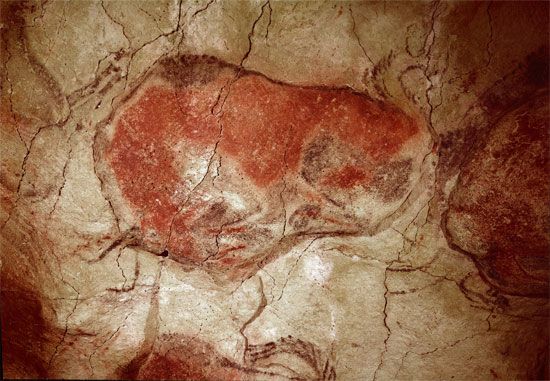
Culturally, Cro-Magnons were highly sophisticated. They produced advanced tools, practiced burial rites, and created remarkable prehistoric art, including intricate carvings and famous cave paintings found at sites like Lascaux and Altamira.1
How did Cro-Magnon tools and technology differ from earlier hominids?
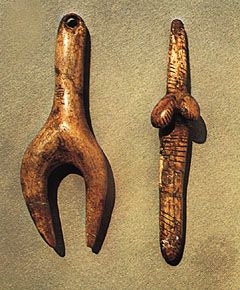
Cro-Magnon tool technology represented a significant leap in complexity and specialization compared to earlier hominids, such as the Neanderthals and earlier Homo species. While earlier groups relied heavily on core-flake industries like the Mousterian or Acheulean, Cro-Magnons utilized a sophisticated blade-based technology that allowed for greater efficiency and material diversity.1345
Key advancements included:
- Material Diversification: Unlike earlier tools primarily made of stone, Cro-Magnons extensively worked bone, antler, ivory, and wood, creating specialized items like needles, fish hooks, and harpoons.135
- Hafting: While some earlier groups used hafting, Cro-Magnons refined the process, fitting handles to cutting edges to increase force and reach, which allowed for more effective hunting and woodworking.36
- Specialized Tools: They developed specific tools for complex tasks, such as the burin (a chisel-like tool for engraving bone and wood) and various scrapers for processing leather.13
- Projectile Innovation: The invention of the spear-thrower and the bow and arrow significantly increased the distance and accuracy between the hunter and their prey.35
- Microliths: They produced small, geometric stone pieces that were cemented into shafts to create composite tools with long, sharp cutting edges.3
What types of dwellings or shelters did Cro-Magnons construct?
Cro-Magnons utilized a variety of shelters, adapting their dwellings to their environment and needs. Their habitations are most frequently identified in deep caves and shallow rock shelters, which provided natural protection and were often occupied year-round.1
Beyond natural formations, archaeological evidence indicates that Cro-Magnons constructed their own shelters, demonstrating an increasing investment of energy in building as populations grew. These structures included:9
- Primitive Huts: These were sometimes built as lean-tos against rock walls or constructed entirely from stone.1
- Skin-Covered Shelters: Evidence suggests the use of shelters built from animal skins stretched over frames made of bone or wood.9
- Structural Features: Many sites from this period reveal evidence of more permanent internal features, such as prepared hearths and stone pavements.9
These dwellings provided essential environmental control, protecting inhabitants from the elements and helping to conserve body heat. While Cro-Magnons were generally a settled people, they moved when necessary to follow new hunting opportunities or to adapt to environmental changes.101
What types of art and cultural artifacts have been associated with Cro-Magnons?
Cro-Magnons produced a wide array of sophisticated art and cultural artifacts that demonstrate their capacity for complex, abstract thought and symbolic expression. Their creative output is categorized into two primary forms: portable art and monumental art.111
Portable Art and Personal Adornment
Cro-Magnons created numerous small, portable objects, often crafted from bone, ivory, antler, and clay:11
- Venus Figurines: These are small, stylized statuettes of women. They are often depicted with exaggerated features—such as large breasts and wide hips—which scholars suggest may have held significance in fertility rites or represented protective spirits.11211
- Animal Figurines: They carved realistic representations of animals using stone, clay, and bone.11
- Musical Instruments: Evidence of their artistic range includes partial bone and ivory flutes, such as a specimen found at Hohle Fels Cave featuring five finger holes.11
- Jewelry: Personal adornment was common, utilizing materials like shells, fish teeth, and animal bones to create necklaces, bracelets, and pendants.1314
Monumental Art
In western Europe, Cro-Magnons created extensive works on the surfaces of limestone caves, such as those at Lascaux and Altamira:111
- Cave Paintings: These include sophisticated polychrome paintings of animals, noted for their dynamic naturalism and exquisite design.11
- Reliefs and Incised Designs: Beyond painting, they produced detailed engravings and relief carvings directly onto cave walls.111
These artifacts, along with decorated tools and weapons, suggest that Cro-Magnons valued art for both aesthetic appreciation and ritual or magical purposes.111
Sources
- Cro-Magnon — Encyclopædia Britannica
- Cro-Magnon — Merriam-Webster
- hand tool - Late Paleolithic toolmaking — Encyclopædia Britannica
- Paleolithic Period: Top Questions — Encyclopædia Britannica
- Homo — Encyclopædia Britannica
- hand tool - The Acheulean industry — Encyclopædia Britannica
- Neanderthal - Neanderthal culture — Encyclopædia Britannica
- human evolution - Refinements in tool design — Encyclopædia Britannica
- history of Europe - Upper Paleolithic developments — Encyclopædia Britannica
- construction - Primitive building: the Stone Age — Encyclopædia Britannica
- prehistoric religion - Female fertility deities — Encyclopædia Britannica
- jewelry - Materials and methods — Encyclopædia Britannica
- Paleolithic Period — Encyclopædia Britannica
- jewelry - The history of jewelry design — Encyclopædia Britannica
- human evolution - Speech and symbolic intelligence — Encyclopædia Britannica
Published on · 4 min read