El Niño
El Niño and La Niña are not separate phenomena but are opposing phases of the same large-scale climate pattern known as the El Niño-Southern Oscillation…
What is the relationship between El Niño and La Niña, and how do they differ?
El Niño and La Niña are not separate phenomena but are opposing phases of the same large-scale climate pattern known as the El Niño-Southern Oscillation (ENSO). They occur irregularly every two to seven years, significantly influencing global weather and climate through changes in the Pacific Ocean surface temperatures.12
Key Differences
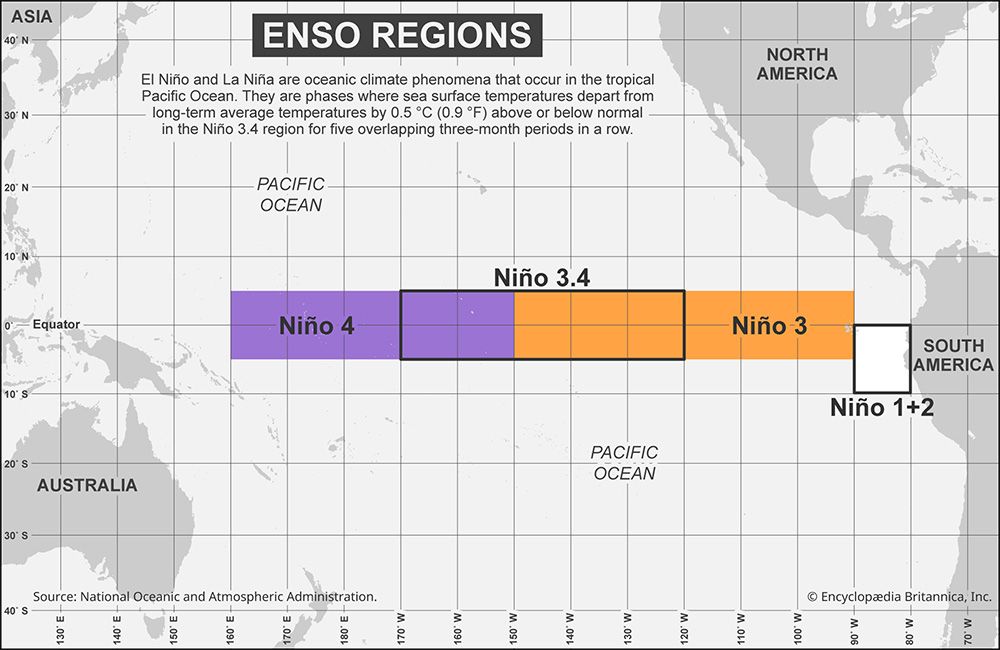
The primary distinction lies in the sea-surface temperature of the east-central Pacific, measured by the Oceanic Niño Index (ONI).23
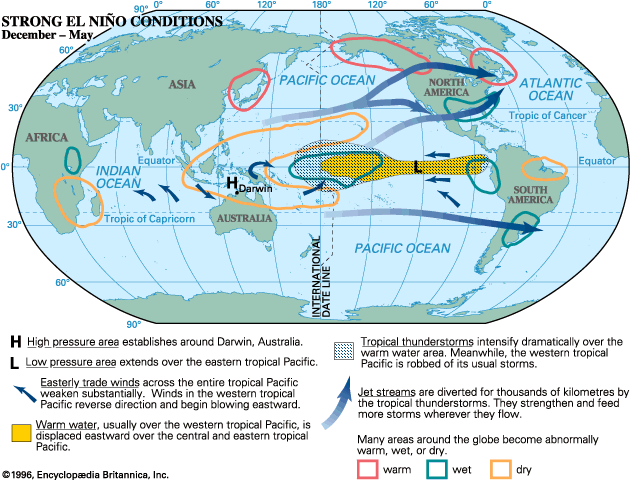
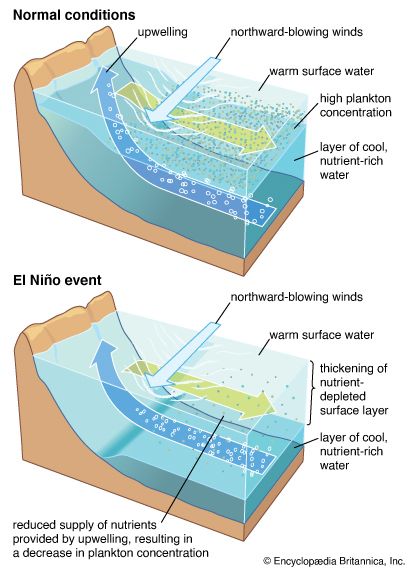
- El Niño (Warm Phase): Characterized by sea-surface temperatures at least 0.5 °C (0.9 °F) above average for five consecutive overlapping three-month seasons. It involves a weakening of trade winds, which reduces nutrient-rich upwelling along the South American coast and shifts rainfall patterns, often causing drier conditions in the western Pacific and wetter conditions in eastern South America.13
- La Niña (Cool Phase): Marked by temperatures at least 0.5 °C (0.9 °F) below average for the same duration. It features strengthened trade winds that enhance upwelling, boosting fish populations, and typically results in increased rainfall in Indonesia and northern Australia.231
What are some historical El Niño events and their significant impacts?
Historical El Niño events have caused significant global climatic and economic disruptions. Because these events vary in intensity, their impacts range from localized weather shifts to worldwide perturbations.4
Notable Historical El Niño Episodes
- 1525: The first recorded occurrence of unusual desert rainfall in northern Peru coincided with the arrival of Francisco Pizarro. Historians suggest the resulting vegetation and water availability may have aided the Spanish conquest of the Inca empire.4
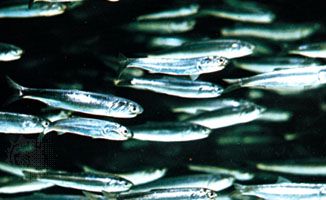
- 1972–73: This event gained global attention due to the collapse of the Peruvian anchovy fishery. The resulting scarcity of fish meal caused significant economic setbacks and reverberated through world commodity markets.45
- 1982–83: One of the most intense events of the 20th century, it caused severe drought in Australia, record flooding in central Chile, and stormy winter conditions along the west coast of North America.4
- 1997–98: Regarded as one of the strongest events on record, it was the first monitored entirely by scientific instrumentation. It led to widespread drought in Brazil, Indonesia, and the Philippines, while causing record-breaking warmth in the U.S. Midwest.4
- 2015–16: This strong episode contributed to a massive global coral-bleaching event, killing approximately 35 percent of corals in parts of the Great Barrier Reef. It also fueled severe wildfires in Canada and drought in Venezuela.4
How does El Niño influence hurricane and typhoon activity in various ocean basins?
El Niño significantly influences tropical cyclone activity by altering atmospheric conditions, such as wind patterns and sea-surface temperatures, across different ocean basins.
North Atlantic Ocean
During El Niño years, hurricane development in the North Atlantic basin is typically reduced. This dampening effect occurs because El Niño conditions lead to stronger-than-normal upper-level winds, which increase vertical wind shear7. This shear, combined with changes in atmospheric instability and reduced sea-surface temperatures in the region, creates an environment less favorable for the formation and intensification of hurricanes.7328
Pacific Ocean
In contrast to the Atlantic, El Niño is associated with increased tropical cyclone activity in the Pacific basin. Specifically, there are indications of more frequent tropical cyclones in the eastern portion of the South Pacific during El Niño years.328
La Niña’s Opposite Effect
La Niña generally produces the opposite results of El Niño. During La Niña episodes, the reduction in vertical wind shear and changes in atmospheric circulation favor increased tropical cyclone development in the North Atlantic. Conversely, La Niña is associated with fewer tropical cyclones in the eastern South Pacific.3748
How does El Niño affect agriculture and food production in different parts of the world?
El Niño significantly disrupts global agriculture and food production by altering seasonal weather patterns, which can lead to both catastrophic crop failures and localized economic instability.32
Regional Impacts on Agriculture
- South America: In Ecuador and northern Peru, El Niño brings dramatic increases in rainfall. While this can provide water, it often results in severe coastal flooding and erosion, which damage transportation infrastructure and agricultural lands.32
- Asia and Oceania: Indonesia and Australia frequently experience severe droughts during El Niño, which can devastate crop yields and water supplies.32
- India: The phenomenon can make monsoons erratic. A decrease in summer rainfall often negatively impacts crop production and the broader national economy.11
- Africa: Southeastern Africa often faces warmer and drier conditions, which can threaten food security in regions dependent on consistent seasonal rains.34
Impact on Fisheries
El Niño weakens the trade winds, which reduces the upwelling of nutrient-rich deep ocean water along the South American coast. This decline in nutrients causes plankton populations to drop, forcing fish to migrate away from traditional grounds. This significantly reduces yields for both small-scale and commercial fishing operations, as seen during the 1972–73 collapse of the Peruvian anchovy fishery, which caused global commodity market repercussions.42
Sources
- La Niña — Encyclopædia Britannica
- What Is the Difference Between El Niño and La Niña? — Encyclopædia Britannica
- El Niño: Top Questions — Encyclopædia Britannica
- El Niño — Encyclopædia Britannica
- Climate - The Southern Oscillation — Encyclopædia Britannica
- Climate - The El Niño phenomenon — Encyclopædia Britannica
- Factors Affecting Hurricane Development in the Atlantic Ocean: Top Questions — Encyclopædia Britannica
- Is the Number of Hurricanes Increasing? — Encyclopædia Britannica
- tropical cyclone - Climatic variations and tropical cyclone frequency — Encyclopædia Britannica
- Southern Oscillation — Encyclopædia Britannica
- climate of India: Top Questions — Encyclopædia Britannica
Published on · 4 min read