Falkland Current
The Falkland Current is a cold-water branch of the Antarctic Circumpolar Current located in the Southern Hemisphere. It flows northward through the South…
What is Falkland Current?
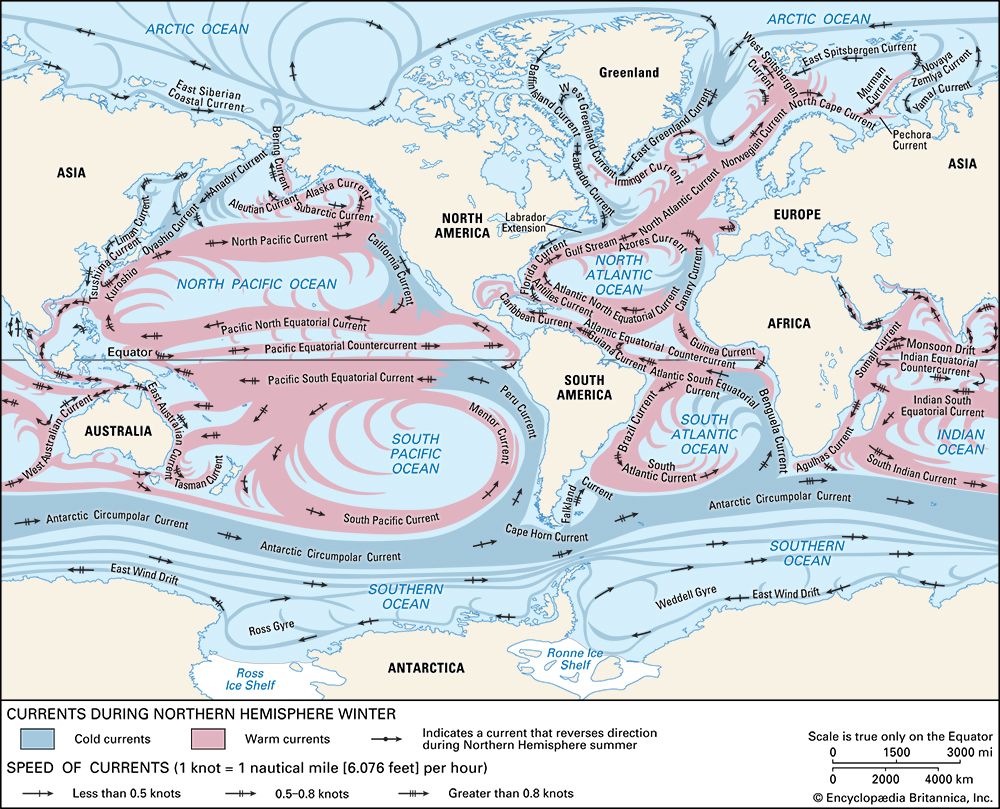
The Falkland Current is a cold-water branch of the Antarctic Circumpolar Current located in the Southern Hemisphere. It flows northward through the South Atlantic Ocean along the eastern coast of Argentina.1
Key characteristics of the current include:
- Temperature: It is cold, with temperatures ranging from 41° to 66° F (5° to 19° C).1
- Salinity: It maintains a relatively low salinity, averaging about 33.5 parts per thousand.1
- Interaction: Between 30° and 40° S latitude, the current meets the southward-flowing Brazil Current, which causes both currents to be deflected eastward1.2
- Ice Transport: The current carries icebergs originating in the Weddell Sea as far north as approximately 35° S latitude.1
What is the Antarctic Circumpolar Current?
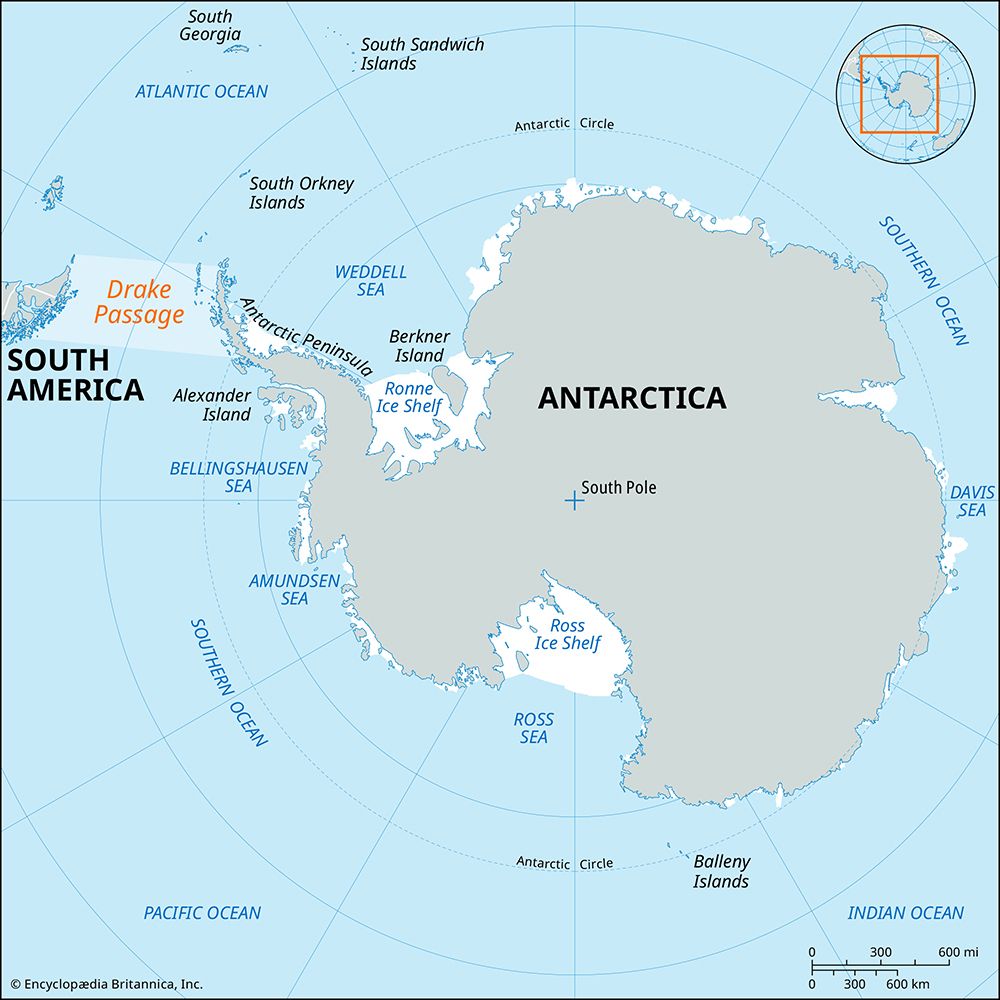
The Antarctic Circumpolar Current (ACC) is a massive, wind-driven surface oceanic current that flows from west to east, encircling Antarctica. As the most significant factor in connecting the world’s major oceans, it effectively separates the Southern Ocean from the Atlantic, Pacific, and Indian oceans.34
Key features of the current include:
- Structure: Rather than a single-axis flow, the ACC consists of multiple individual currents separated by frontal zones. It reaches the seafloor, where its path is guided by irregular submarine topography.4
- Volume: It is a powerful force, transporting approximately 134 million cubic meters of seawater per second, with some measurements through the Drake Passage reaching as high as 173.3 million cubic meters per second.34
- Climate Role: The current facilitates the poleward transfer of heat through large meanders and eddies, helping to balance oceanic heat loss. It also includes the Circumpolar Deep Water (CDW), a warm water mass that can influence ice melt when it upwells near the Antarctic continent.45
How do ocean currents influence global climate patterns?
Ocean currents are fundamental drivers of global climate patterns, acting as a massive heat-distribution system that regulates temperatures across the planet. By transporting warm water from the tropics toward the poles and returning cold water toward the equator, these currents effectively balance the Earth’s heat budget.789
Mechanisms of Climate Influence
- Heat Transport: Currents like the Gulf Stream carry significant thermal energy to higher latitudes. This process moderates the climate of coastal regions, such as northwestern Europe, which would be much cooler and potentially drier without this influx of warmth.78
- Atmospheric Interaction: The ocean acts as a vast heat reservoir. Through evaporation and direct heat transfer, the ocean supplies moisture and energy to the atmosphere, influencing cloud formation, precipitation, and the development of tropical cyclones.98
- Thermohaline Circulation: Beyond wind-driven surface currents, the thermohaline circulation moves water globally based on density differences. This slow, deep-ocean flow helps regulate long-term climate stability.10
- Large-Scale Oscillations: Complex interactions between the ocean and atmosphere, such as El Niño, can trigger major climatic shifts by altering sea-surface temperatures, which in turn disrupt global weather patterns and precipitation.98
What happens when cold and warm ocean currents meet?
When cold and warm ocean currents meet, they create significant thermal gradients that profoundly influence both the atmosphere and marine life.
Atmospheric Effects
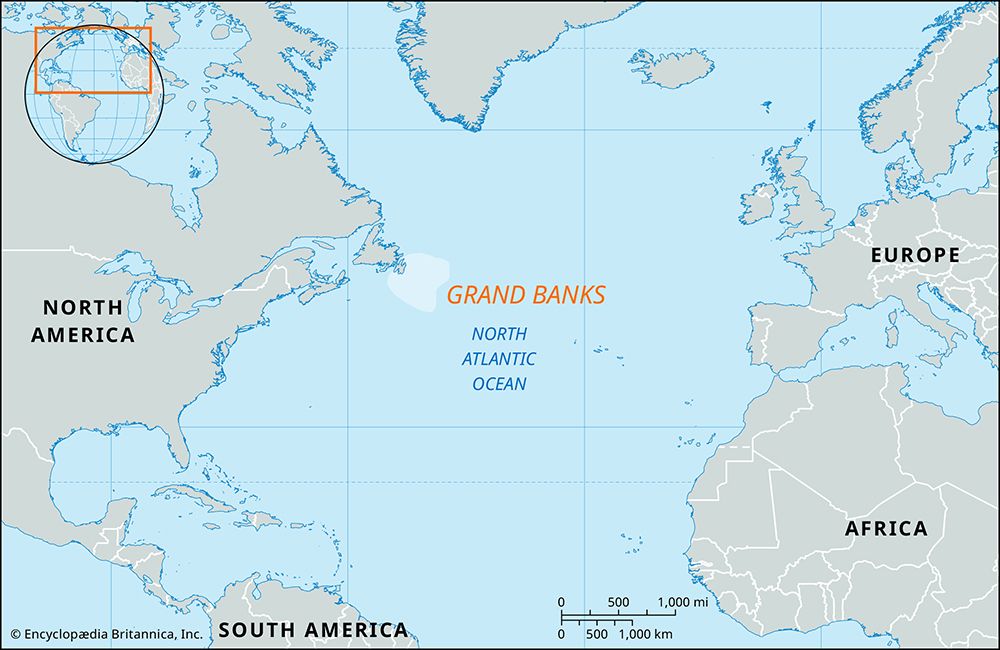
The most notable result of these convergences is the formation of advection fog. This occurs when relatively warm, moist air passes over a colder water surface, causing the air to cool and its water vapor to condense into dense fog. A classic example is the frequent, heavy fog found off the Grand Banks of Newfoundland, where warm air from the Gulf Stream moves over the cold Labrador Current.1011
Furthermore, these strong thermal gradients in the sea surface influence the atmosphere above by guiding the flow of the jet stream. By altering the energy supply to the atmosphere, these boundaries help steer weather systems, which can lead to persistent anomalies in regional climate patterns.10
Biological Impact
These meeting points are often areas of intense biological activity. The mixing of different water masses can concentrate nutrients and small organisms, providing a rich food supply for marine life. Additionally, currents act as transport mechanisms; for instance, warm currents can carry tropical larvae to higher latitudes, resulting in a tropical infusion for cold-temperate ecosystems.12
Sources
- Falkland Current — Encyclopædia Britannica
- Brazil Current — Encyclopædia Britannica
- Antarctic Circumpolar Current — Encyclopædia Britannica
- Amundsen Sea — Encyclopædia Britannica
- Atlantic Ocean - The South Atlantic — Encyclopædia Britannica
- ocean current - The Antarctic Circumpolar Current — Encyclopædia Britannica
- How Do Ocean Currents Affect the Biosphere? — Encyclopædia Britannica
- thermohaline circulation — Encyclopædia Britannica
- Climate - Climate and the oceans — Encyclopædia Britannica
- Climate - Circulation, currents, and ocean-atmosphere interaction — Encyclopædia Britannica
- Marine ecosystem - Ocean currents — Encyclopædia Britannica
- Fog — Encyclopædia Britannica
- Atmosphere - Effect of oceans on air movement — Encyclopædia Britannica
- seawater - Chemical composition — Encyclopædia Britannica
Published on · 3 min read