Screw Moss
Screw moss refers to any member of the moss genus Tortula, which belongs to the subclass Bryidae. These plants typically form yellow-green or reddish-brown…
What is Screw moss?
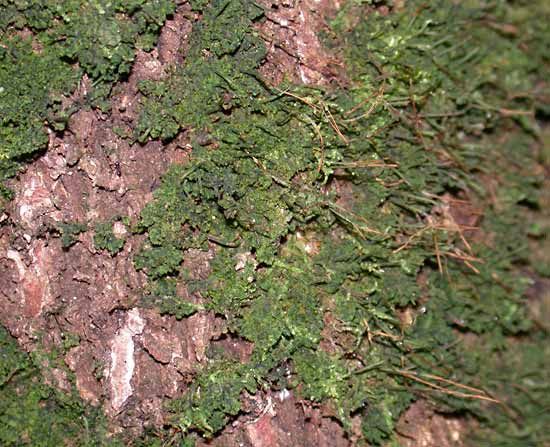
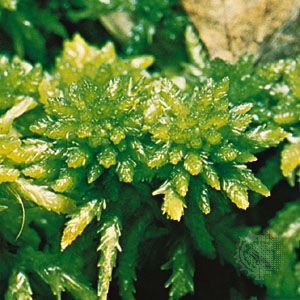
Screw moss refers to any member of the moss genus Tortula, which belongs to the subclass Bryidae. These plants typically form yellow-green or reddish-brown cushions and can be found growing on diverse surfaces, including soil, rocks, trees, walls, and sand dunes throughout the Northern Hemisphere.1
Key characteristics of screw moss include:
- Size: Depending on the species, they range from 0.5 to 10 centimeters (about 1/5 to 4 inches) in height.1
- Leaves: They feature tongue-shaped phyllids (leaves) that are commonly tipped with a long hair.1
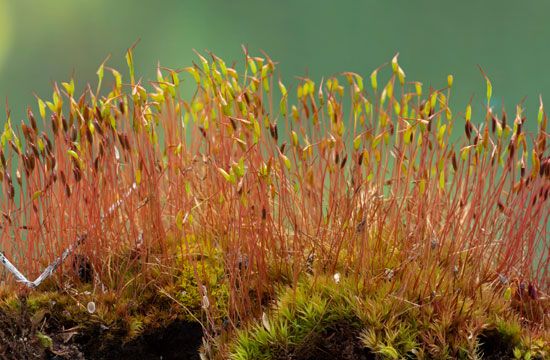
- Spore Case: The teeth surrounding the mouth of the capsule, or spore case, are often spirally twisted and united at the base into a tubular membrane, which is a defining feature of the genus.1
There are approximately 144 species within the genus, with about 25 native to North America. The most well-known species in both North America and Great Britain are T. muralis and T. ruralis.1
How do mosses reproduce without seeds?
Mosses reproduce through a process known as alternation of generations, which involves two distinct life phases: the sexual gametophyte and the asexual sporophyte.45
Sexual Reproduction
The dominant, leafy green phase is the gametophyte, which produces male and female sex organs called antheridia and archegonia. Because moss sperm are motile and flagellated, they require water—such as rain or heavy dew—to swim from the antheridia to the archegonia for fertilization. This process results in a zygote that develops into a sporophyte, which remains attached to and dependent on the gametophyte for nutrients.6745
Asexual Reproduction
Mosses also reproduce asexually through several methods:
- Spore Production: The mature sporophyte produces spores within a capsule. When released, these spores germinate to form a protonema, a branching threadlike structure that eventually develops into a new leafy gametophyte.465
- Vegetative Propagation: Mosses can grow from fragmentation or specialized cell masses called gemmae, where any living piece of the gametophyte has the potential to regenerate into a complete new plant.45
What is the difference between mosses, liverworts, and hornworts?
While mosses, liverworts, and hornworts are all nonvascular plants traditionally grouped as bryophytes, they are now classified into distinct divisions: Bryophyta (mosses), Marchantiophyta (liverworts), and Anthocerotophyta (hornworts).43
Key Differences
Feature
Mosses
Liverworts
Hornworts
Gametophyte Form
Usually leafy; spirally arranged leaves with midribs.
Leafy (3 rows) or flattened, ribbonlike
thallus
.
Flattened, lobulated thallus; usually lacks a midrib.
Sporophyte Growth
Terminal; has a
seta
(stalk) and capsule.
Often borne on specialized structures; seta elongates rapidly.
Indeterminate growth; horn-shaped, lacks a stalk.
Spore Dispersal
Controlled by teeth around the capsule mouth.
Often uses
elaters
to throw spores.
Splits lengthwise; uses elaters for dispersal.
Rhizoids
Multicellular.
Unicellular.
Unicellular.
Distinguishing Characteristics
- Mosses: Known for their leafy gametophores and complex sporophytes that often feature a conducting strand. Their spore release is highly regulated by specialized teeth.10
- Liverworts: Can be “leafy” or “thallose.” Unlike mosses, their leaves lack midribs. Their sporophytes are often transitory and may be elevated on umbrella-like structures.106
- Hornworts: Unique for their horn-shaped sporophytes that grow continuously from a basal meristem throughout the season. They are also noted for having cavities in the thallus that may host symbiotic blue-green algae.1110
Why are mosses important to their ecosystems?
Mosses play vital roles in maintaining ecological balance and shaping their environments. Their contributions include:
- Hydrological Regulation: Mosses, particularly Sphagnum (peat moss), act as massive sponges that absorb and retain significant amounts of water. By influencing the water table, they help control the hydrology of surrounding landscapes and are fundamental to the development of wetland habitats.1314
- Carbon Sequestration: Peatlands are critical for sequestration of carbon, making the protection of these moss-dominated ecosystems an essential strategy for climate change mitigation.13
- Soil Formation and Erosion Control: Mosses are pioneer species that colonize bare rock, initiating soil formation and providing a substrate for other plants. They are also highly effective in erosion control.1314
- Nutrient Cycling: Mosses participate in nutrient cycling by capturing airborne minerals and precipitation, which influences the composition of surrounding vegetation.14
Because peatlands are fragile and their destruction releases stored carbon, it is ethically imperative to prioritize their conservation over unsustainable harvesting practices.13
Sources
- screw moss — Encyclopædia Britannica
- Pottiaceae — Merriam-Webster
- bryophyte - Classification — Encyclopædia Britannica
- bryophyte — Encyclopædia Britannica
- Alternation of generations — Encyclopædia Britannica
- bryophyte - Form and function — Encyclopædia Britannica
- Plant reproductive system - Mosses — Encyclopædia Britannica
- moss — Encyclopædia Britannica
- Plant - Definition of the category — Encyclopædia Britannica
- hornwort — Encyclopædia Britannica
- Plant reproductive system - Liverworts and hornworts — Encyclopædia Britannica
- Plant - Division Marchantiophyta — Encyclopædia Britannica
- peat moss — Encyclopædia Britannica
- bryophyte - Ecology and habitats — Encyclopædia Britannica
Published on · 3 min read