Grebe
Grebes are a diverse family of foot-propelled diving birds known for their specialized aquatic adaptations, such as lobed toes and the ability to submerge…
What are some of the most common species of grebes, and how do they differ?
Grebes are a diverse family of foot-propelled diving birds known for their specialized aquatic adaptations, such as lobed toes and the ability to submerge rapidly. While there are approximately 22 species, they vary significantly in size, habitat, and behavior.
Common species and their distinguishing characteristics include:
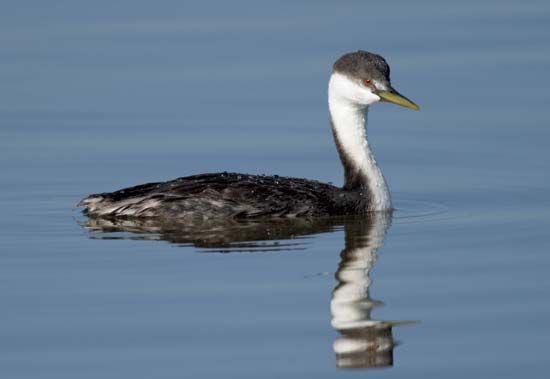
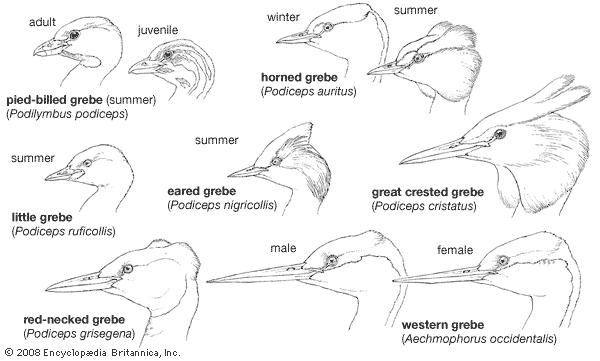
- Western Grebe (Aechmophorus occidentalis): Notable for its size and preference for large bodies of open water. They are famous for their elaborate “rushing” courtship displays and primarily feed on fish.1
- Pied-billed Grebe (Podilymbus podiceps): A more secretive species often found on small, vegetated waters. They are distinct for their diet, which includes heavy-bodied crustaceans, and they rely more on vocalizations than visual displays during courtship.1
- Dabchicks (Genus Tachybaptus): A group of smaller grebes that, like the pied-billed grebe, favor small waters with emergent vegetation and utilize vocalizations as a primary means of communication.1
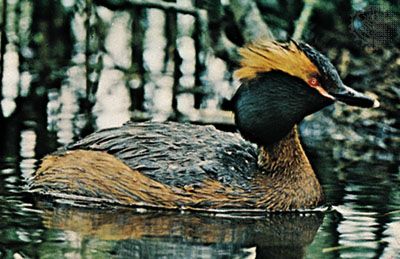
- Horned and Red-necked Grebes: These species are recognized for their more varied diets and complex courtship ceremonies, which involve ritualized behaviors like head shaking and weed carrying.1
What are the defining physical characteristics of grebes?
Grebes (order Podicipediformes) are highly specialized diving birds defined by several distinct physical characteristics that facilitate their aquatic lifestyle:
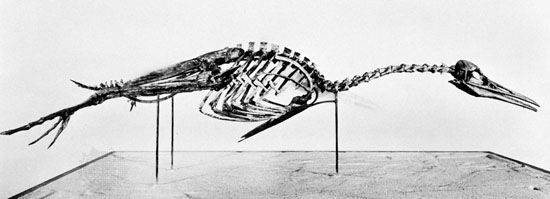
- Feet and Legs: Grebes are characterized by lobed toes with flat nails, rather than webbed feet. Their legs are positioned far back on the body near the tail, which is an adaptation for powerful propulsion while swimming but makes them awkward on land.
- Plumage: They are known for their silky, satiny breast feathers. This texture results from the loose structure of the feathers combined with spirally coiled barbules that lie parallel to the barbs.
- Body and Tail: Grebes have greatly reduced tail feathers and generally streamlined bodies. Adult sizes range from 21 to 73 cm (8 to 29 inches) in length and weigh between 150 grams and 1.4 kg.
- Head and Bill: Species are primarily distinguished by variations in bill shape and the ornamentation of the head, such as elongated plumes or crests, which are often more prominent in males and during the summer breeding season.
Where are grebes typically found, and what types of habitats do they prefer?
Grebes are found on every continent and across many island groups, though they are most prevalent in temperate regions. They are primarily associated with aquatic environments, specifically breeding on still or slow-moving bodies of fresh water.1
Their habitat preferences vary by species:
- Small, vegetated waters: Species such as the pied-billed grebe and various dabchicks (genus Tachybaptus) are most commonly found on smaller bodies of water that feature significant amounts of emergent vegetation.1
- Large, open waters: The western grebe typically prefers large, open bodies of water.1
- Coastal areas: During the winter months, some species move to sheltered coastal waters.1
While most grebes are migratory, their distribution is global, with seven species found in both North and South America, five in Eurasia, and three each in Africa and Australia.1
How do grebes’ legs and feet differ from those of other water birds?
Grebes are highly specialized for an aquatic lifestyle, and their legs and feet differ significantly from those of many other water birds, such as ducks or geese, which typically possess fully webbed feet.167
Instead of webs, grebes have lobed toes equipped with flat nails. These lobes provide the necessary surface area for propulsion in the water while remaining more efficient for the bird’s specific swimming mechanics.16
Key differences in their anatomy and function include:
- Leg Placement: The legs of a grebe are positioned far back on the body, near the tail. While this placement is an excellent adaptation for powerful, foot-propelled diving, it makes the birds quite awkward and clumsy when moving on land.16
- Swimming Mechanics: While on the surface, grebes typically swim using alternate strokes of their feet. When diving underwater, however, they move their feet simultaneously. To maximize efficiency, the feet rotate 90° between the power and recovery strokes, allowing the broad side of the lobes to push against the water for propulsion.1
- Anatomical Structure: The grebe’s leg structure is further defined by the absence of the ambiens muscle and the presence of a large, pyramidal patella (kneecap) and a significant projection on the tibia.1
Sources
- Grebe — Encyclopædia Britannica
- grebe — Merriam-Webster
- Locomotion - Tetrapodal vertebrates — Encyclopædia Britannica
- Anseriform - Anatomy — Encyclopædia Britannica
- Migration - In North America — Encyclopædia Britannica
- lobefoot — Merriam-Webster
- Bird - Swimming and diving — Encyclopædia Britannica
- Vertebrate - External features — Encyclopædia Britannica
- Passeriform - Feet and legs — Encyclopædia Britannica
Published on · 3 min read