Torrent Duck
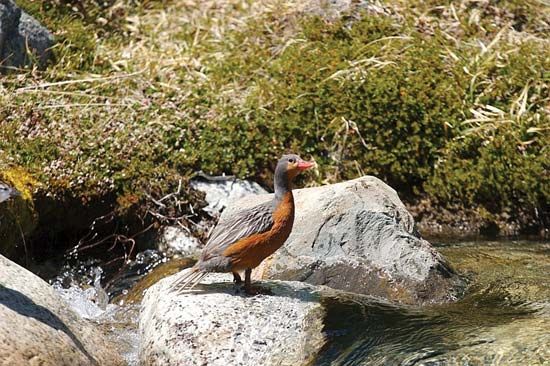
The torrent duck (Merganetta armata) is a long-bodied duck native to the rushing mountain streams of the Andes, ranging from Colombia to Chile.
What is Torrent duck?
The torrent duck (Merganetta armata) is a long-bodied duck native to the rushing mountain streams of the Andes, ranging from Colombia to Chile.12
Taxonomically, it is typically classified as an aberrant dabbling duck, though it is sometimes placed in its own distinct tribe, the Merganettini, within the family Anatidae. These birds are uniquely adapted to their turbulent environment; they use their stiff tails to cling to slippery stones and possess narrow, soft bills used to probe beneath rocks for insect larvae.1
The species exhibits notable sexual dimorphism in its plumage:
- Drakes: Feature white heads with black eye and neck stripes, with gray to black coloring below.1
- Hens: Display rusty and dark gray coloration.1
Additionally, both sexes possess a spur at the bend of the wing, a characteristic shared by many perching ducks.1
How do Torrent ducks adapt to fast-moving water?
The torrent duck (Merganetta armata) has evolved specialized physical traits to thrive in the turbulent, fast-moving mountain streams of the Andes. Its primary adaptations for this environment include:
- Stability: The bird utilizes a long, stiff tail to cling to slippery, submerged stones, providing necessary purchase against strong currents.13
- Streamlined Morphology: The duck possesses a streamlined body shape, which reduces drag and allows it to navigate high-velocity water more efficiently.3
- Foraging Mechanics: To feed on insect larvae, the torrent duck dives and probes beneath rocks using a narrow, soft bill, a behavior facilitated by its ability to maintain position in rushing water.1
- Locomotion: Like other waterfowl, it relies on powerful legs for swimming, but its specific anatomical structure allows it to exert the great power required to dive and maneuver within fast-running streams.3
What are the main differences between dabbling ducks and diving ducks?
The primary differences between dabbling ducks and diving ducks lie in their feeding behaviors, physical anatomy, and preferred habitats.
Feeding Behavior
- Dabbling Ducks: These birds feed primarily in shallow water or on land. They are known for “tipping up,” a behavior where they tilt their bodies forward to reach aquatic vegetation, seeds, and insects beneath the surface without fully submerging.45
- Diving Ducks: These species are adapted for underwater foraging. They dive completely beneath the surface—sometimes to depths exceeding 20 feet—to reach food sources like mussels, crabs, and submerged plants at the bottom of lakes, bays, and coastal waters.46
Physical Anatomy and Locomotion
- Body Shape: Diving ducks possess more streamlined bodies, which reduce drag and make them efficient swimmers.47
- Leg Placement: While all true ducks have legs set toward the rear of the body, this trait is more pronounced in diving ducks. Their legs are positioned further back, which makes them excellent for underwater propulsion but results in a more awkward, upright posture when on land.47
- Flight: Dabbling ducks are generally more agile in the air and can launch themselves directly upward from the water with a powerful thrust. Many diving ducks, such as pochards and mergansers, must “skitter” or run along the surface of the water to gain enough momentum for takeoff.57
What other wildlife lives in the Andes mountain range?
The Andes mountain range hosts a diverse array of wildlife, with species distribution heavily influenced by altitude, climate, and food availability.89
Mammals
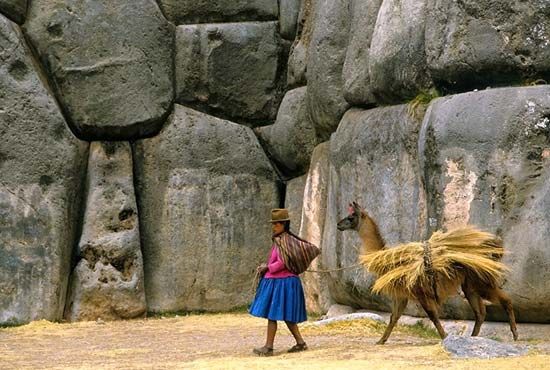
The high-altitude plateaus, particularly the Altiplano, are home to camelids, including the domesticated llama and alpaca, as well as their wild relatives, the guanaco and vicuña. Other notable mammals include:810
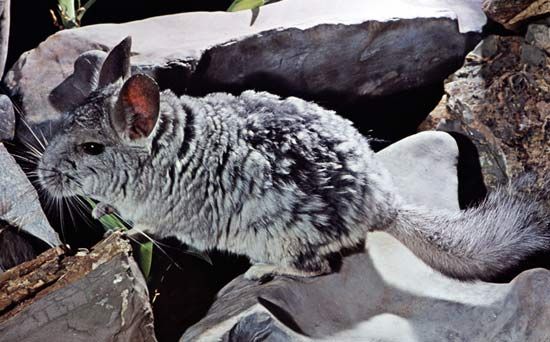
- Rodents: Chinchillas, vizcachas, guinea pigs (cuy), and white-tailed mice.81011
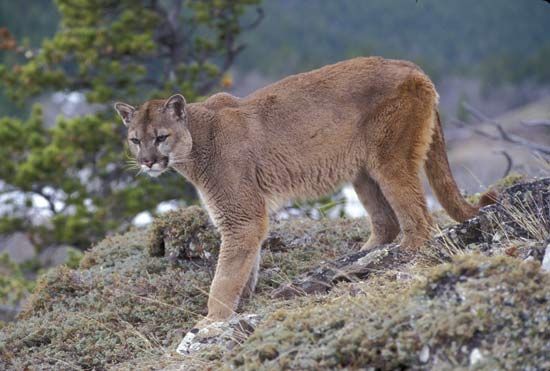
- Predators: The puma is a prominent predator, while the spectacled bear—the only bear species in South America—also inhabits the region.81211
- Others: The guemul (a type of deer) and various foxes are also found in Andean habitats.8911
Birds
The Andean condor is perhaps the most iconic avian resident, capable of flying at extreme altitudes. The region’s many lakes and wetlands support a variety of waterfowl, including:89
- Flamingos: Often seen in large flocks on shallow lakes like Lake Titicaca and Lake Poopó.1011
- Others: Grebes, coots, cormorants, geese, gulls, and various hummingbirds.1012
Other Wildlife
The lower, more tropical slopes and eastern forests host a richer variety of jungle fauna, including jaguars, monkeys, sloths, tapirs, and peccaries. Reptiles and amphibians are also present, ranging from giant toads in Lake Titicaca to various lizards, snakes, and caimans in the warmer, lower-elevation regions.1012911
Sources
- Torrent duck — Encyclopædia Britannica
- torrent duck — Merriam-Webster
- Anseriform - Locomotion — Encyclopædia Britannica
- What do ducks eat? — Encyclopædia Britannica
- Duck — Encyclopædia Britannica
- Dabbling duck — Encyclopædia Britannica
- Diving duck — Encyclopædia Britannica
- Exploring 7 of Earth’s Great Mountain Ranges - Andes — Encyclopædia Britannica
- Andes Mountains - Plant and animal life — Encyclopædia Britannica
- Bolivia - Animal life — Encyclopædia Britannica
- Colombia - Plant and animal life — Encyclopædia Britannica
- South America - The high Andes — Encyclopædia Britannica
Published on · 3 min read