Has a Complete Skeleton Been Discovered?
While many fossil discoveries consist of fragmented remains, complete skeletons have been found in the field of paleontology.
Has a complete skeleton been discovered?
While many fossil discoveries consist of fragmented remains, complete skeletons have been found in the field of paleontology.
In 1878, a significant discovery occurred in a coal mine in Bernissart, Belgium, where several dozen complete, articulated skeletons of the dinosaur Iguanodon were uncovered. These remains were meticulously restored, and today, the public can view an impressive display of these skeletons, which provided early evidence that some dinosaurs were bipedal and may have traveled in groups.1
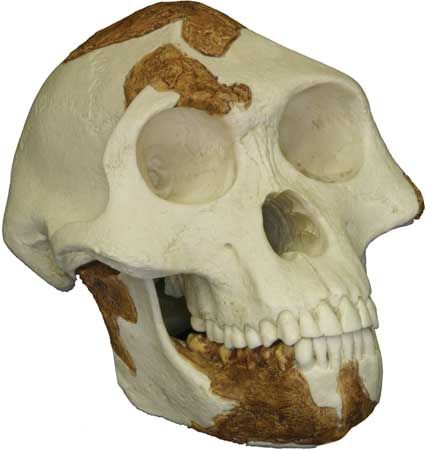
In contrast, human and hominin fossil finds are frequently incomplete. For example, the famous Australopithecus afarensis specimen known as Lucy is considered remarkably complete, yet it is only about 40 percent intact. Other notable finds, such as the Ehringsdorf remains or various Homo habilis specimens like OH 62, typically consist of fragmented skulls, jaws, or isolated limb bones rather than full skeletons.234
Why is it so rare to find a complete fossilized skeleton?
Finding a complete fossilized skeleton is rare because the process of fossilization requires a specific, often improbable, set of environmental conditions. For an organism to become a fossil, it must generally possess hard parts, such as bones or shells, which are more resistant to decay than soft tissues.56
The primary challenges to preservation include:
- Rapid Burial: To prevent decomposition and protect remains from scavengers, an organism must be buried quickly after death.56
- Environmental Factors: Most fossils are preserved in water environments, such as the bottom of seas, where anaerobic conditions can prevent the destruction of remains by other organisms. Land-based remains are far more easily destroyed by the elements and biological activity.6
- Taphonomic Processes: The field of taphonomy studies the complex processes—including burial, decay, and geological shifts—that affect remains as they transition into fossils. During this time, bones can be scattered, dissolved by acidic solutions, or damaged by geological pressure.76
Even when remains are preserved, they are often fragmented or incomplete, making the discovery of a nearly intact skeleton a significant scientific event.8
How do scientists reconstruct skeletons from fragmented bones?
Scientists reconstruct skeletons from fragmented remains by applying principles of comparative anatomy and skeletal biology. When remains are discovered, experts first identify whether the fragments are human or animal and determine which part of the body they represent. If a single bone is found, researchers often search the surrounding area, as other pieces belonging to the same individual are frequently located nearby.10
For forensic anthropologists, the goal is to establish the identity of the deceased by analyzing skeletal structures to estimate characteristics such as age, gender, race, and stature. When dealing with more complete remains, they may use techniques like skull superimposition—a process where a face is reconstructed using clay based on established measurements of tissue thickness—to help identify missing persons.10
In the broader context of evolutionary biology, scientists use the structural similarities between different species to reconstruct the phylogeny, or evolutionary history, of organisms. By comparing bone-by-bone correspondences across various species, researchers can infer common ancestry and understand how different structures have been modified over time to adapt to diverse environments.11
What can we learn about an animal’s behavior from its skeletal structure?
An animal’s skeletal structure provides significant insights into its behavior, as morphology is often closely linked to how an organism interacts with its environment. By analyzing the physical form of a skeleton, scientists can infer key aspects of an animal’s life, including its locomotion, diet, and social structure.1213
Locomotion and Physical Capabilities
The dimensions and proportions of skeletal elements reveal how an animal moved. For instance, the length and thickness of limbs are direct indicators of speed and power: shorter, thicker limbs generally provide greater force, while longer, more slender limbs are adapted for speed. Furthermore, the presence of jointed skeletons allows for precise, complex movements—such as running, climbing, or flying—which can be reconstructed by examining the attachment points of muscles on the bone.13
Diet and Feeding Habits
Skeletal features, particularly the jaw, offer clues about an animal’s diet. The massiveness of the jaws reflects the toughness of the food an animal consumed. Additionally, fossil evidence sometimes provides direct proof of behavior; for example, the discovery of stomach contents within a skeleton or the presence of multiple predators associated with a single large prey animal can suggest specific hunting strategies, such as pack hunting.1314
Evolutionary and Behavioral Context
Comparative anatomy allows scientists to link specific morphological structures to behaviors. If a behavior is consistently associated with a particular structure, such as an elongated tail, the appearance of that structure in the fossil record can help date the origin of that behavior. While these reconstructions provide valuable insights, they remain hypotheses that are best validated when supported by direct fossil evidence.15
Sources
- Homo habilis - The fossil evidence — Encyclopædia Britannica
- Lucy — Encyclopædia Britannica
- dinosaur - Reconstruction and classification — Encyclopædia Britannica
- Ehringsdorf remains — Encyclopædia Britannica
- How are fossils formed? — Encyclopædia Britannica
- fossil — Encyclopædia Britannica
- tyrannosaur - Hell Creek discoveries — Encyclopædia Britannica
- taphonomy — Merriam-Webster
- Did you know? — Merriam-Webster
- forensic science - Forensic anthropology — Encyclopædia Britannica
- evolution - Structural similarities — Encyclopædia Britannica
- skeleton - Comparative study of skeletal systems — Encyclopædia Britannica
- dinosaur - The flesh eaters — Encyclopædia Britannica
- Animal - Types of skeletons and their distribution — Encyclopædia Britannica
- Comparative anatomy — Encyclopædia Britannica
- Animal behaviour - The comparative approach — Encyclopædia Britannica
Published on · 4 min read