Homo Sapiens Sapiens
Homo sapiens sapiens is a subspecies of Homo sapiens that encompasses all modern human beings. In anthropology and paleontology, this designation was…

What is Homo sapiens sapiens?
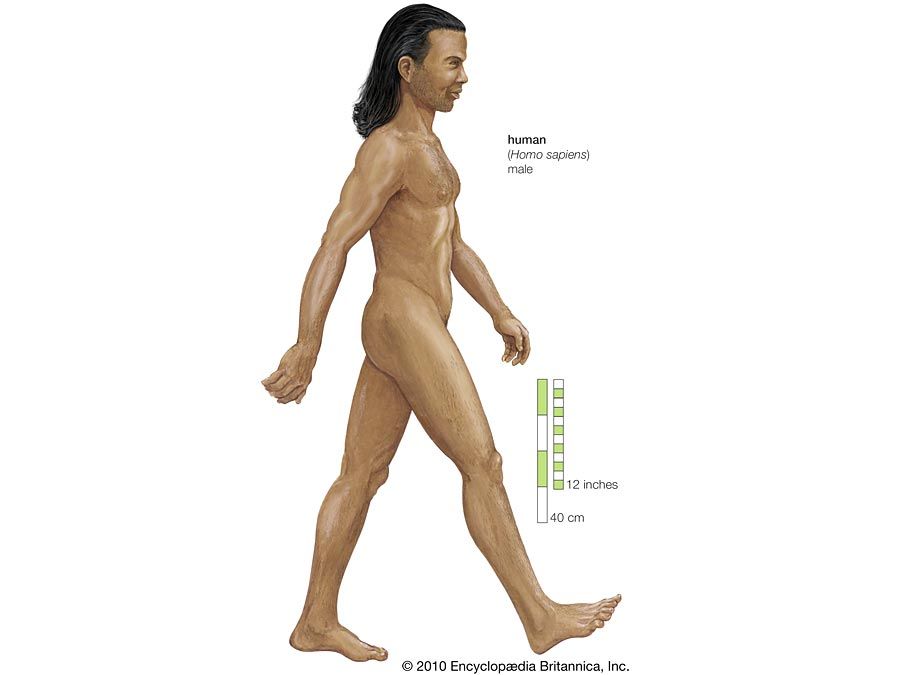
Homo sapiens sapiens is a subspecies of Homo sapiens that encompasses all modern human beings. In anthropology and paleontology, this designation was traditionally used to distinguish modern humans from more archaic members of the Homo sapiens species.1
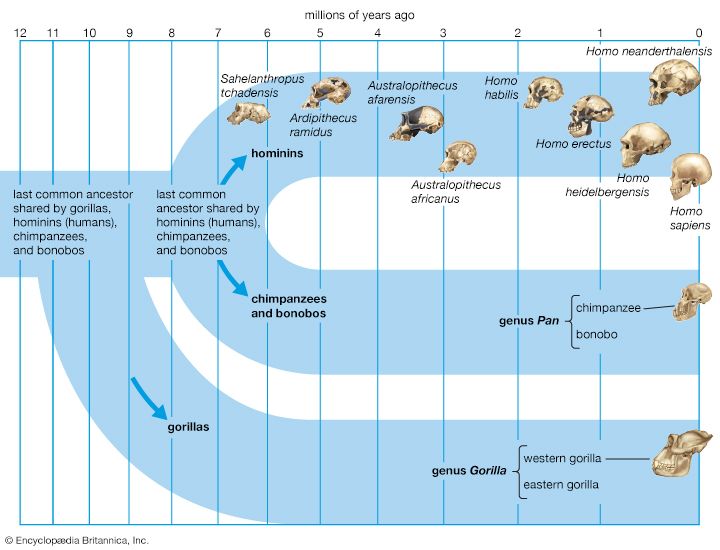
Current scientific consensus holds that H. s. sapiens evolved in Africa approximately 160,000 to 90,000 years ago before migrating across the globe. While it is the only widely accepted subspecies of H. sapiens today, its use remains a subject of debate among experts. Taxonomic practice typically reserves subspecies designations for groups with evidence of distinct, separate subgroups; because modern humans are highly variable but represent a single, interbreeding population, some researchers argue that the sapiens subspecies label is unnecessary. Historically, other classifications were proposed—such as those by Carl Linnaeus—but these were discarded due to their reliance on outdated, prejudiced notions of human hierarchy rather than biological evidence.1
What is the ‘Out of Africa’ theory of human evolution?
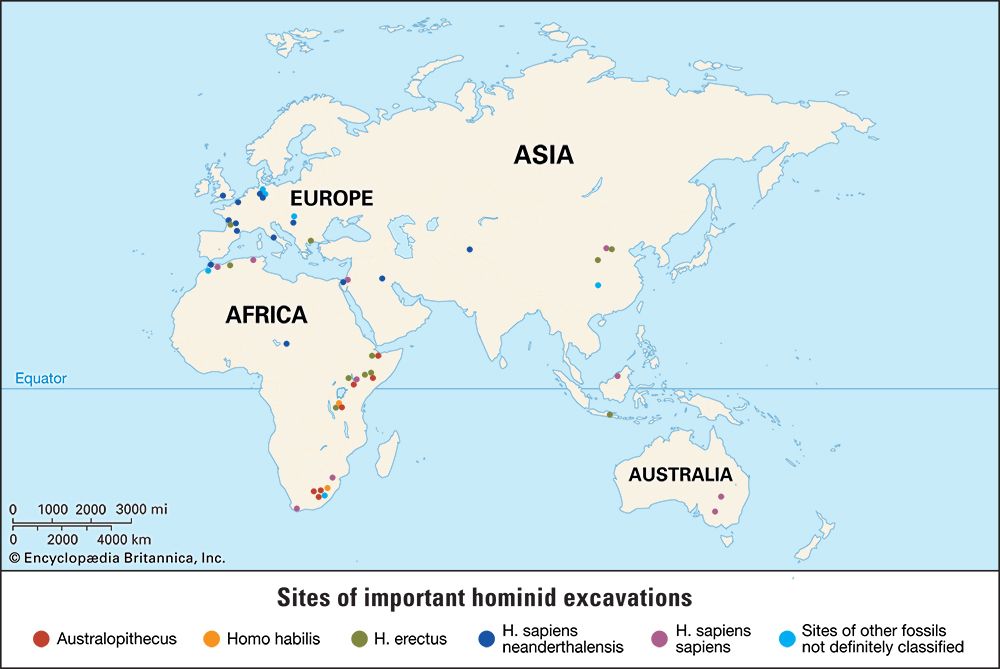
The “Out of Africa” theory—often referred to as the single-origin hypothesis or Out of Africa 2—is the prevailing scientific model explaining the emergence and dispersal of Homo sapiens. It posits that modern humans evolved exclusively in Africa between approximately 315,000 and 160,000 years ago before migrating to other continents and replacing indigenous archaic hominin populations.563
Key aspects of this model include:
- African Origins: Molecular genetic data, particularly from mitochondrial DNA, indicate that all modern humans share a common ancestry originating from a small African population.3
- Dispersal and Replacement: Unlike the multiregional evolution model, which suggests humans evolved locally in different regions, the Out of Africa theory argues that H. sapiens migrated out of the continent in several waves (notably after 60,000 years ago) and eventually replaced other Homo species, such as Neanderthals and Denisovans.537
- Genetic Evidence: While the model emphasizes replacement, genomic studies have revealed evidence of limited interbreeding between H. sapiens and archaic groups, which left genetic traces in the DNA of modern non-African populations.37
How did early humans interact with Neanderthals?
Early humans and Neanderthals interacted through both coexistence and interbreeding, a relationship that has been clarified by advancements in genetics and the analysis of ancient DNA.89
Interbreeding and Genetic Legacy
Scientific evidence confirms that Homo sapiens and Neanderthals interbred after modern humans migrated out of Africa. Today, approximately 1–4 percent of the gene pool of modern Eurasian populations is derived from Neanderthals. This genetic exchange likely occurred between 80,000 and 50,000 years ago, influencing traits such as immune system responses and skin complexion.9310
Coexistence and Cultural Exchange
Fossil and archaeological evidence suggests that the two groups coexisted in regions like the Levant and Europe for thousands of years.107
- Shared Technology: Both groups utilized the Mousterian industry for stone tool production. Later, some Neanderthal sites showed evidence of blade-based technologies similar to those used by early modern humans, such as the Châtelperronian industry.1011
- Cultural Parallels: Neanderthals exhibited complex behaviors, including the use of pigments, ornaments, and ritualistic burial practices, indicating cognitive capabilities that may have facilitated interaction with modern humans.11
While the exact nature of their social encounters remains a subject of study, the presence of hybrid remains—such as the individual found at Peștera cu Oase—provides direct evidence of these historical meetings.9
What physical traits distinguish Homo sapiens from other hominins?
Homo sapiens is distinguished from other hominins by a unique suite of anatomical characteristics, particularly within the skeletal structure. While the fossil record shows significant variation, modern humans are defined by several key physical traits:
Cranial Features
- Braincase: H. sapiens possesses a high, rounded, and thin-boned braincase, which houses a brain with an average capacity of approximately 1,350 cubic cm—significantly larger than that of H. erectus and earlier hominins.1213
- Face and Jaw: The face is greatly reduced and not expanded by large air sinuses. Unlike other hominins, H. sapiens features a complex, distinctive chin structure in the lower jaw, rather than a simple midline swelling.12
- Brow Ridges: The brow ridges are small or only modestly pronounced and are uniquely divided into distinct central and lateral halves, contrasting with the heavy, continuous brow ridges found in species like H. neanderthalensis and H. erectus.51213
Postcranial Structure
- Skeleton: H. sapiens is characterized by a relatively lightly built skeleton compared to the more robust frames of archaic hominins.12
- Locomotion and Physiology: Our species exhibits specialized adaptations for endurance, including a highly vascularized skin surface rich in sweat glands for efficient cooling and a thoracic shape that allows for flexible breathing patterns during movement.3
These features, combined with the absence of the heavy, robust bone structures seen in earlier Homo species, mark H. sapiens as an anatomically distinct species that emerged in Africa approximately 315,000 years ago.1412
Sources
- Homo sapiens sapiens — Encyclopædia Britannica
- Homo sapiens — Merriam-Webster
- Homo sapiens - Bodily structure — Encyclopædia Britannica
- taxonomy - Ranks — Encyclopædia Britannica
- human evolution - The emergence of Homo sapiens — Encyclopædia Britannica
- Homo sapiens - The genus Homo — Encyclopædia Britannica
- human genome - Origins of the human genome — Encyclopædia Britannica
- Neanderthal - Neanderthal classification — Encyclopædia Britannica
- Neanderthal - Genetics — Encyclopædia Britannica
- Vindija — Encyclopædia Britannica
- Neanderthal - Neanderthal culture — Encyclopædia Britannica
- Neanderthal - Craniofacial features — Encyclopædia Britannica
- human evolution - Theories of bipedalism — Encyclopædia Britannica
- Homo erectus - Body structure — Encyclopædia Britannica
Published on · 4 min read