What Is a Whale Graveyard?
A "whale graveyard" refers to a site where large concentrations of whale bones accumulate, though these locations are not the result of instinctive…
What Is a Whale Graveyard?
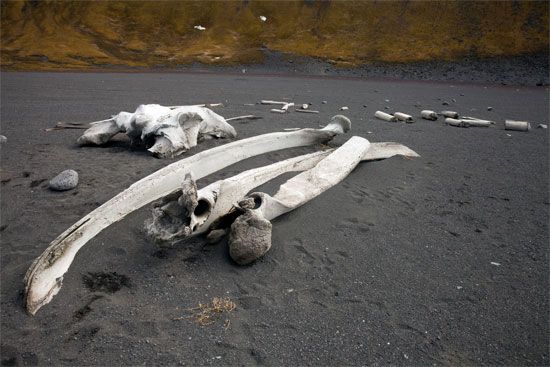
A “whale graveyard” refers to a site where large concentrations of whale bones accumulate, though these locations are not the result of instinctive, purposeful gatherings by the animals. Instead, these sites are shaped by environmental and oceanographic forces.1
Whale graveyards generally occur in two distinct settings:
- Inland or Beach Environments: These sites often result from mass strandings. Over time, the remains of entire pods become covered by layers of sediment, such as sand or rock deposited by floods or mountain runoff.1
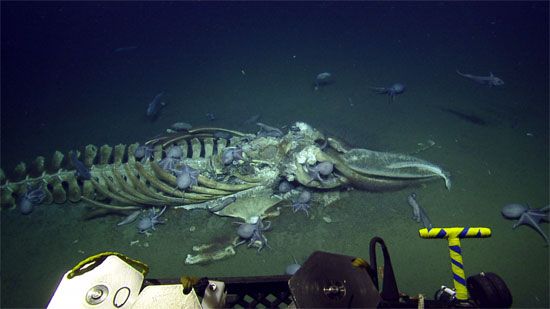
- Deep-Sea Trenches: In the open ocean, carcasses may drift before sinking to the seafloor. In specific areas like the Diamantina Fracture Zone, the V-shaped topography of deep-sea trenches can funnel falling carcasses to the bottom. These areas often serve as thriving biological communities for invertebrates and provide paleontologists with invaluable fossils to study evolution and speciation, particularly among beaked whales.1
How do deep-sea creatures survive in the dark abyssal plains?
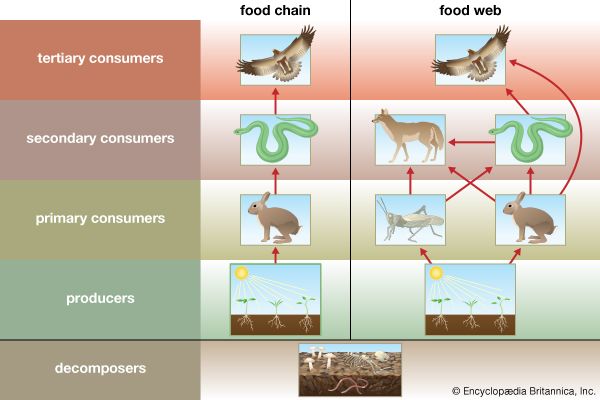
Life in the dark abyssal plains—the vast, deep-sea environment between 2,000 and 6,000 meters—is defined by extreme conditions, including high hydrostatic pressure, near-freezing temperatures, and a total absence of sunlight. To survive in this challenging habitat, organisms have evolved specialized physiological and behavioral adaptations.2
Energy and Nutrition
Because photosynthesis cannot occur in the darkness of the abyss, life relies on organic material that settles from the upper ocean layers, often referred to as marine snow. This debris provides a vital food source for bottom-dwelling scavengers and deposit feeders. Some organisms also sustain themselves through chemoautotrophic bacterial associations, which allow them to derive energy from chemical sources rather than sunlight.23
Adaptations to the Environment
- Pressure: Abyssal animals lack air-filled compartments like lungs or swim bladders, which would collapse under the immense hydrostatic pressure. Instead, their internal body pressures are equal to the external environment.42
- Bioluminescence: Many deep-sea creatures, such as the anglerfish, utilize bioluminescence—a chemically generated light—to attract prey or potential mates in the darkness.56
- Physical Structure: Abyssal fauna are often delicately structured, unstreamlined, and may be gray or black in color. Many mobile species have evolved long legs to navigate soft sediments, while others may be blind.2
- Metabolism: Due to the scarcity of food, many abyssal animals reproduce very slowly and have evolved to be highly efficient in their energy use.2
What causes whales to become stranded on beaches?
Whale strandings occur through a variety of complex factors, and biologists emphasize that there is no single explanation for these events. Some strandings are simply the result of natural mortality; when a whale dies offshore, decomposition gases can cause the carcass to float and eventually wash ashore.11
When live whales strand, the causes are often multifaceted, particularly in mass strandings involving toothed whales. These species, which typically live in deep offshore waters, may struggle to navigate shallow environments or physical borders. Because they are highly social, group ties can prevent them from extricating themselves once they enter dangerous waters.11
Proposed causes for these events include:
- Biological and Health Factors: Epidemic disease, parasitic infestations affecting hearing, or issues with a group leader.11
- Environmental and Behavioral Factors: Pursuit of prey, following ancestral migratory routes, magnetic anomalies, or fright reactions to predators.11
- Sensory Interference: The failure of echolocation in shallow water and the impact of noise pollution, such as naval sonar, which can disrupt navigation and is linked to mass stranding events.1112
How do scientists use fossils to study the evolution of whales?
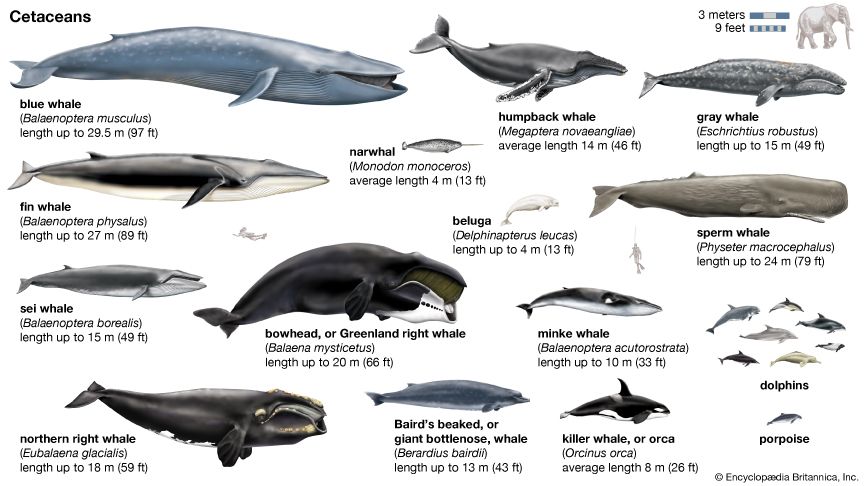
Scientists use the fossil record to reconstruct the evolutionary history of whales by identifying transitional fossils that bridge the gap between terrestrial ancestors and modern aquatic species. By analyzing morphological characteristics—such as tooth structure, skull modifications, and the reduction of limbs—paleontologists can track how cetaceans transitioned from four-legged land mammals into fully aquatic animals.13141516
Key insights from the fossil record include:
- Ancestral Origins: The earliest known fossil cetacean, Pakicetus, dates to the Early Eocene Epoch and provides evidence of the group’s terrestrial roots.13
- Locomotor Evolution: Fossils reveal the shift from limbs used for walking to the development of flippers and horizontal flukes, as well as the internal migration of pelvic remnants.1516
- Diversification: The record documents the rapid diversification of archaeocetes and the eventual emergence of the two modern suborders: toothed whales (Odontoceti) and baleen whales (Mysticeti).1316
- Sensory Development: Fossil evidence tracks the evolution of structures related to echolocation in toothed whales, appearing as early as 27 million years ago.13
Sources
- What Is a Whale Graveyard? — Encyclopædia Britannica
- Marine bioluminescence — Encyclopædia Britannica
- abyssal zone — Encyclopædia Britannica
- abyssal plain — Encyclopædia Britannica
- Marine ecosystem - Plankton — Encyclopædia Britannica
- Biosphere - Hydrostatic pressure — Encyclopædia Britannica
- benthos — Encyclopædia Britannica
- sea ice - Ice salinity , temperature, and ecological interactions — Encyclopædia Britannica
- life - Temperature and desiccation — Encyclopædia Britannica
- deep-sea fish — Encyclopædia Britannica
- cetacean - Stranding — Encyclopædia Britannica
- noise pollution - Effects on humans and wildlife — Encyclopædia Britannica
- cetacean - Paleontology — Encyclopædia Britannica
- cetacean - Locomotor adaptations — Encyclopædia Britannica
- cetacean - Annotated taxonomy — Encyclopædia Britannica
- transitional fossil — Merriam-Webster
- cetacean - Classification — Encyclopædia Britannica
Published on · 4 min read