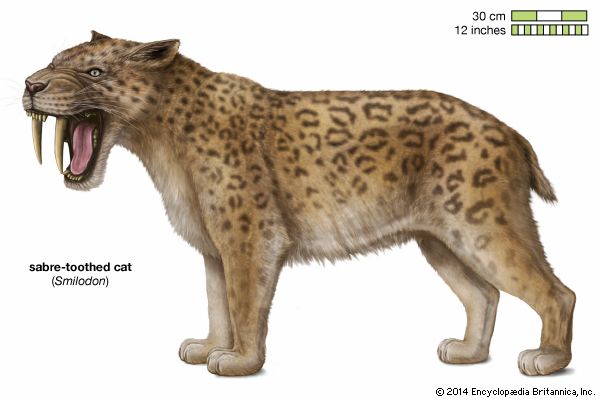
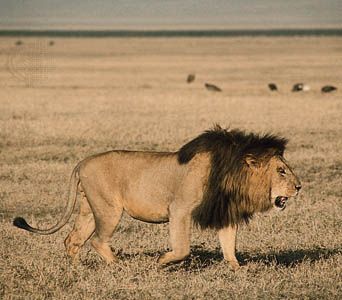
How Big Was a Saber-toothed Tiger?
The term "saber-toothed tiger" is a popular name for the extinct genus Smilodon, though it is important to note that these animals were not true tigers…
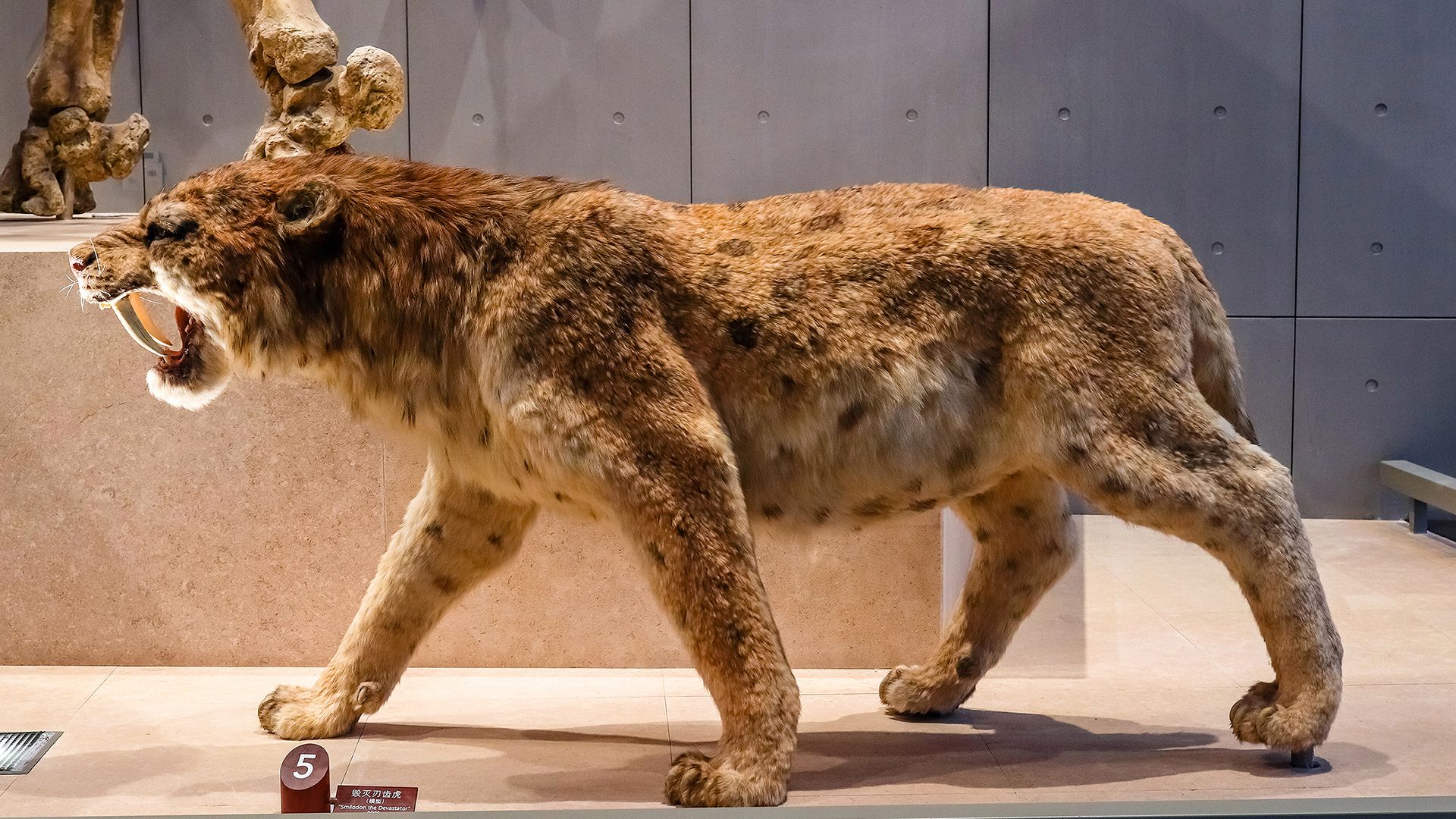
How big was a saber-toothed tiger?
The term “saber-toothed tiger” is a popular name for the extinct genus Smilodon, though it is important to note that these animals were not true tigers, which belong to the subfamily Felinae.12
In terms of size, Smilodon species were generally comparable to modern big cats but were built with a more robust, stocky, and muscular frame. Their physical dimensions varied by species:3
- Smilodon fatalis: Weighed between 160 and 280 kg (350 to 620 pounds), placing it within the weight range of modern lions and tigers.13
- Smilodon populator: This species was significantly larger and more robust, with some estimates reaching up to 400 kg (880 pounds), making it one of the largest cats to have ever lived.3
Unlike modern tigers, which are built for speed and stealth, Smilodon possessed short limbs and powerful forelimbs adapted for grappling and ambush tactics rather than sprinting.3
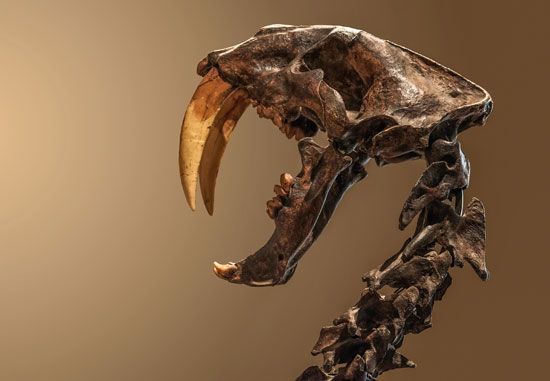
What kind of prey did Smilodon hunt during the Ice Age?
During the Pleistocene Epoch, the genus Smilodon—often called the “saber-toothed tiger”—was a specialized predator that primarily hunted large herbivores.12
Evidence from the fossil record suggests that Smilodon targeted massive prey, such as the mastodon. Its physical anatomy was highly adapted for this hunting style:2
- Canine Teeth: Its elongated, bladelike upper canine teeth, which could reach up to 20 cm (8 inches) in length, were designed for stabbing and slashing attacks.12
- Jaw Mechanics: The jaw could open to a 90° angle, allowing the animal to clear its upper canines for action.12
- Musculature: Its skull and neck were structured to support powerful muscles, which provided the force necessary to drive the head downward into prey.12
Fossil evidence from the La Brea Tar Pits indicates that these cats often scavenged or hunted other animals that had become trapped in the tar.2
How did the La Brea Tar Pits help scientists learn about these cats?
The La Brea Tar Pits in Los Angeles have served as a vital natural laboratory for paleontologists studying the saber-toothed cat. Because the pits consist of thick, sticky pools of asphalt that oozed to the surface from underground petroleum reservoirs, they acted as natural traps for prehistoric animals during the Pleistocene Epoch.4
These pits helped scientists learn about these cats in several key ways:
- Abundant Fossil Preservation: The tar effectively preserved the bones and skulls of thousands of individuals, providing a massive sample size that allows researchers to study the anatomy, growth, and population dynamics of the species.4
- Ecological Context: By unearthing the remains of other animals alongside the cats—such as mammoths, mastodons, and various insects and plants—scientists have been able to reconstruct the environment and the complex food webs of the era.4
- Ongoing Research: With over one million specimens exhumed, the site continues to provide new data on how these predators interacted with their surroundings and why they eventually went extinct.4
Why did saber-toothed cats go extinct while other big cats survived?
The extinction of saber-toothed cats at the end of the Pleistocene Epoch was part of a broader megafaunal extinction event that primarily affected large mammals. Unlike modern big cats, which are generalists adapted for speed and stealth in diverse environments, saber-toothed cats like Smilodon were highly specialized predators.2236
Their survival was closely linked to the availability of the massive herbivores they hunted, such as mastodons. As these large prey species declined or vanished, the specialized hunting adaptations of the saber-toothed cat—such as their immense canine teeth and robust, grappling-focused bodies—became a disadvantage.763
Scientists debate the primary drivers of this collapse, with two main hypotheses:
- Overkill Hypothesis: Suggests that the arrival of skilled human hunters led to the rapid depletion of large prey, subsequently causing the starvation of specialized carnivores.23
- Climatic and Environmental Change: Proposes that abrupt shifts in climate and vegetation reorganized ecosystems, stressing populations and reducing the food sources necessary to sustain such large, specialized predators.23
It is likely that a combination of these factors, varying by region, contributed to their demise.2
Sources
- How big was a saber-toothed tiger? — Encyclopædia Britannica
- sabre-toothed cat — Encyclopædia Britannica
- How big were saber-toothed cats compared to tigers? — Encyclopædia Britannica
- La Brea Tar Pits — Encyclopædia Britannica
- La Brea Tar Pits — Merriam-Webster
- Pleistocene Epoch - Megafaunal extinctions — Encyclopædia Britannica
- Quaternary - Fauna and flora — Encyclopædia Britannica
Published on · 3 min read