Ice Formation
Water exists in three primary states, defined by the behavior and arrangement of its molecules:
What are the three main states of water and how does ice fit into this?
Water exists in three primary states, defined by the behavior and arrangement of its molecules:
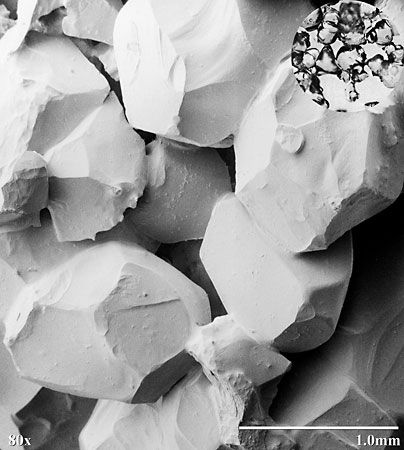
- Solid (Ice): At temperatures of 0 °C (32 °F) or lower, water molecules form a rigid, ordered crystalline lattice. In this state, each oxygen atom collects four neighbors, creating an open, less dense structure than liquid water. This unique property allows ice to float.12
- Liquid: In this state, water molecules are associated in a polymeric structure—chains connected by weak hydrogen bonds. Thermal agitation causes these bonds to constantly break and reform, allowing the molecules to remain more closely packed than in ice.1
- Gaseous (Steam or Water Vapour): At temperatures of 100 °C (212 °F) or higher, water molecules become largely independent. Interactions are minimal, and the substance exists primarily as single molecules.1
Ice is specifically the solid phase of water. While most substances become denser when they freeze, water’s hydrogen bonding creates an open assembly that makes ice less dense, which is why it forms on the surface of lakes rather than sinking.12
What are some different types of ice formations found in nature?
Ice formations in nature are diverse, categorized by their location, method of formation, and physical structure. Here are some of the primary types found in the natural world:
Terrestrial and Perennial Ice
- Glaciers and Ice Sheets: These massive, perennial ice bodies form on land through the compaction and recrystallization of snow over many years.4
- Permafrost and Ground Ice: Permafrost is soil or rock that remains frozen for two or more years. Within it, you can find foliated ice (wedge-shaped sheets in thermal cracks) and pingo ice (lens-shaped or horizontal masses).4
Surface Water Ice
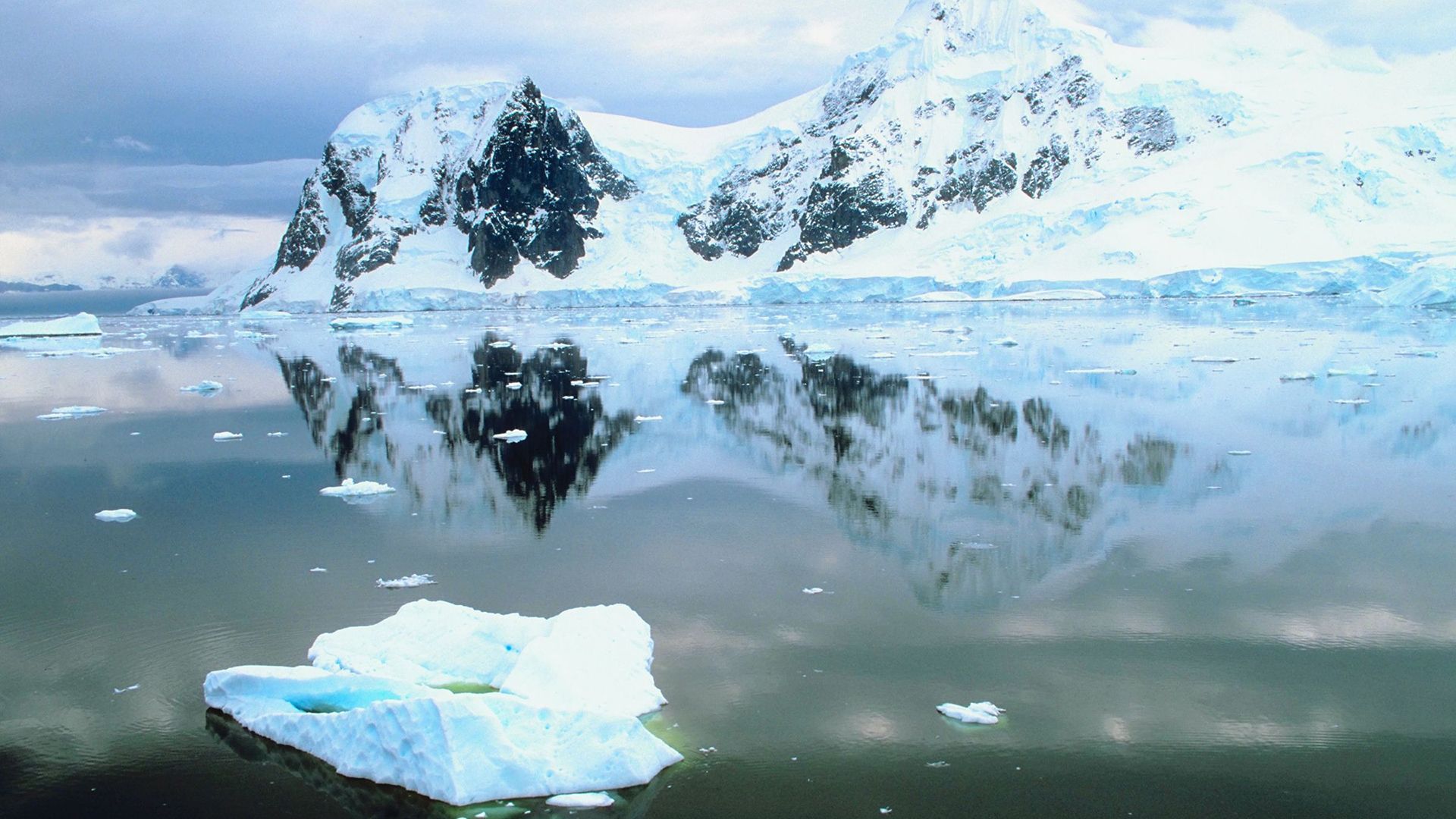
- Sea Ice: Formed by freezing seawater, this includes pack ice (mobile ice drifting with currents and wind) and landfast ice (immobile ice attached to the shore or seafloor). Marine ice is a specific type that forms deep beneath Antarctic ice shelves.5
- River and Lake Ice: These form as sheets on water bodies. In rivers, turbulent flow creates frazil ice—small, thin disks of ice. These can accumulate into anchor ice (on the riverbed), hanging dams (beneath surface ice), or icings (Aufeis or naleds), which are thick buildups formed when water overflows and freezes.67
- Icebergs: Large chunks of ice that break off (calve) from glaciers or ice shelves. In the Arctic, these can also include ice islands, which are large, tabular pieces of ice.48
Atmospheric and Surface Deposits
- Frost: Atmospheric moisture that crystallizes directly onto surfaces. This includes hoarfrost (crystalline structures) and rime (granular ice formed from freezing supercooled water droplets).9
How do glaciers form, and what impact do they have on Earth’s landscape?
Glaciers form through the gradual transformation of snow into dense ice, a process that varies significantly based on local climate and temperature.
The Formation of Glacier Ice
The process begins when snow accumulates and survives through a melting season, becoming known as firn. Over time, the weight of overlying snow compresses these layers, causing the intricate shapes of individual snowflakes to round and sinter together. As density increases, air spaces are sealed off, eventually creating impermeable glacier ice. In warm, wet environments, this transformation can occur in just a few years, while in cold, dry regions like the Antarctica plateau, it may take thousands of years.11
Impact on Earth’s Landscape
Glaciers are powerful agents of geological change, reshaping the landscape through both erosion and deposition:
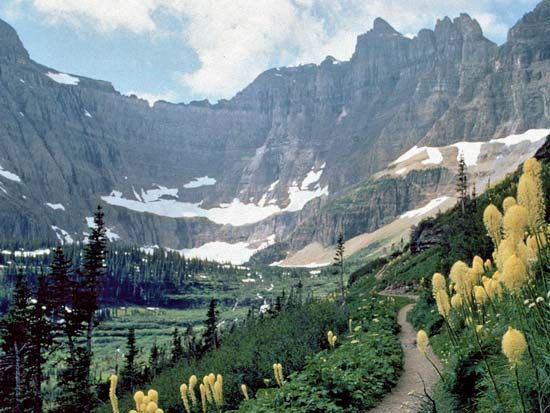
- Erosional Landforms: Glaciers carve out distinct, steep-walled U-shaped valleys from pre-existing V-shaped river valleys. They also create dramatic features such as cirques (amphitheatre-shaped hollows), arêtes (knife-edge ridges), and horns (sharp mountain peaks). When these glaciated valleys are later submerged by the sea, they form fjords.1213
- Depositional Landforms: As glaciers move, they transport and deposit vast amounts of debris. This creates features like moraines (linear ridges of till) and drumlins (streamlined mounds of sediment aligned with ice flow).14
- Global Sea Levels: Glaciers act as massive reservoirs for water. During glacial periods, water is sequestered on land, causing sea levels to drop significantly—up to 120 meters lower than today during the last glacial peak. Conversely, the melting of these ice sheets contributes to rising sea levels, which can flood coastal regions and alter global geography.15
What role does ice play in the water cycle?
Ice plays a critical role in the water cycle by acting as a major reservoir that stores and regulates the movement of water across the planet.1718
Storage and Regulation
Glaciers and ice caps serve as massive storage facilities, holding approximately three-fourths of the world’s fresh water. By accumulating snow over long periods, these ice masses sequester water that would otherwise contribute to immediate runoff. Glaciers also act as natural buffers; they regulate streamflow by releasing meltwater during warmer months, which helps stabilize water availability in regions like the Alps.192018
Phase Changes and Movement
Ice participates in the water cycle through several key processes:
- Sublimation: Ice can transition directly from a solid to a gaseous state (water vapor) without becoming liquid, a process known as sublimation19.21
- Meltwater Runoff: Seasonal melting of snow and glacier ice provides essential water resources. The timing of this runoff is influenced by the glacier’s albedo, which naturally adjusts to weather variations to balance annual discharge.18
- Oceanic Influence: Icebergs and sea ice affect ocean salinity and circulation. While sea ice influences local salinity through its formation and melting, melting icebergs release fresh water that can impact global ocean currents and climate patterns.22
Sources
- ice - The water molecule — Encyclopædia Britannica
- water - Structures of ice — Encyclopædia Britannica
- freezing point — Encyclopædia Britannica
- ice formation — Encyclopædia Britannica
- ice in lakes and rivers - Ice particles — Encyclopædia Britannica
- iceberg - Arctic icebergs — Encyclopædia Britannica
- Frost — Encyclopædia Britannica
- sea ice — Merriam-Webster
- sea ice — Encyclopædia Britannica
- ice in lakes and rivers - Ice buildups — Encyclopædia Britannica
- glacier - Transformation of snow to ice — Encyclopædia Britannica
- glacial landform - Depositional landforms of continental glaciers — Encyclopædia Britannica
- fjord — Encyclopædia Britannica
- Quaternary - Sea-level changes — Encyclopædia Britannica
- glacial landform - Cirques , tarns, U-shaped valleys, arêtes, and horns — Encyclopædia Britannica
- glacier - Glacier flow — Encyclopædia Britannica
- hydrologic sciences - The accumulation of ice — Encyclopædia Britannica
- iceberg - Impact on ocean structure — Encyclopædia Britannica
- Water cycle — Encyclopædia Britannica
- sublimation — Encyclopædia Britannica
- glacier: Top Questions — Encyclopædia Britannica
- hydrosphere - Processes involved in the cycle — Encyclopædia Britannica
- glacier - Glacier hydrology — Encyclopædia Britannica
Published on · 4 min read