Kyzylkum Desert
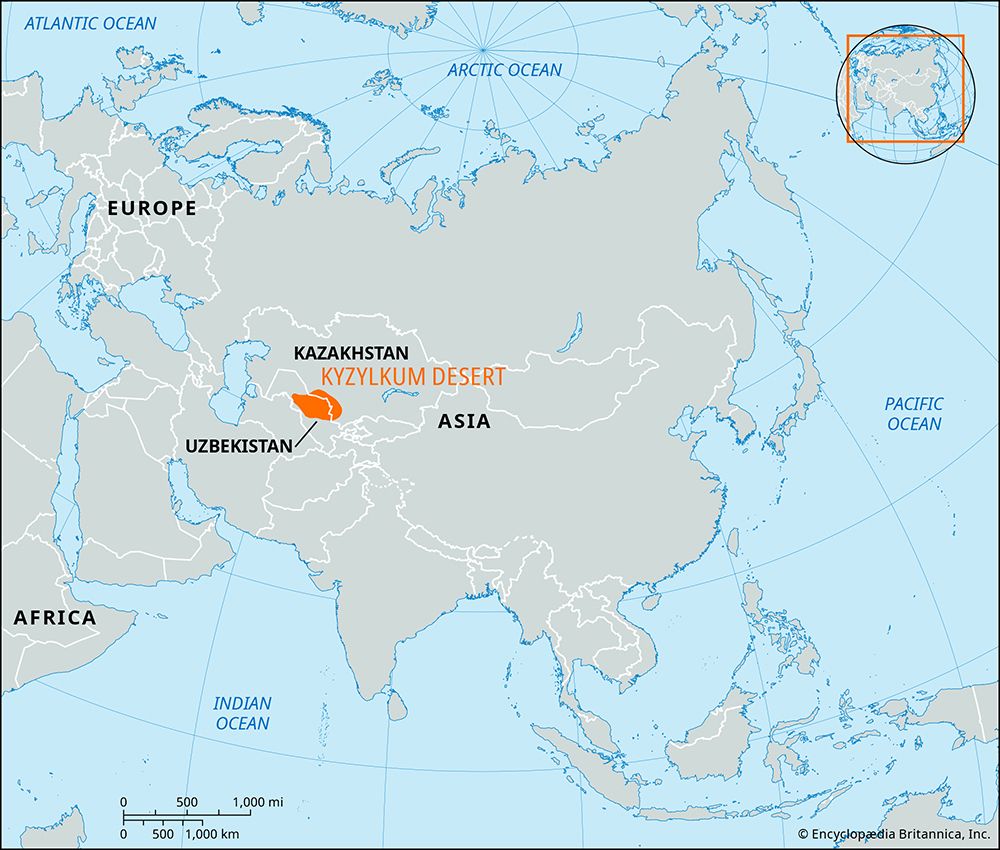
The Kyzylkum Desert is a vast desert spanning approximately 115,000 square miles (300,000 square km) across Kazakhstan and Uzbekistan. Located southeast of…
What is Kyzylkum Desert?
The Kyzylkum Desert is a vast desert spanning approximately 115,000 square miles (300,000 square km) across Kazakhstan and Uzbekistan. Located southeast of the Aral Sea, the region is situated between the Syr Darya and Amu Darya rivers.12
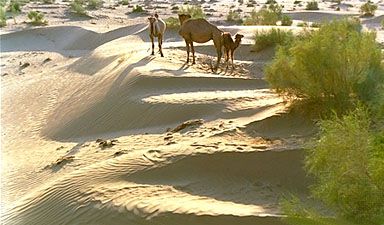
The landscape is primarily a plain that slopes toward the northwest, characterized by sand ridges, several enclosed basins, and isolated mountains reaching heights of up to 3,025 feet. The area receives limited annual precipitation, mostly during the winter and spring.1
Despite its arid conditions, the desert supports plants that serve as pasture for horses, camels, and Karakul sheep. The region also contains significant economic resources, including natural gas deposits at Gazli and gold mining operations at Muruntow.1
What is the significance of the Aral Sea to this region?
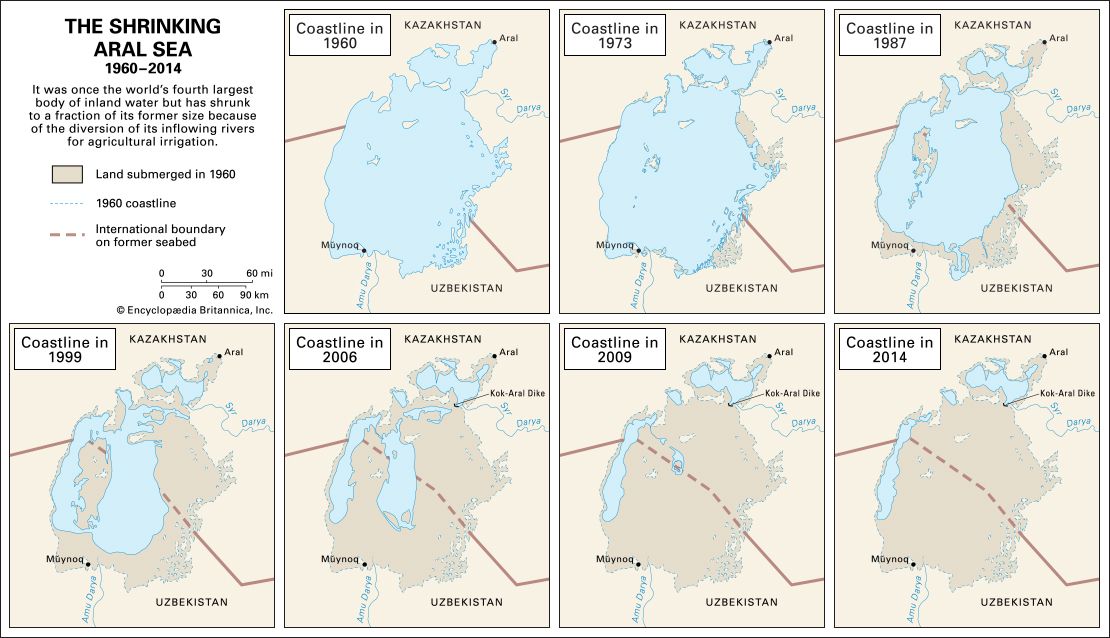
The Aral Sea has historically been a vital component of the Central Asian landscape, serving as a major inland body of water that supported regional biodiversity, climate stability, and economic activity. Once the world’s fourth-largest lake, it acted as a critical hub for a flourishing fishing industry and sustained the livelihoods of surrounding populations.345
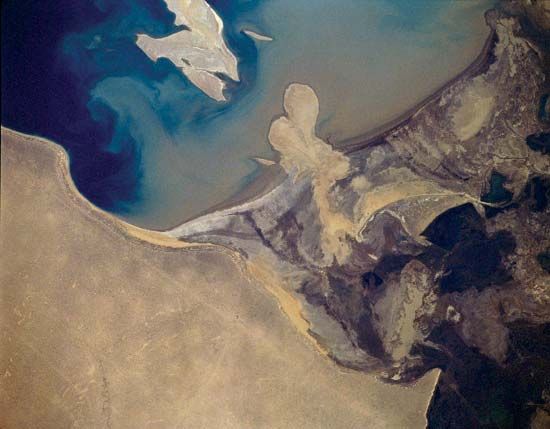
However, the significance of the sea has shifted dramatically due to its catastrophic decline, which began in the 1960s when the Soviet Union diverted the Syr Darya and Amu Darya rivers for large-scale irrigation. This diversion led to severe environmental and humanitarian consequences:34
- Ecological Collapse: The loss of water volume caused intense salinization and pollution from agricultural chemicals, destroying fish populations and the local fishing industry.53
- Public Health Crisis: The exposed seabed produces toxic, salt-laden dust storms that have contributed to high rates of respiratory and chronic diseases among local inhabitants.53
- Climate Alteration: The shrinkage of the sea has resulted in a harsher, more extreme regional climate.3
While projects like the Kok-Aral Dam have helped stabilize parts of the northern sea, the region continues to grapple with the lasting impacts of this environmental disaster.34
How do animals like camels adapt to desert environments?
Animals have evolved remarkable physiological and behavioral adaptations to survive in the harsh, arid conditions of deserts. These strategies primarily focus on moisture conservation and thermoregulation.6
Physiological Adaptations
Many desert animals possess specialized features to manage water and heat:
- Water Retention: Camels are highly efficient, utilizing oval-shaped blood cells that allow them to consume large volumes of water rapidly and maintain blood flow even when dehydrated. Other animals, such as reptiles and birds, derive necessary moisture directly from their food, such as insects or plant fluids.78
- Metabolic Efficiency: Camels store fat in their humps, which provides nourishment during food scarcity and helps regulate body temperature by concentrating insulation in one area. They can also tolerate significant dehydration, losing up to 25–30 percent of their body weight, and can produce highly concentrated urine and dry feces to minimize water loss.79
- Temperature Tolerance: Some animals can allow their body temperature to rise significantly before resorting to sweating, which reduces water loss.9
Behavioral Adaptations
- Nocturnal Habits: Many mammals, including rodents and rabbits, are nocturnal, remaining in cool, humid underground burrows during the heat of the day to avoid dehydration.86
- Thermoregulation: Lizards use behavioral thermoregulation, such as basking in the sun to reach a “preferred temperature” or seeking shade to avoid overheating.10
What are the major differences between sandy and rocky deserts?
Deserts are diverse environments, and their classification often depends on their surface composition. The primary distinction between sandy and rocky deserts lies in their geomorphic features and the materials that dominate their landscapes.
Sandy Deserts
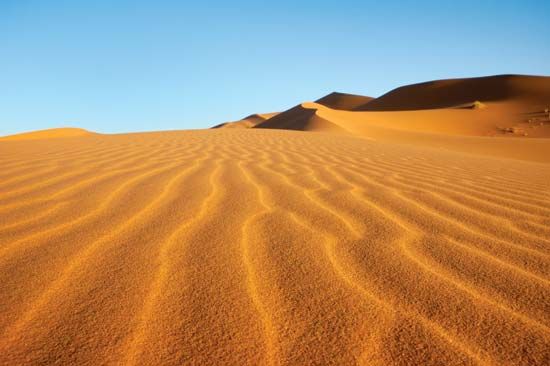
Sandy deserts, often referred to as ergs or sand seas, are characterized by large accumulations of loose, windblown sand. These areas are defined by:
- Active Landforms: They feature shifting sand dunes and sand sheets, which are shaped by wind and gravity.11
- Composition: The sand is typically composed of quartz, which resists chemical weathering, though gypsum or volcanic ash can also form dunes in specific regions.12
- Accessibility: These regions are often considered the harshest and most difficult to traverse due to the instability of the surface.1314
Rocky Deserts
Rocky deserts, sometimes called hammadas, are defined by their hard, stable surfaces. Key characteristics include:
- Surface Structure: These regions consist of rock-floored or rock-strewn plateaus, often featuring desert pavement made of coarse gravel and stones.1415
- Desert Varnish: The stones are frequently coated with a dark, glossy patina known as desert varnish, consisting of iron and manganese oxides.14
- Topography: They are often cut by steep-sided, dry valleys called wadis, creating a rugged, boulder-strewn landscape that contrasts sharply with the undulating nature of sandy ergs.14
Sources
- Kyzylkum Desert — Encyclopædia Britannica
- Kyzyl Kum — Merriam-Webster
- Uzbekistan - Drainage — Encyclopædia Britannica
- Aral Sea — Encyclopædia Britannica
- 6 Lakes That Are Drying Up - Aral Sea — Encyclopædia Britannica
- Do Camels Store Water in Their Humps? — Encyclopædia Britannica
- camel - Natural history — Encyclopædia Britannica
- lizard - Thermoregulation — Encyclopædia Britannica
- North American Desert - Animal life — Encyclopædia Britannica
- Desert - Population and community development and structure — Encyclopædia Britannica
- erg — Encyclopædia Britannica
- Desert - Environment — Encyclopædia Britannica
- list of deserts — Encyclopædia Britannica
- hammada — Merriam-Webster
- sand dune - Sands — Encyclopædia Britannica
- sand dune — Encyclopædia Britannica
- Namib - Physiography — Encyclopædia Britannica
Published on · 4 min read