Mustache Shrimp
A mustache shrimp is a common name for any member of the crustacean subclass Mystacocarida. These are small, primitive, free-living marine animals that…
What is mustache shrimp?
A mustache shrimp is a common name for any member of the crustacean subclass Mystacocarida. These are small, primitive, free-living marine animals that inhabit sandy bottoms in shallow waters and the intertidal zone.1
The body of a mustache shrimp is tubular and features a long abdomen. They are characterized by thick, bristly antennules that extend approximately two-thirds of their body length. These organisms are quite small; for instance, the largest known species, Derocheilocaris galvarina, reaches lengths of only 0.5 mm (about 0.02 inch).1
The first species of this group was discovered in 1943 near Woods Hole, Massachusetts. Different species are distributed globally, with D. typicus found on the Atlantic coast of the United States, D. galvarina along the Pacific coast of South America, and D. remani inhabiting the coasts of Africa and Europe.1
What are the main characteristics of crustaceans?
Crustaceans are a diverse subphylum of arthropods comprising approximately 45,000 species worldwide. While they exhibit significant structural variety, they share several defining characteristics:23
- Appendages: Crustaceans are distinguished from other arthropods by having two pairs of appendages in front of the mouth—the antennules and antennae—and paired appendages near the mouth that function as jaws.2
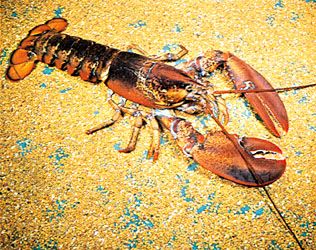
- Body Plan: Many crustaceans follow a segmented body plan consisting of a head, thorax, and abdomen. In many groups, such as decapods, the head and thorax are fused into a cephalothorax, which is often covered by a protective shield called a carapace a protective shield called a carapace.456
- Habitat: They are primarily aquatic animals, inhabiting environments ranging from marine to freshwater, though some species have adapted to terrestrial life.25
- Development: Many crustaceans undergo a complex life cycle that begins with a nauplius larva, characterized by a simple, unsegmented body, three pairs of appendages, and a single eye.6
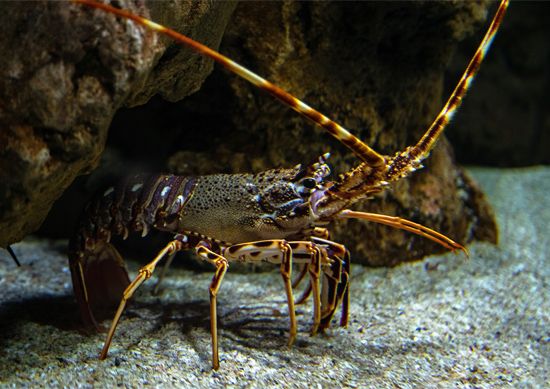
- Diversity: The group includes well-known animals like crabs, lobsters, shrimp, and wood lice, as well as a vast array of less familiar forms.23
What is the intertidal zone and why is it important?
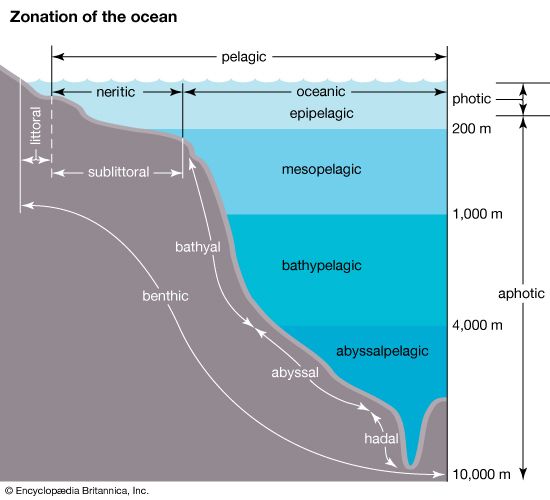
The intertidal zone, also known as the littoral zone, is the marine environment that extends from the high-tide mark to the low-tide mark. This area is defined by the regular, predictable rise and fall of sea levels caused by the gravitational forces of the Moon and the Sun.8910
Characteristics and Importance
The intertidal zone is a dynamic environment characterized by alternating periods of submergence and exposure. This unique setting is significant for several reasons:11
- High Biological Activity: The zone is rich in dissolved oxygen, sunlight, and nutrients, making it a highly productive area for diverse marine life.11
- Diverse Habitats: Depending on the substrate, the zone supports varied ecosystems, including rocky shores, sandy beaches, and muddy bottoms. These areas host a wide array of organisms, such as algae, mussels, barnacles, crabs, and burrowing mollusks.1112
- Ecological Role: The intertidal zone serves as a critical interface between land and sea. The movement of tides distributes wave energy and transports sediments, which helps shape coastal landforms and influences the distribution of species.9
How do microscopic animals survive in sandy environments?
Microscopic animals have evolved diverse strategies to survive in sandy environments, where they must navigate shifting grains and fluctuating conditions.
- Interstitial Adaptation: Some organisms, such as certain gastropods, have adapted to live specifically in the interstices, or the tiny spaces between sand grains.13
- Cryptobiosis: Tardigrades, or water bears, are microscopic organisms capable of surviving in extreme environments, including deserts. When faced with harsh conditions, they enter a state of cryptobiosis—a desiccated, deathlike state—in which they can remain for decades before returning to active life upon exposure to water.14
- Oxygen Management: In sandy or muddy environments where oxygen may be limited, some small animals, such as nematodes, have developed high resistance to hypoxia. Many can survive indefinitely in the complete absence of oxygen, allowing them to inhabit deeper layers of the substrate rather than being restricted to the surface.15
- Feeding Strategies: Animals like scaphopods dwell within sand or sandy mud, using specialized head tentacles called captacula to capture protozoa, small crustaceans, or other microscopic prey.13
Sources
- mustache shrimp — Encyclopædia Britannica
- crustacean — Encyclopædia Britannica
- crustacean - Reproduction and life cycles — Encyclopædia Britannica
- crustacean - Ecology — Encyclopædia Britannica
- List of crustaceans — Encyclopædia Britannica
- malacostracan - Size range and diversity of structure — Encyclopædia Britannica
- decapod — Encyclopædia Britannica
- littoral zone — Encyclopædia Britannica
- Marine ecosystem - Benthos — Encyclopædia Britannica
- Marine ecosystem - Geography, oceanography, and topography — Encyclopædia Britannica
- coastal landforms - Tides — Encyclopædia Britannica
- What causes tides in the ccean? — Encyclopædia Britannica
- Salt marsh — Encyclopædia Britannica
- mollusk - Habitats, feeding habits, and associations — Encyclopædia Britannica
- 8 Animals That Live in Extreme Environments — Encyclopædia Britannica
Published on · 3 min read