North Island
New Zealand’s flora and fauna are characterized by high levels of endemism due to the country's long-term isolation, with nearly nine-tenths of indigenous…
How does the flora and fauna of the North Island differ from the South Island?
New Zealand’s flora and fauna are characterized by high levels of endemism due to the country’s long-term isolation, with nearly nine-tenths of indigenous plants being unique to the islands. While both the North and South islands share many of these native species, their distribution is influenced by distinct climatic and geological differences.123
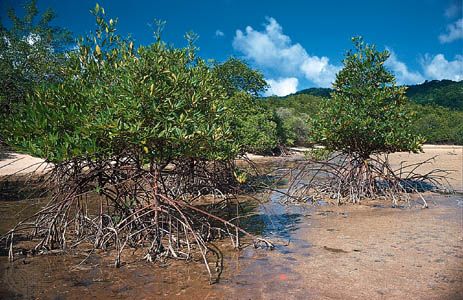
The North Island features a more benign, subtropical climate, particularly in the north, where mangrove swamps are found. In contrast, the South Island is dominated by the rugged Southern Alps, which create sharp climatic contrasts between the wet west coast and the drier east. Native “bush” remains in areas unsuitable for settlement, with false beech being a predominant forest tree along the mountain chains of both islands.231
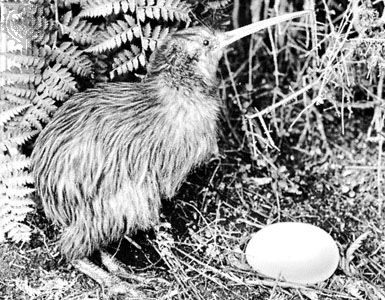
Regarding fauna, New Zealand is noted for its lack of native land predators, which allowed for the evolution of unique flightless birds such as the kiwi and takahe. Endemic reptiles, including geckos, skinks, and the tuatara, are found across the country, though they are now largely restricted to protected areas or outlying islands.1
How has the North Island’s economy developed over time?
The economic development of the North Island has been shaped by a transition from early resource extraction to a diverse, modern economy. In the early 19th century, the region’s economy was driven by whaling, timber, and flax, with trade centers like Kororareka (now Russell) serving as hubs for international vessels.5
During the mid-19th century, economic growth in the North Island was significantly retarded by conflicts, while the South Island experienced a boom driven by gold and pastoral farming. The North Island did not regain its economic lead until the 20th century. Following the abolition of provincial governments in 1876, the central government took a more active role in development, notably through the public works policies of Julius Vogel, which expanded infrastructure.6
The introduction of refrigeration in the 1880s was a turning point, enabling the export of meat and dairy products and fostering intensive small-scale farming. Today, the North Island—anchored by Auckland—is a center for manufacturing, financial services, and the film industry, contributing significantly to the national GDP.67
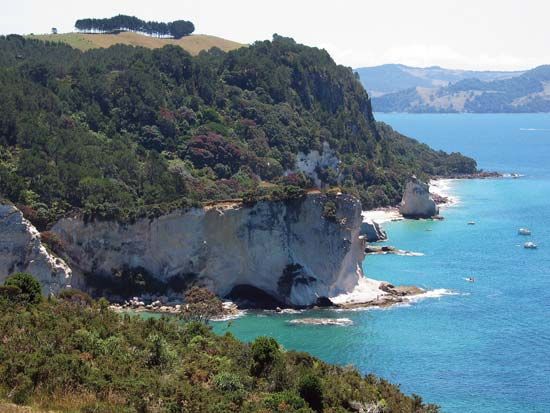
How does the North Island’s geography differ from the South Island?
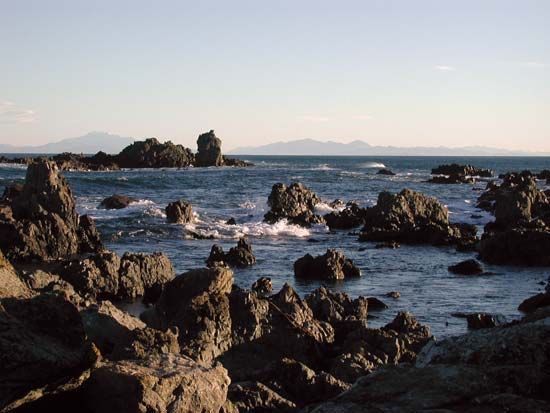
The geography of New Zealand’s North and South islands is defined by distinct geological processes and terrain characteristics. While both islands are bisected by mountain ranges, their physical landscapes differ significantly.1312
South Island
The South Island is characterized by its rugged, mountainous terrain, which covers nearly three-quarters of its landmass. The central Southern Alps form a 300-mile-long chain of fold mountains, including the country’s highest peak, Aoraki/Mount Cook. This range creates a sharp climatic divide: the western slopes are narrow and wet, while the eastern side features the broad, alluvial Canterbury Plains. The southwest is dominated by the dramatic, glaciated landscape of Fiordland.12113
North Island
The North Island’s terrain is generally less precipitous than the South Island’s. It is defined by significant volcanism, with the central Volcanic Plateau rising from Lake Taupō, an ancient volcanic crater. The island features rolling farmlands, such as those in the Taranaki region, and a more benign, subtropical climate in the north, which is marked by deep-encroaching inlets and mangrove swamps.1
What is the history of Maori settlement on the North Island?
The history of Māori settlement on the North Island is rooted in the arrival of Polynesian voyagers in New Zealand, generally dated to about 1300 CE. These settlers brought with them dogs, rats, and plants such as the kumara (sweet potato), taro, and yam.1617
Phases of Settlement
Historians often divide the pre-European period into distinct phases:
- Colonization (until c. 1400): Settlers established base camps along the coasts, focusing on exploiting abundant animal food resources, such as the flightless moa17.
- Transitional (c. 1400–1600): This phase saw population growth, a shift toward a diet of fish, shellfish, and plants, and the emergence of food-storage pits.17
- Traditional (c. 1600–European contact): Māori culture reached a high point, particularly in the North Island, characterized by the construction of inland villages, advanced agriculture, and sophisticated arts, including sculpture and architecture.1718
By the classic period, approximately 90 percent of the Māori population resided on the North Island, which became the center for the development of distinct carving styles and social structures. Māori society was organized into iwi (tribes), hapū (subtribes), and whānau (extended families), with landholding primarily managed at the hapū level.1816
Sources
- New Zealand - Relief of New Zealand — Encyclopædia Britannica
- biogeographic region - New Zealand region — Encyclopædia Britannica
- New Zealand - Climate — Encyclopædia Britannica
- New Zealand - Plant and animal life — Encyclopædia Britannica
- New Zealand - Economy of New Zealand — Encyclopædia Britannica
- history of New Zealand - Fluctuation of the economy — Encyclopædia Britannica
- New Zealand - Early European settlement — Encyclopædia Britannica
- Auckland — Encyclopædia Britannica
- New Zealand - Manufacturing — Encyclopædia Britannica
- New Zealand - Services — Encyclopædia Britannica
- New Zealand - Agriculture, forestry, and fishing — Encyclopædia Britannica
- North Island — Encyclopædia Britannica
- Southern Alps/Kā Tiritiri o te Moana — Encyclopædia Britannica
- Mount Taranaki — Encyclopædia Britannica
- South Island — Encyclopædia Britannica
- Māori — Encyclopædia Britannica
- history of New Zealand - Discovery of New Zealand — Encyclopædia Britannica
- New Zealand - Settlement patterns — Encyclopædia Britannica
- Oceanic art and architecture - New Zealand — Encyclopædia Britannica
- Oceanic art and architecture - Polynesia — Encyclopædia Britannica
Published on · 4 min read