Painted Turtle
The painted turtle (Chrysemys picta) is an omnivorous species that maintains a varied diet consisting of plants, small animals, and carrion. Because they are…
What is the diet of painted turtles and how do they hunt for food?
The painted turtle (Chrysemys picta) is an omnivorous species that maintains a varied diet consisting of plants, small animals, and carrion. Because they are opportunistic feeders, they consume whatever food sources are readily available within their freshwater habitats.1
While the provided information confirms that painted turtles are omnivores that consume a mix of vegetation and animal matter, the specific hunting techniques they employ to capture their prey are not detailed in the current Britannica records. Generally, turtles exhibit diverse feeding behaviors—ranging from active pursuit to scavenging—but specific behavioral data for Chrysemys picta remains limited in this knowledge base.12
Where do painted turtles typically live and what is their habitat like?
The painted turtle (Chrysemys picta) is a widespread North American reptile found across a vast range extending from southern Canada to northern Mexico.1
These turtles typically inhabit quiet, shallow bodies of fresh water. Their preferred environment features a soft, mud bottom that is thickly planted with vegetation, which provides both cover and food sources.1
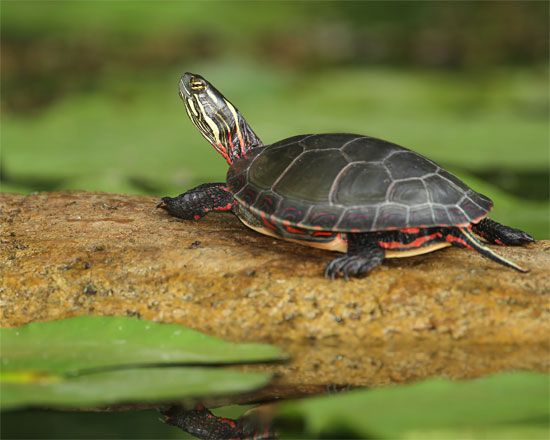
A defining characteristic of their habitat usage is the presence of objects such as logs or rocks, which the turtles use for basking in large groups. Because they are cold-blooded, this behavior is essential for thermoregulation. Additionally, their habitat must support their seasonal needs; in many regions, these turtles hibernate in the water during the winter months. When it is time to reproduce, females seek out nesting sites on land located near the water’s edge to lay their eggs.1
What are the physical characteristics of painted turtles?
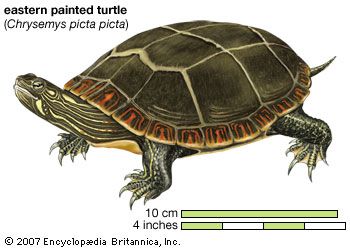
The painted turtle (Chrysemys picta) is a reptile characterized by its smooth, relatively flat shell, which typically measures between 14 and 18 cm (5.5 to 7 inches) in length in adults.1
The physical appearance of the species includes the following features:
- Carapace (upper shell): The shell is generally black or greenish brown in color. It is adorned with distinctive red and yellow markings along its margins. The scutes—the individual plates making up the shell—may be bordered in yellow, red, or olive.14
- Plastron (lower shell): The underside of the turtle is yellow.4
- General Build: As a member of the family Emydidae, it possesses a streamlined, smooth-shelled body adapted for its freshwater environment.1
How do painted turtles differ from other turtle species in terms of appearance and behavior?
The painted turtle (Chrysemys picta) is distinguished from other turtle species by its unique combination of physical traits and social behaviors.
Appearance
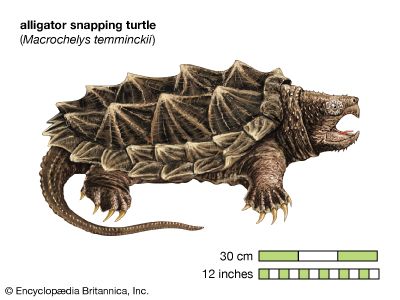
Unlike many other turtles that may have drab or uniform shells, the painted turtle is known for its brightly marked, smooth, and relatively flat carapace, which is black or greenish brown with distinct red and yellow markings along the margins. Its plastron (underside) is characteristically yellow. While other species, such as the snapping turtle, possess rugged or specialized shells for defense or camouflage, the painted turtle’s streamlined build is specifically adapted for its life in quiet, shallow freshwater environments.142
Behavior
In terms of behavior, painted turtles are highly social compared to more solitary species like the bog turtle. They are frequently observed basking in large groups on logs and other objects to regulate their body temperature. Their diet is also notably flexible; while some turtles are strictly carnivorous or herbivorous, the painted turtle is an opportunistic feeder that consumes a mix of plants, small animals, and carrion.12
Sources
- painted turtle — Encyclopædia Britannica
- What do turtles eat? — Encyclopædia Britannica
- turtle - Feeding behaviour — Encyclopædia Britannica
- painted turtle — Merriam-Webster
- turtle - Habitats — Encyclopædia Britannica
Published on · 3 min read