Pechora Sea
The Pechora Sea is a body of water located north of European Russia, serving as a southeastern extension of the Barents Sea. It is bounded by Kolguyev Island…
What is Pechora Sea?
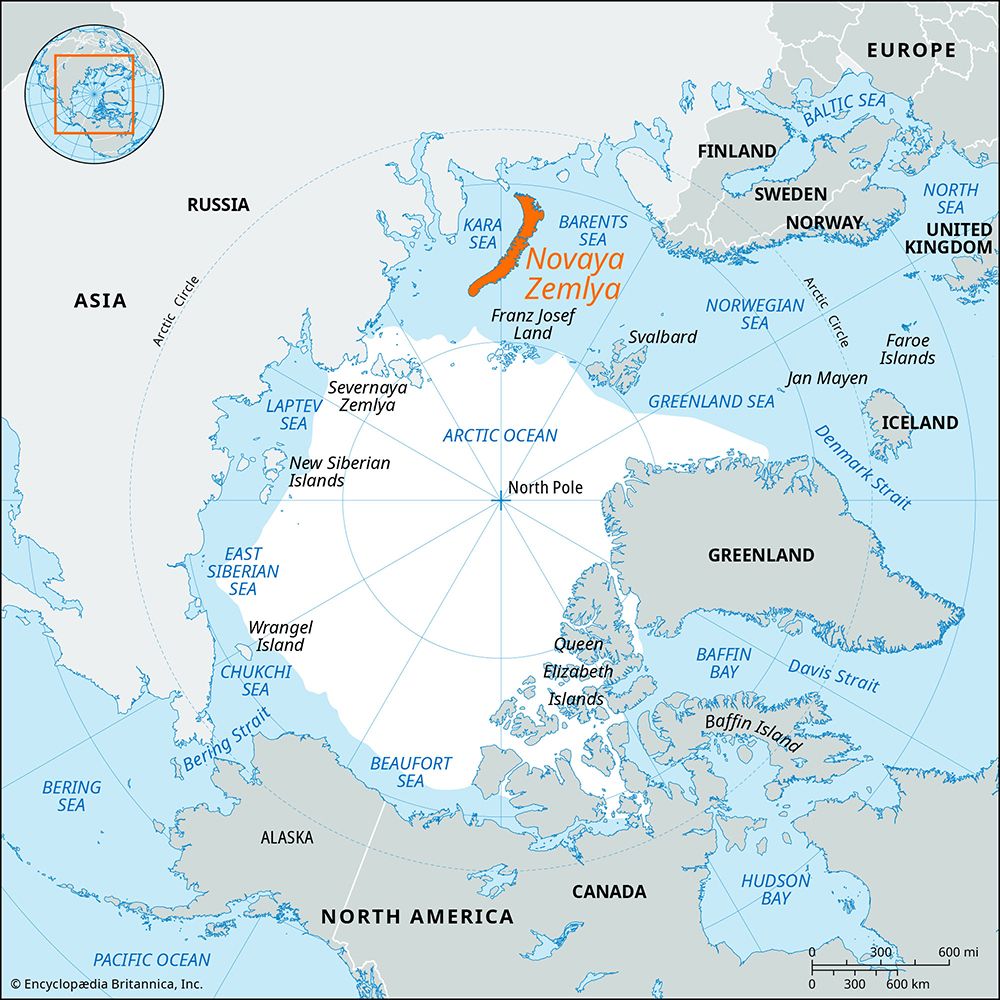
The Pechora Sea is a body of water located north of European Russia, serving as a southeastern extension of the Barents Sea. It is bounded by Kolguyev Island to the west, the Yugorsky Peninsula to the east, and Novaya Zemlya to the north.1
The sea is relatively shallow, with an average depth of 20 feet (6 meters), though it reaches a maximum depth of 690 feet (210 meters). Its environment is significantly influenced by the inflow of the Pechora River, which also serves as a vital transport route for timber through the port of Naryan-Mar. Due to its northern location, the sea is typically obstructed by floating ice from November through June. The region supports various marine life, including cod and seals, and is part of a broader area known for its significant natural resources.12
How does the Barents Sea connect to the Arctic Ocean?
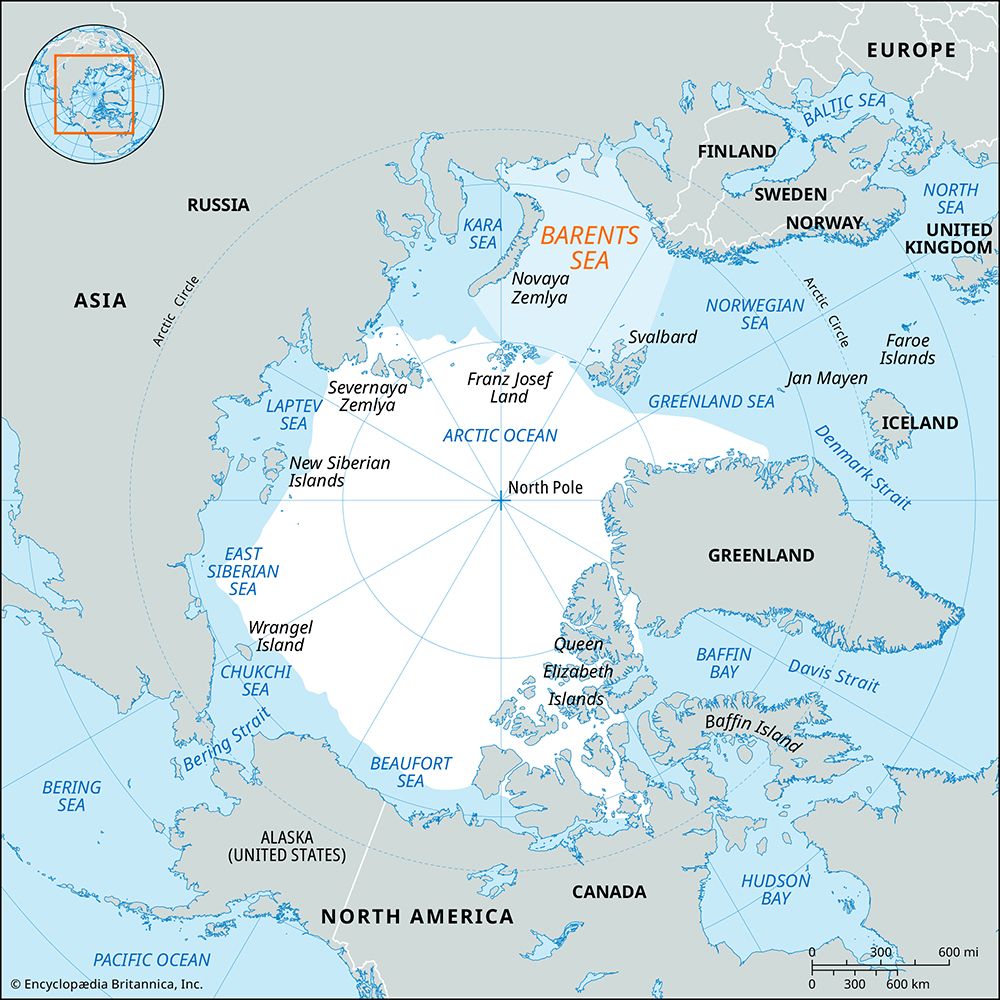
The Barents Sea is an outlying portion of the Arctic Ocean, situated as a marginal sea along the Eurasian continental shelf. It connects to the broader Arctic Ocean through its northern boundaries, which are defined by the archipelagoes of Svalbard and Franz Josef Land.34
While the Arctic Ocean is primarily connected to the Atlantic via the deep channel of the Fram Strait, the Barents Sea serves as one of the secondary routes for water exchange. Approximately one-quarter of the volume of water transported southward from the Arctic Basin passes through the Barents and Kara seas. Additionally, the Barents Sea is a key segment of the Northeast Passage, a maritime route that facilitates navigation along the northern coast of the Eurasian landmass, linking the Atlantic and Pacific oceans through the Arctic.45
What kind of wildlife lives in the Arctic seas?
The Arctic marine ecosystem is dominated by warm-blooded mammals, which are well-adapted to the cold environment. The wildlife in these seas includes a diverse array of species that rely on complex food webs, often centered around algae that grow within sea ice6.6
Marine Mammals
- Whales: Arctic species include the beluga and narwhal. The bowhead whale is also found in regions like the Beaufort Sea and Baffin Bay, while killer whales are frequent visitors.6
- Seals: Typical Arctic species include the ringed and bearded seals. Migratory species such as the harp seal and hooded seal also inhabit these waters.6
- Polar Bears: These are considered essentially aquatic animals, as they are at home in the sea, on sea ice, and on land.6
Fish and Birds
- Fish: Fish are less abundant in the Arctic zone compared to mammals. Key species include the arctic char and two small gadids, the polar cod and arctic cod.6
- Birds: Many marine birds migrate to the Arctic in summer. Common groups include the auk family (such as murres and guillemots), various sea ducks, gulls, terns, and jaegers.6
Why is the Pechora River important for the region’s economy?
The Pechora River is vital to the economy of the Komi region, primarily serving as a hub for resource extraction and transportation. Its basin contains significant deposits of coal, petroleum, and natural gas, which form the foundation of the area’s industrial development.210
Key economic contributions include:
- Mining: The Vorkuta and Inta areas are major centers for coal mining, while regions like Usinsk, Vozey, and Ukhta are significant for oil and gas production.10
- Timber Industry: The river is heavily utilized for timber rafting, and the production of wood products—such as barges, veneers, and prefabricated houses—is a key local industry.210
- Transportation: Despite being frozen for much of the year, the river is navigable as far as Ust-Unya, and the port of Naryan-Mar serves as an important gateway for exporting timber. The construction of the Pechora railway further integrated these resource-rich areas into the broader economy.2110
Sources
- Pechora Sea — Encyclopædia Britannica
- Pechora River — Encyclopædia Britannica
- Barents Sea — Encyclopædia Britannica
- Arctic Ocean - Oceanography — Encyclopædia Britannica
- Northeast Passage — Encyclopædia Britannica
- Arctic - Marine fauna — Encyclopædia Britannica
- Inuit: Top Questions — Encyclopædia Britannica
- sea ice - The emerging impacts of recent changes to sea ice — Encyclopædia Britannica
- Ectotherm — Encyclopædia Britannica
- Komi — Encyclopædia Britannica
- Komi — Encyclopædia Britannica
Published on · 3 min read