Phalanger
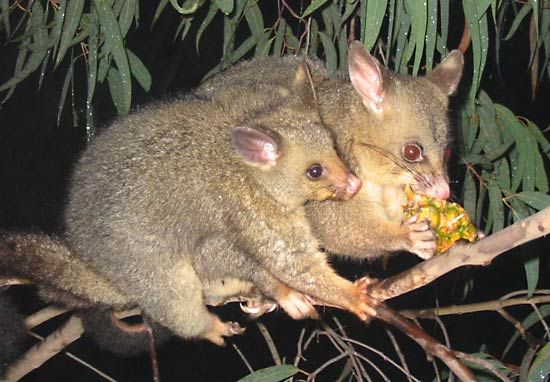
Phalangers, which are marsupial mammals commonly known as possums in Australia and Tasmania, face several significant threats in their natural habitats.
What threats do phalangers face in their natural habitats?
Phalangers, which are marsupial mammals commonly known as possums in Australia and Tasmania, face several significant threats in their natural habitats.
These arboreal animals are vulnerable to the following pressures:
- Predation: They are natural prey for snakes and cats.1
- Human Activity: Historically, they have been trapped for their fur.1
- Habitat Loss: The destruction and alteration of their forest environments pose a major threat to their survival.1
While some species, such as the scaly-tailed possum, are protected due to their endangered status, others like the brush-tailed possum are so widely distributed that they are sometimes managed as pests. It is essential to recognize that the loss of biodiversity and the endangerment of these unique creatures highlight the urgent need for responsible environmental stewardship and the preservation of forest ecosystems.1
How do phalangers compare to other marsupials like possums or koalas?
The term “phalanger” is often used interchangeably with “possum” in Australia and Tasmania, as they belong to the same group of marsupial mammals. While “phalanger” specifically refers to members of the family Phalangeridae—such as the cuscus and brush-tailed possums—the name is frequently applied to a broader range of arboreal marsupials across several families.123
Comparisons and Classification
Phalangers are distinguished by their adaptations for an arboreal (tree-dwelling) lifestyle, including prehensile tails and opposable digits that allow them to grasp branches. They are often considered the marsupial ecological equivalents of placental mammals like monkeys, sloths, and squirrels.12
When compared to other marsupials, their relationships are defined by the order Diprotodontia:3
- Possums: Many species commonly called “possums” belong to families other than Phalangeridae, such as the Petauridae (gliders and striped possums), Burramyidae (pygmy possums), and Pseudocheiridae (ringtail possums). These groups share similar arboreal habits but differ in specific anatomical features like tooth structure or gliding membranes.31
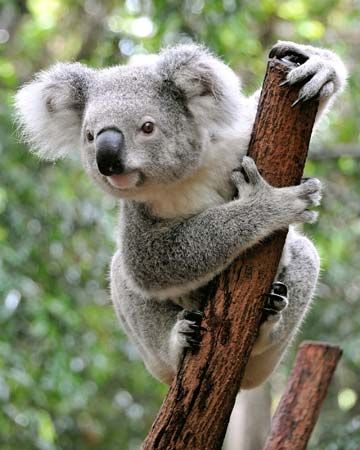
- Koalas: The koala belongs to its own family, Phascolarctidae. While it is also an arboreal, herbivorous marsupial, it is more closely related to the wombat (family Vombatidae) than to the phalangers.3
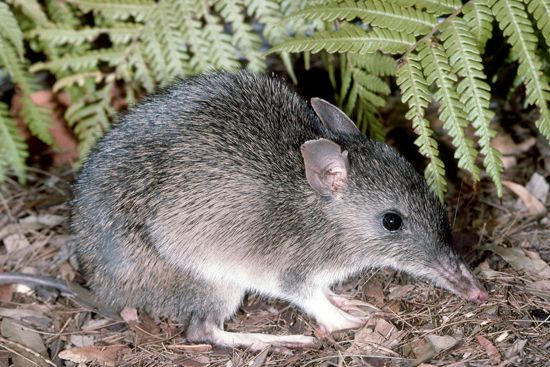
- Other Marsupials: Unlike terrestrial marsupials such as kangaroos or bandicoots, phalangers are specialized for life in the canopy, feeding primarily on fruits, leaves, and blossoms.134
How do phalangers reproduce and care for their young?
Like other marsupials, phalangers reproduce by giving birth to young that are in a highly underdeveloped, embryonic state. Because they belong to the infraclass Metatheria, their reproductive cycle is characterized by a short gestation period, after which the newborn must make an arduous journey to the mother’s marsupium, or pouch.4
Once the young, known as a joey, reaches the pouch, it attaches itself to a milk-giving teat. This attachment is often so firm that the teat swells and effectively fuses to the young’s mouth tissues, providing a secure source of nourishment as it continues its development for several weeks or months.4
In species where the pouch is absent or less developed, the young simply cling to the exposed teats. As the joey grows, it eventually begins to emerge from the pouch to explore its surroundings, though it remains dependent on the mother for milk and protection until it is fully weaned and capable of looking after itself.4
What role do phalangers play in their ecosystem?
Phalangers, which include species like the cuscus, play a significant role as herbivorous members of the forest ecosystems in Australia, Tasmania, and New Guinea. Their ecological contributions are primarily defined by their diet and their position within the food web.18
- Dietary Impact: As herbivores, phalangers feed on fruits, leaves, and blossoms. By consuming these plant materials, they interact with the vegetation of their native rainforests and woodlands, potentially influencing plant distribution through their feeding habits.1
- Food Web Dynamics: Phalangers serve as a vital food source for various predators, including snakes and cats, thereby supporting the populations of these carnivores within their habitats.1
- Niche Occupation: Being tree-dwelling animals, they occupy the forest canopy, filling an ecological niche similar to that of various placental mammals in other parts of the world.1
While some species, such as the brush-tailed possum, are so successful that they are considered pests in certain regions, others are endangered due to habitat loss and predation, highlighting the delicate balance they maintain within their environments.1
Sources
- phalanger — Encyclopædia Britannica
- Phalangeridae — Merriam-Webster
- marsupial - Classification — Encyclopædia Britannica
- marsupial — Encyclopædia Britannica
- phalanger — Merriam-Webster
- What are baby koalas called? — Encyclopædia Britannica
- kangaroo - Reproduction and development — Encyclopædia Britannica
- Papua New Guinea - Plant and animal life — Encyclopædia Britannica
Published on · 3 min read