Wombat
Wombats are heavily built, virtually tailless marsupials native to Australia. They typically measure 80 to 120 cm in length and possess small eyes and short…
What are the unique physical characteristics of wombats?
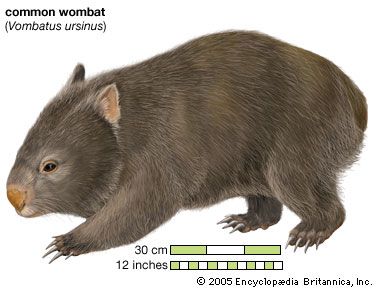
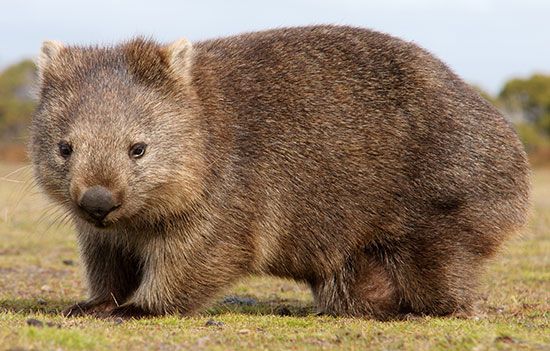
Wombats are heavily built, virtually tailless marsupials native to Australia. They typically measure 80 to 120 cm in length and possess small eyes and short ears.1
Key physical characteristics include:
- Skull and Teeth: Wombats have flattened skulls with extremely thick bones. Unlike other marsupials, they feature continuously growing, rootless teeth—including rodentlike incisors—adapted for a hard-wearing diet. They lack canine teeth.1
- Nose and Fur: The common wombat has coarse dark hair and a bald, granular nose pad. In contrast, hairy-nosed wombats have silky fur and a nose entirely covered in hair.1
- Pouch: Female wombats possess a pouch that opens rearward, which protects their young during development.1
These animals are well-adapted for their lives as burrowers, often sharing extensive underground tunnel systems.1
How do wombats differ from other marsupials?
Wombats possess several distinct physical and biological traits that set them apart from other marsupials. While most marsupials are characterized by simpler brain structures—notably lacking a corpus callosum—wombats exhibit specific adaptations for their specialized lifestyle as burrowers.13
Key differences include:
- Dental Structure: Unlike other marsupials, wombats have continuously growing, rootless teeth. They possess rodentlike incisors and lack canine teeth entirely, an adaptation for their hard-wearing, herbivorous diet.1
- Skull Morphology: Wombats have evolved flattened skulls with exceptionally thick bones, providing protection and structural support for their digging activities.1
- Pouch Orientation: While many marsupials have pouches, the wombat’s pouch opens rearward. This orientation prevents dirt from entering the pouch while the mother is digging.1
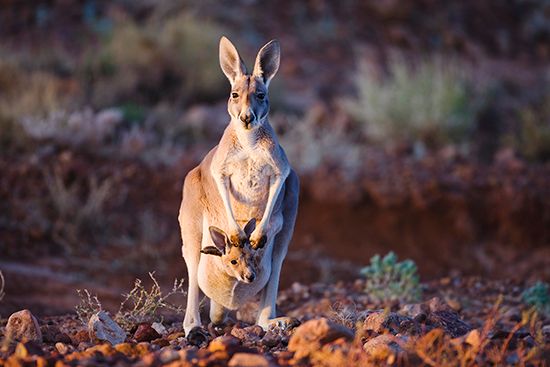
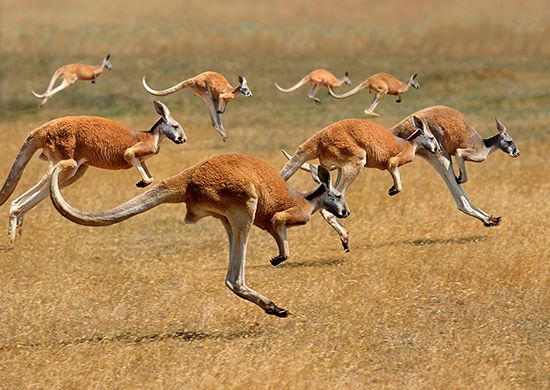
- Physical Build: As heavy, virtually tailless burrowers, wombats are structurally distinct from other terrestrial marsupials like kangaroos or wallabies, which rely on powerful hind limbs for movement across plains rather than tunneling.13
What is the habitat and geographical distribution of wombats?
Wombats are native to Australia, where their distribution and habitat preferences vary by species:
- Common Wombat (Vombatus ursinus): This species inhabits the woodlands of hilly country along the Dividing Range in southeastern Australia. Its range extends from southeastern Queensland through New South Wales and Victoria into South Australia, and it is also found in Tasmania.1
- Southern Hairy-nosed Wombat (Lasiorhinus latifrons): These wombats reside primarily in semiarid regions. Their range spans across South Australia and extends through the Nullarbor Plain into the southeastern portion of Western Australia.1
- Northern Hairy-nosed Wombat (L. barnardi): This critically endangered species has a very restricted distribution. The majority of the population is protected within Epping Forest National Park in central Queensland.1
Wombats are terrestrial burrowers that rely on underground tunnel systems for shelter, with hairy-nosed species often sharing these extensive burrows with others in their social groups.1
What are the dietary habits and behaviors of wombats?
Wombats are strictly herbivorous marsupials that have evolved specialized physical traits to support their diet and lifestyle. Their teeth are rootless and grow continuously, an adaptation necessary for consuming a hard-wearing diet of grasses and, in the case of the common wombat, the inner bark of tree and shrub roots.13
Regarding their behavior, wombats are primarily nocturnal and are well-known as powerful, heavily built burrowers. They use their strong foreclaws to tunnel into the ground to create extensive underground systems for shelter and food access. While common wombats are generally solitary, hairy-nosed wombats are more sociable, often sharing large burrows—which can reach 30 metres (100 feet) in length—with several other individuals.13
Because they dig in pastures and cultivated fields, wombats are sometimes viewed as pests by farmers. Additionally, their burrows are known to provide shelter for rabbits.1
Sources
- wombat — Encyclopædia Britannica
- wombat — Merriam-Webster
- marsupial — Encyclopædia Britannica
Published on · 3 min read