Rail-babbler
The rail-babbler is a songbird belonging to the subfamily Orthonychinae. While their classification varies among authorities—sometimes grouped with other…
What is Rail-babbler?
The rail-babbler is a songbird belonging to the subfamily Orthonychinae. While their classification varies among authorities—sometimes grouped with other babblers in the family Timaliidae or placed near the Timaliinae within the Muscicapidae—they are distinct from true rails.1
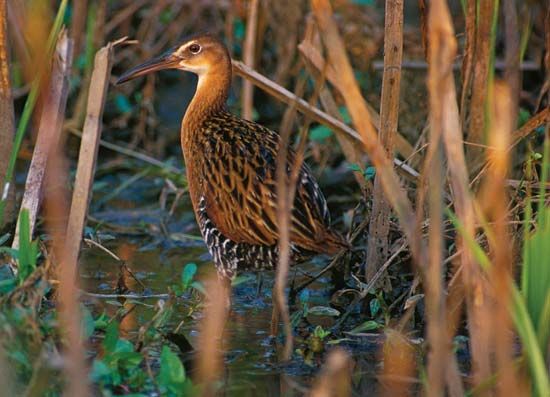
These birds are characterized by a rail-like appearance, featuring small heads, thin necks, long legs, and tails that are typically carried in a cocked position. Despite these physical similarities to rails, they possess small feet and bills that resemble those of a thrush. Their plumage is generally black, blue, or reddish in color. Rail-babblers inhabit thick forests across a range extending from Malaysia to New Guinea.1
What are the main differences between rail-babblers and actual rails?
While rail-babblers share a superficial physical resemblance to rails, they are fundamentally different birds belonging to entirely separate taxonomic groups.
The primary differences include:
- Taxonomy: Rail-babblers are songbirds (order Passeriformes), typically classified within the subfamily Orthonychinae. In contrast, rails belong to the order Gruiformes, a group primarily composed of medium to large, marsh-dwelling birds.12
- Physical Features: Although rail-babblers mimic the rail’s small head, thin neck, and long legs, they possess distinctively small feet and thrushlike bills. Rails, by comparison, are part of a diverse family that includes gallinules and coots, which are adapted for life in marshy environments.12
- Habitat: Rail-babblers are specialized for life in thick forests, ranging from Malaysia to New Guinea. Rails are found worldwide and are most characteristically associated with marshland habitats.12
What kind of environment do rail-babblers prefer in the forest?
Rail-babblers are specifically adapted to life within thick forests. Their habitat range spans across a significant geographical area, extending from Malaysia to New Guinea./Malaysia) to New Guinea. Within these dense environments, they utilize their physical characteristics—such as long legs—to navigate the forest floor and undergrowth.1
How do songbirds differ from other types of birds?
Songbirds, which belong to the suborder Passeri (or Oscines) within the order Passeriformes, are distinguished from other birds primarily by their highly developed vocal apparatus, known as the syrinx.3
While all birds share general characteristics such as feathers, a four-chambered heart, and wings, songbirds possess specific anatomical features that set them apart:4
- Complex Syrinx: The syrinx in true songbirds is an intricately constructed organ located at the base of the windpipe. It features a firm bony framework and specialized membranes controlled by up to four pairs of intrinsic muscles, allowing for complex vocalizations.356
- Anatomical Traits: Passerines are defined by a suite of unique derived characters, including an aegithognathous palate (fused vomer bone), a specific arrangement of the anisodactyl foot (featuring a large, independent hind toe), and spermatozoa with a coiled head.7
- Behavioral Plasticity: Songbirds are often noted for their large brain size, complex nest-building behaviors, and behavioral flexibility, which have enabled them to adapt to diverse environments globally.8
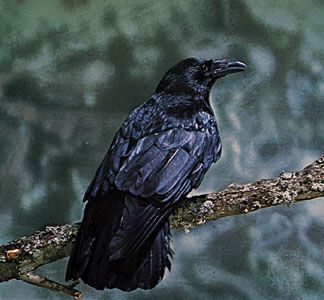
While the term “songbird” implies musical ability, not all members of this group sing melodiously; some, like crows, have harsh voices, and others sing very little.3
Sources
- Rail-babbler — Encyclopædia Britannica
- Gruiform - Annotated classification — Encyclopædia Britannica
- Passeriform - Sound production — Encyclopædia Britannica
- Passeriform - Evolution and paleontology — Encyclopædia Britannica
- Songbird — Encyclopædia Britannica
- Syrinx — Encyclopædia Britannica
- Bird - Distinguishing taxonomic features — Encyclopædia Britannica
- Passeriform - Syrinx — Encyclopædia Britannica
- Passeriform - Distinguishing taxonomic features — Encyclopædia Britannica
- Bird: Top Questions — Encyclopædia Britannica
Published on · 2 min read