Rasbora
A rasbora is any of approximately 45 species of active, slender, schooling freshwater fish belonging to the carp family, Cyprinidae. Primarily native to…
What is rasbora?
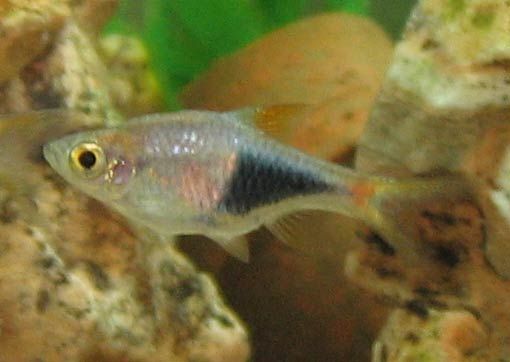
A rasbora is any of approximately 45 species of active, slender, schooling freshwater fish belonging to the carp family, Cyprinidae. Primarily native to Southeast Asia, with a few species found in Africa, these fish are characterized by a protruding lower jaw.1
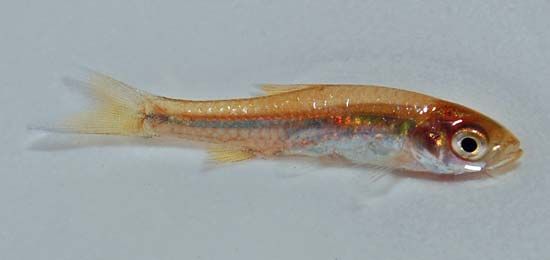
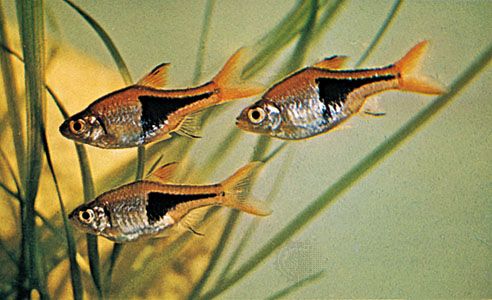
Many rasboras are popular in the aquarium trade due to their brilliant coloration and small size. A notable example is the harlequin fish (R. heteromorpha), which typically grows to 4–5 cm (1.5–2 inches) and is distinguished by a prominent wedge-shaped black spot on its sides. The genus name, Rasbora, was introduced by zoologist Francis Buchanan-Hamilton in 1822, though its etymological origins remain obscure.21
What are some other popular fish in the carp family?
The family Cyprinidae is a diverse group of freshwater fish that includes many well-known species beyond the rasbora. Here are some other popular and notable members of the carp family:
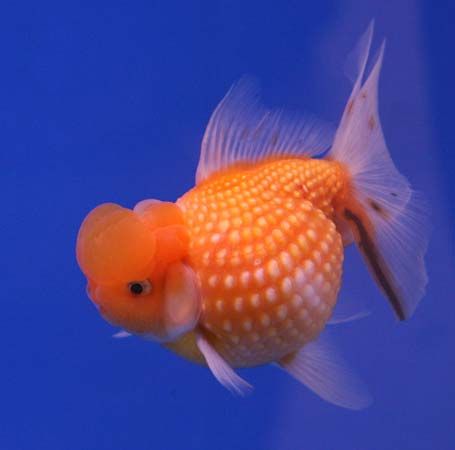
- Goldfish: One of the most famous aquarium fish, the goldfish (Carassius auratus) is a hardy species widely used in scientific research and as a pet.3
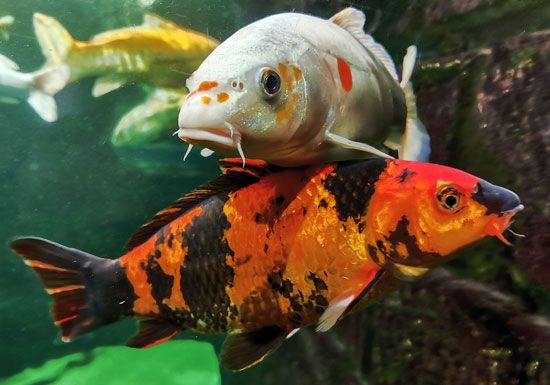
- Koi: A popular ornamental fish thought to descend from the common carp, koi are prized for their vibrant colors and are often kept in garden ponds.4
- Barbs: These are active, schooling fish frequently kept in home aquariums due to their lively behavior and variety of colors.3
- Danios: Including the well-known zebra fish (Danio rerio), these small, energetic fish are popular in the aquarium trade and are also significant models in scientific studies.3
- Minnows: In North America, this term refers to many small cyprinids, such as the golden shiner, which are often used as live bait or kept in aquariums.5
- Common Carp: While often considered a nuisance in North American waterways, the common carp is an important food fish in many parts of the world and is extensively cultured in aquaculture.43
- Asian Carp: This group includes species like the grass carp, bighead carp, black carp, and silver carp, which were introduced to control aquatic pests but have become invasive in some regions.4
How do schooling fish behave in the wild?
Schooling behavior is a remarkable phenomenon where large groups of fish—such as herrings and anchovies—swim in such precise coordination that the entire group appears to act as a single organism.910
Key Behavioral Characteristics
- Organization: Schools are typically composed of individuals of similar size and age. If a fish grows too large or remains too small, it will break away to join a school of its own size class.910
- Coordination: Fish maintain even spacing, often aligning their bodies side-by-side or staggered. While they move with incredible precision, there is no permanent leader; individuals in the vanguard frequently rotate to the flanks and rear, ensuring equitable access to food.10
- Sensory Mechanisms: Schools likely maintain cohesion through visual contact or the lateral line system, which detects vibrations in the water.10
- Vertical Migration: Many schools perform daily vertical movements, often staying in deep, cold water during the day and rising toward the surface at night to follow plankton movements.10
Adaptive Advantages
The primary benefit of schooling is safety. When threatened by a predator, schools contract into tight, writhing spheres, making it difficult for the predator to isolate and capture a single individual. Additionally, schooling simplifies finding mates and may facilitate more efficient feeding through hydrodynamic interactions.910
What makes the harlequin rasbora unique?
The harlequin rasbora (Rasbora heteromorpha) is a distinctive member of the carp family that stands out for its specific physical appearance.
Measuring approximately 4–5 cm (1.5–2 inches) in length, this species is characterized by its vibrant reddish coloration. Its most unique feature is a prominent, wedge-shaped black spot located on each side of its body, which serves as its primary identifier. Like other members of the rasbora genus, it is an active, schooling freshwater fish native to Southeast Asia. Due to its striking markings and peaceful nature, it has become one of the most popular species kept in home aquariums.1
Sources
- rasbora — Encyclopædia Britannica
- rasbora — Merriam-Webster
- carp — Encyclopædia Britannica
- atheriniform - Natural history — Encyclopædia Britannica
- ostariophysan - Importance — Encyclopædia Britannica
- minnow — Encyclopædia Britannica
- Cyprinodontidae — Merriam-Webster
- cyprinodont — Merriam-Webster
- Schooling behaviour — Encyclopædia Britannica
- clupeiform - Schooling behaviour — Encyclopædia Britannica
Published on · 3 min read