Redwood
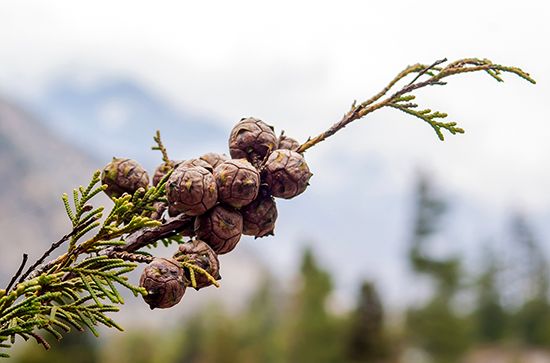
The term redwood refers to any of three species of large trees within the cypress family (Cupressaceae): the coast redwood, the giant sequoia, and the dawn…
What is Redwood?
The term redwood refers to any of three species of large trees within the cypress family (Cupressaceae): the coast redwood, the giant sequoia, and the dawn redwood.1
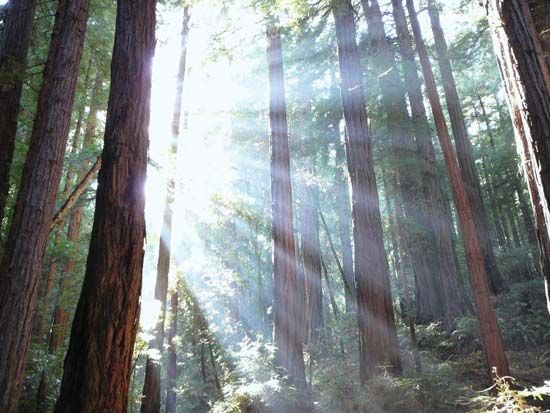
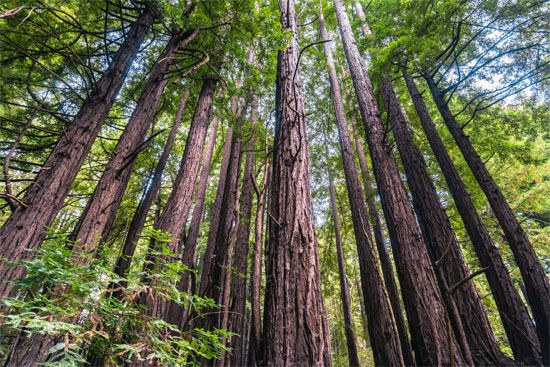
- Coast redwood (Sequoia sempervirens): Native to the coastal fog belt from Oregon to central California, these are the tallest living trees on Earth, often exceeding 90 meters (300 feet) in height. They are highly valued for their durable, decay-resistant timber.234
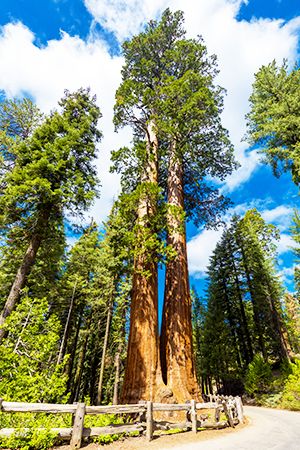
- Giant sequoia (Sequoiadendron giganteum): Found in the Sierra Nevada mountains, these are the most massive trees by volume. While they are not as tall as coast redwoods, their immense bulk makes them the largest trees in the world.52
- Conservation: Both the coast redwood and giant sequoia are listed as endangered species by the IUCN Red List, facing threats from climate change, drought, and fire suppression. Protecting these ancient organisms is an essential environmental priority.253
How do coast redwoods and giant sequoias differ in size and habitat?
Coast redwoods and giant sequoias are distinct species within the cypress family that differ significantly in their physical dimensions and native environments.
Size Comparisons
- Coast Redwood (Sequoia sempervirens): These are the tallest living trees on Earth, frequently exceeding 90 meters (300 feet) in height, with some reaching over 112 meters (367 feet).3
- Giant Sequoia (Sequoiadendron giganteum): While not as tall as the coast redwood, these are the most massive trees in the world by volume and bulk. For example, the General Sherman tree stands 83 meters (272 feet) tall but possesses a massive circumference of 31 meters (101.5 feet) at its base.2
Habitat Differences
- Coast Redwood: These trees are endemic to the coastal fog belt, stretching from southwestern Oregon to central California. They thrive at lower elevations, typically up to 1,000 meters (3,300 feet) above sea level, where they rely on coastal moisture.36
- Giant Sequoia: These trees are found in scattered groves on the western slopes of the Sierra Nevada mountains in California. They grow at much higher elevations, ranging between 900 and 2,600 meters (3,000 and 8,500 feet).26
Why is fire actually important for the reproduction of redwood trees?
Fire plays a critical role in the reproduction of coast redwoods by creating the necessary environmental conditions for their seeds to thrive. While these trees produce seeds naturally, only a small percentage will successfully germinate without the influence of fire.8
The importance of fire for redwood regeneration includes the following factors:
- Clearing Competition: In many forest ecosystems, dominant conifers struggle to regenerate among more shade-tolerant species that grow around them over time. Fire clears the understory, removing this competition and exposing the bare soil required for new seedlings to establish themselves bare soil required for new seedlings to establish themselves.8
- Stimulating Germination: Fire acts as a vital stimulus for the germination process. By clearing away debris and litter, fire creates an ash-fertilized seed bed that provides a more favorable environment for seeds to take root.9
- Fire Adaptation: Coast redwoods are exceptionally fire-adapted. Their thick, fibrous, and deeply furrowed bark—which can reach 30 cm (12 inches) or more in thickness—protects the living tissues of the tree from the heat of a conflagration, allowing mature trees to survive while the fire prepares the forest floor for the next generation.8
What are some other extremely long-lived tree species?
Beyond the well-known bristlecone pines—which include the oldest known non-clonal trees on Earth, with some individuals exceeding 5,000 years of age—several other tree species are noted for their remarkable longevity.1314
- Baobabs (Adansonia): These iconic trees, known for their massive, barrel-like trunks, are celebrated for their extraordinary lifespan. The African baobab is recognized as the oldest known angiosperm (flowering) tree, with some specimens dated to over 1,200 years old. Their unique ability to store water and their modular growth pattern allow them to endure in harsh, arid environments.1513
- Ginkgo (Ginkgo biloba): Research into the ginkgo tree has revealed that its vascular cambium shows little evidence of cell death, even in very old specimens. This cellular resilience, combined with strong chemical defenses against pests and diseases, contributes to the species’ ability to live for millennia.13
The longevity of these trees is generally attributed to a combination of “good luck”—avoiding lethal events like fires or droughts—and a simple, low-maintenance body plan where dead woody tissue makes up the vast majority of the tree’s structure.13
Sources
- redwood — Encyclopædia Britannica
- coast redwood — Encyclopædia Britannica
- giant sequoia — Encyclopædia Britannica
- redwood — Merriam-Webster
- Redwood National Park — Encyclopædia Britannica
- Sequoia — Encyclopædia Britannica
- Sequoia National Forest and Giant Sequoia National Monument — Encyclopædia Britannica
- conifer - Sporophyte phase — Encyclopædia Britannica
- Wildfire: Top Questions — Encyclopædia Britannica
- forestry - Fire prevention and control — Encyclopædia Britannica
- prescribed fire — Encyclopædia Britannica
- Seed - Afterripening, stratification, and temperature effects — Encyclopædia Britannica
- How Can Some Trees Survive for Thousands of Years? — Encyclopædia Britannica
- bristlecone pine — Encyclopædia Britannica
- Holocene Epoch - Chronology and correlation — Encyclopædia Britannica
- Baobab — Encyclopædia Britannica
Published on · 4 min read