Roller
Rollers are members of the order Coraciiformes, a group that also includes kingfishers and bee-eaters. While all three are often brightly colored, they…
How do roller birds differ from other colorful bird species like kingfishers or bee-eaters?
Rollers are members of the order Coraciiformes, a group that also includes kingfishers and bee-eaters. While all three are often brightly colored, they differ significantly in their physical characteristics and feeding behaviors:1
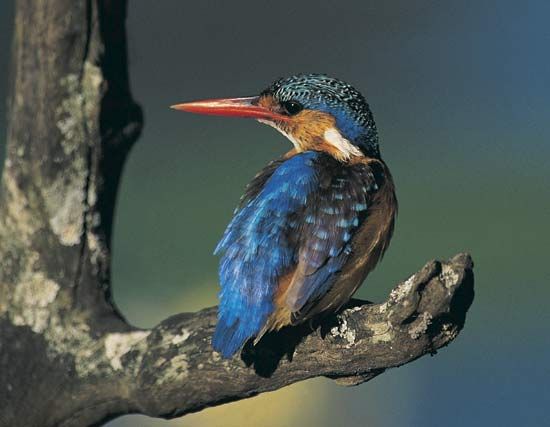
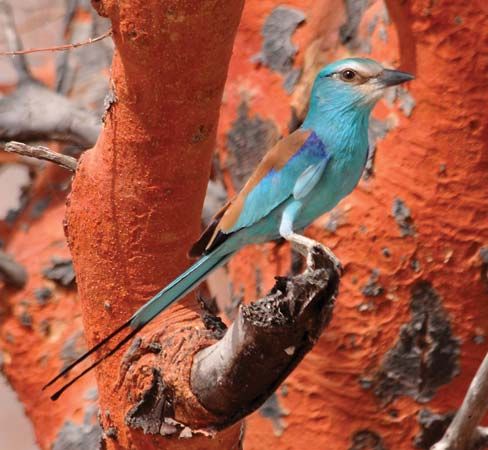
- Physical Traits: Rollers are stocky, short-legged birds with stout, crowlike bills that are slightly downcurved and terminally hooked. In contrast, kingfishers typically possess medium to long, stout, and spearlike bills. Bee-eaters are characterized by long, slender, and tapering bills that are slightly decurved, along with long, pointed wings.21
- Feeding Behavior: Kingfishers are primarily “watchful waiters” that sit quietly on perches before making swift, direct flights to seize prey from branches, the ground, or water. Bee-eaters are aerial feeders that often spend long periods gliding in circles to hunt insects. Rollers also engage in aerial hawking, but they spend more time perched than bee-eaters and are known for their graceful, swift flight and the distinct dives and somersaults they perform during courtship displays.32
Where are roller birds primarily found in the world?
Rollers are primarily found in the warm regions of the Old World, with a distribution that spans from Europe and Africa to Australia.1
While they are abundant and diverse across the Old World tropics, they are notably absent from the New World, where niches typically occupied by coraciiform birds are filled by other avian families. Within their range, specific groups have unique distributions:6
- Mainland Africa and Eurasia: Rollers are well-represented in these regions, where they occupy niches such as aerial hawking. The common roller, for instance, is found from southern Europe to western Asia.71
- Madagascar: This island is home to endemic families such as the ground rollers and the cuckoo roller, which are distinct from the modern rollers found on the African mainland.64
- Australia: The roller family has successfully reached the Australian continent, where they occupy specific ecological niches alongside other coraciiforms.67
What is the typical diet of roller birds?
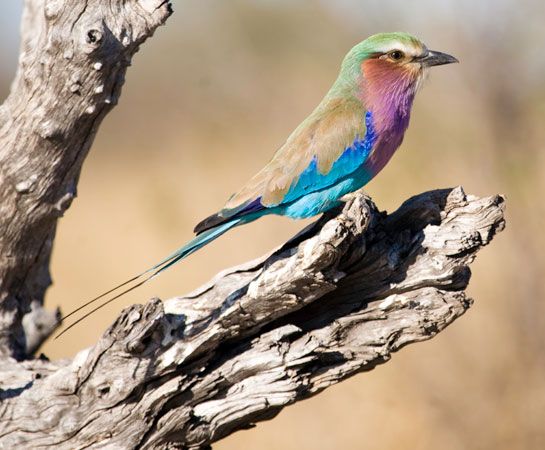
Rollers are primarily insectivorous, often gathering in noisy flocks to feed on locusts and flying ants. In addition to these insects, their diet frequently includes lizards.1
As aerial feeders, rollers capture much of their food by hawking—sallying out from a perch to catch passing insects—or by darting down to the ground to seize prey. While their diet is largely composed of animal matter, the broader order of Coraciiform birds, to which rollers belong, consumes a diverse range of organisms including worms, snails, crustaceans, amphibians, small birds, and mammals. Some species within this order also supplement their diet with vegetable matter, such as the fruits of trees.2
Are there any conservation concerns for roller birds, and if so, what are they?
The provided search results do not contain specific information regarding the conservation status or threats facing the family Coraciidae (roller birds). While broader environmental issues such as deforestation, pollution, and the use of pesticides are known to negatively impact avian populations and their insect food resources, the Britannica knowledge base does not currently provide a detailed assessment of these specific pressures on roller birds.
Sources
- Roller — Encyclopædia Britannica
- Coraciiform - Locomotion and feeding — Encyclopædia Britannica
- Coraciiform - Annotated classification — Encyclopædia Britannica
- Cuckoo roller — Encyclopædia Britannica
- Coraciiform - Habitat selection and ecological diversity — Encyclopædia Britannica
- Coraciiform - Evolution and paleontology — Encyclopædia Britannica
- Coraciidae — Merriam-Webster
- Coraciiform — Encyclopædia Britannica
- Philippine eagle: Top Questions — Encyclopædia Britannica
- Neonicotinoid: Top Questions — Encyclopædia Britannica
Published on · 3 min read