Rubiaceae
The Rubiaceae family, also known as the madder or coffee family, plays a significant role in ecosystems worldwide, particularly in tropical regions where…
What role do Rubiaceae plants play in various ecosystems?
The Rubiaceae family, also known as the madder or coffee family, plays a significant role in ecosystems worldwide, particularly in tropical regions where these trees and shrubs often constitute at least 5 percent of local species and individual plants.1
Their ecological contributions include:
- Pollination Networks: These plants rely almost exclusively on animals for pollination, attracting a diverse range of insects, birds, and bats through their varied floral forms.1
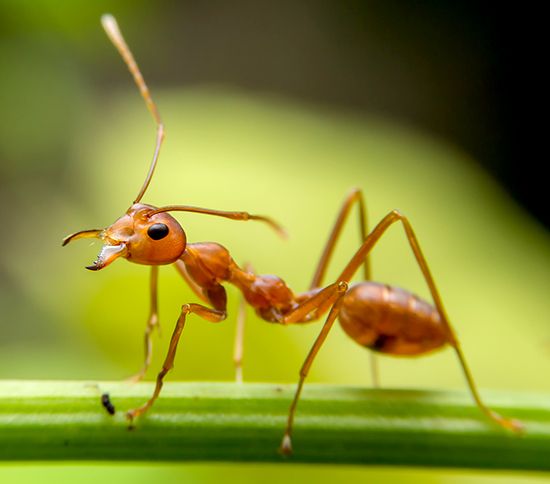
- Symbiotic Relationships: Many species have evolved specialized structures in their stems and leaves to house ant colonies. Genera such as Myrmecodia, Nauclea, Duroia, and Hydnophytum provide habitat for these invertebrates.21
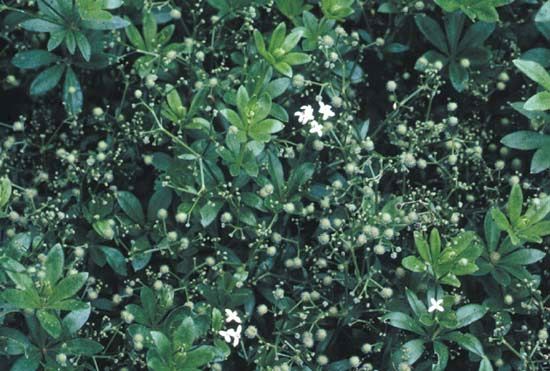
- Habitat Diversity: Found in most habitats globally, the family includes everything from large tropical trees and lianas to temperate herbs like bedstraw and partridgeberry, contributing to the structural complexity of their environments.21
What are the main characteristics of plants in the Rubiaceae family?
The Rubiaceae family, commonly known as the madder or coffee family, is a diverse group of flowering plants within the order Gentianales. It comprises over 13,150 species of herbs, shrubs, and trees, primarily distributed in tropical regions.1
Key Physical Characteristics
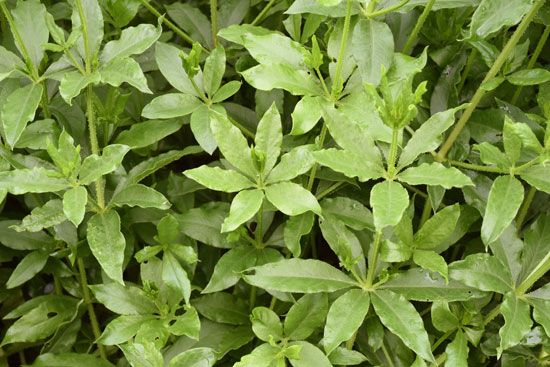
- Leaves: Typically arranged oppositely with stipules or in whorls. They feature unbroken margins and leaflike appendages at the base of the leafstalks. In tropical species, leaves are often large and evergreen, while temperate species may be deciduous and desert species may have needlelike or scalelike leaves.1
- Flowers: Plants may bear single flowers or clusters of small flowers. In some species, such as those in the genus Coffea, the flowers are fragrant and white or pink.13
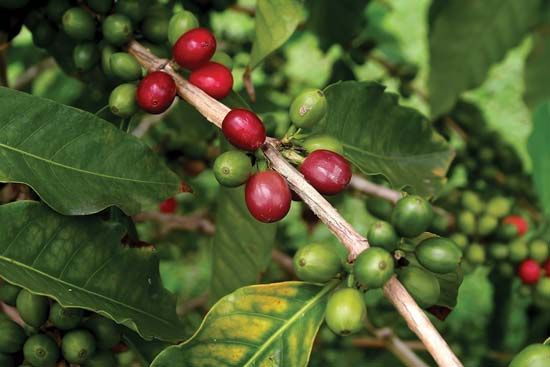
- Fruits: The family produces a variety of fruit types, including berries, drupes, capsules, and schizocarps.1
- Growth Habits: Members range from low-growing herbs with square stems, such as bedstraw, to tropical trees and lianas. Some genera, like Myrmecodia, have evolved specialized swollen stems to house ants.1
Which important economic crops belong to the Rubiaceae family?
The Rubiaceae family, also known as the madder or coffee family, includes several plants of significant economic importance, ranging from global commodities to medicinal sources.41
Major Economic Crops and Products
- Coffee: The most prominent economic product of the family, coffee is derived from the seeds of Coffea species, primarily C. arabica and C. canephora (Robusta).431
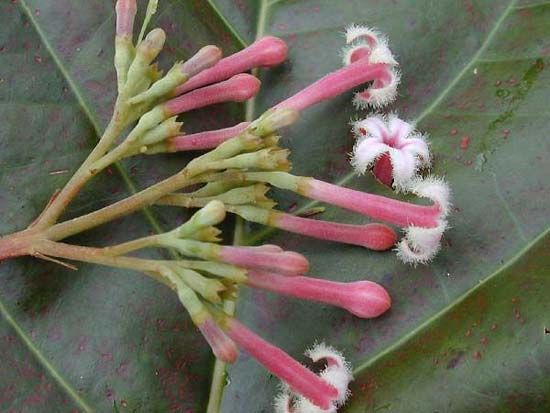
- Quinine: Derived from the bark of various Cinchona species, this substance was historically the primary treatment for malaria and remains a vital medicinal resource.241
- Ipecac: Obtained from the roots of Carapichea ipecacuanha (also referred to as Psychotria ipecacuanha), this substance is used medicinally to induce vomiting.41
- Kratom: The leaves of Mitragyna speciosa are used in traditional medicine and recreationally as a stimulant, though the FDA has warned against its use due to safety concerns and lack of approved medical applications.415
- Gambier: A substance extracted from Uncaria gambir, used primarily in the tanning industry.4
- Dyes: Common madder (Rubia tinctorum) was historically cultivated for the red dye [alizarin], which is now produced synthetically.41
Additionally, several species provide useful timber, and many are cultivated as ornamentals, including Gardenia and Ixora.41
How do plants in the Rubiaceae family reproduce?
Plants in the Rubiaceae family, which are angiosperms, primarily reproduce through sexual means involving flowers, though they may also propagate vegetatively in horticultural contexts.627
Sexual Reproduction
- Floral Structure: Rubiaceae flowers typically feature stamens (male organs) and ovaries (female organs) within the same flower or on the same plant. A notable feature in many species is heterostyly, where flowers exhibit reciprocal differences in the lengths of their styles and stamens, a strategy that promotes cross-pollination.687
- Pollination: Pollination is almost exclusively carried out by animals, including various insects, birds, and bats. The flowers have evolved a wide range of forms, fragrances, and colors to attract these specific pollinators.6
- Seed Development: Following successful pollination and fertilization, the ovaries develop into fruits—such as berries, drupes, or capsules—which contain the seeds. These seeds are dispersed by various means, ranging from wind to animal consumption.68
Vegetative Reproduction
While sexual reproduction is the primary method for genetic diversity, many plants can also reproduce asexually through vegetative reproduction. In horticulture, this is often achieved through cuttings or the use of specialized structures, allowing for the propagation of exact genetic clones of a parent plant.2
Sources
- Rubiaceae — Encyclopædia Britannica
- Gentianales - Rubiaceae — Encyclopædia Britannica
- Coffea — Encyclopædia Britannica
- Cinchona — Encyclopædia Britannica
- Kratom — Encyclopædia Britannica
- Do Plants Have Sexes? — Encyclopædia Britannica
- Vegetative reproduction — Encyclopædia Britannica
- Sapindales - Characteristic morphological features — Encyclopædia Britannica
- Fruit - Animal dispersal — Encyclopædia Britannica
- Rubiaceae — Merriam-Webster
- Angiosperm - General features — Encyclopædia Britannica
Published on · 4 min read